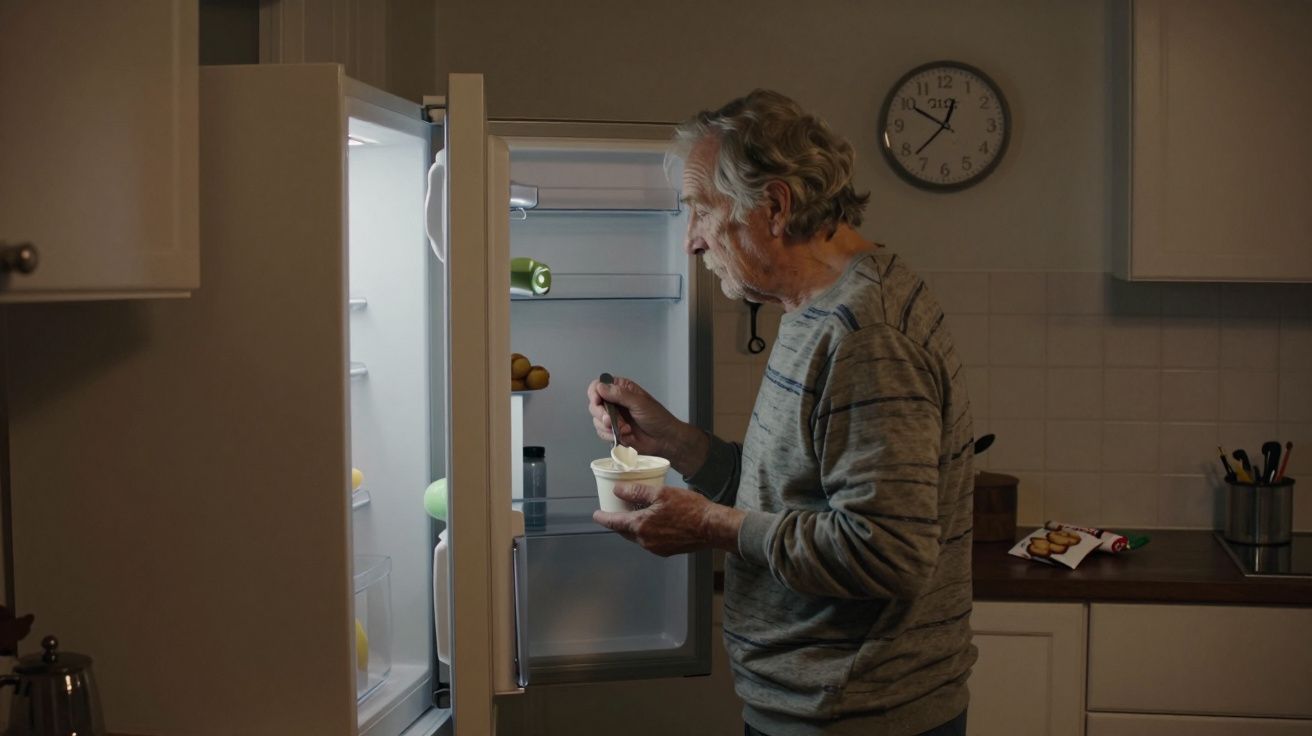
The kitchen is half-dark, lit mostly by the fridge door you’ve just opened “for a little something” before bed. A spoon hovers over the yoghurt pot. On the worktop sits the packet of biscuits you swore you’d stop buying “for the grandchildren”. The clock says 21:45. Your body, somewhere between hungry and heavy, says: this probably isn’t helping.
For years, “no eating after 20:00” sounded like sensible advice. Now, past 55, your sleep is lighter, your muscles don’t bounce back as quickly after a walk or a swim, and a too-early dinner leaves you awake at 3 a.m., stomach quietly rumbling. The old rules start to feel… off.
Somewhere between the early bird dinner and the midnight raid on the biscuit tin, nutrition scientists have been looking at a more useful question: not just what you eat at night, but when you eat it if you want to protect your muscles and still sleep well.
The answer isn’t a magic snack. It’s a window.
A small, well-chosen evening snack, timed right, can quietly keep your muscles fed through the night and make sleep easier, not harder. The trick is giving your body what it actually needs in those last 90 minutes before you turn off the light.
Why timing matters more after 55
From your mid‑50s onwards, your muscles become a little less responsive to the usual signals. The technical term is “anabolic resistance”: your body needs a bit more high‑quality protein, and a bit more planning, to build or maintain the same lean mass. Left completely to chance, the default is slow loss of muscle, strength and balance.
At the same time, your daily rhythm changes. Hormones that help you fall and stay asleep, like melatonin, tend to decline. Blood sugar control can become a little less flexible. Big, late meals that you tolerated at 35 may now sit like a brick or send you to bed with your heart racing.
Most people over 55 also fall into a very common pattern: light or rushed breakfasts, small lunches, then a big, carb‑heavy evening meal. Add a few hours of television and a snack in front of it, and your body spends most of the night digesting, not repairing.
This is where timing comes in. Instead of one heavy hit of food late at night, research suggests your muscles and sleep do better with:
- A comfortable main evening meal a few hours before bed.
- A small, protein‑focused snack in a defined “pre‑sleep” window, not right as you climb under the covers and not four hours before.
It’s less about rules, more about rhythm.
The “muscle and sleep” snack window
When scientists study evening nutrition in older adults, they often use a simple pattern: a normal dinner, then a protein‑rich snack about an hour before sleep. In trials with people in their 60s and 70s, around 20–30 g of slow‑digesting protein in that window increased overnight muscle repair and, when combined with resistance exercise, helped build lean mass over several weeks.
Translated into everyday life, that looks more like this:
Aim to finish your main dinner 3–4 hours before bed.
Enough time for the bulk of digestion to happen, so you don’t lie down with a very full stomach.Use a small snack 60–90 minutes before you plan to sleep if:
- you feel a bit hungry,
- you’ve been active that day (walking, gardening, gym, swimming),
- or you know your dinner was light on protein.
Keep the snack:
- modest in size (roughly 150–250 kcal for most people),
- centred on protein,
- low in added sugar and not too high in fat.
For someone going to bed around 22:30, that might mean dinner at 18:30–19:00, then a snack between 21:00 and 21:30. If you eat later, say at 20:30, you may not need the snack at all – or you bring it forward to around 22:00 and keep it very light.
Soyons honnêtes : personne ne veut sortir la balance de cuisine à 21:17. You’re aiming for a rough window, not a laboratory schedule. The goal is consistency over weeks, not perfection every night.
What to eat in that window (and what to keep for earlier)
The snack that supports both muscle and sleep has three jobs: drip‑feed your muscles with amino acids through the night, keep your blood sugar stable, and feel gentle on the stomach.
Think “calm dairy, plant proteins and fibre”, not “sugar rush and crisps”.
Good options for most people
Pick one of these and adjust portions to your appetite:
Greek or Icelandic yoghurt (skyr), plain or lightly sweetened, with:
- a small handful of berries, or
- a teaspoon of chopped nuts, or
- a spoon of ground seeds (flax, chia, pumpkin).
Cottage cheese or ricotta on:
- a slice of wholegrain toast, or
- a few oatcakes.
A glass of milk (cow’s, soy or enriched pea) with:
- a small banana, or
- a tablespoon of nut butter on half a slice of toast.
Silken tofu or soy yoghurt “pudding” with:
- a few slices of fruit,
- a sprinkle of cinnamon.
Hummus with:
- carrot sticks,
- a few wholegrain crackers.
The common thread is 15–25 g of protein, some gentle carbohydrate and very little added sugar. Slow proteins like casein (in dairy) or soy are especially useful because they release amino acids gradually across several hours.
If you have reflux or a sensitive stomach
Lying down soon after eating can aggravate heartburn, especially with heavy or fatty foods. To protect your sleep:
- Favour smooth textures and smaller volumes:
- yoghurt rather than a stacked sandwich,
- milk rather than a giant bowl of nuts.
- Avoid:
- very acidic toppings (large amounts of citrus or tomato),
- large portions of chocolate, mint, spicy leftovers, or alcohol in that last 2‑hour window.
- Stay upright for at least an hour after the snack, and use a slightly raised pillow if reflux is frequent.
If you manage blood sugar or diabetes
Evening snacking can feel risky if you live with diabetes or pre‑diabetes, but the right choice and timing can actually stabilise your night:
- Combine protein + a small amount of low‑GI carbohydrate + a little fat, e.g.:
- plain Greek yoghurt + a spoon of oats and seeds,
- cheese + 1–2 oatcakes,
- unsweetened soy yoghurt + a few nuts.
- Avoid:
- fruit juices,
- sugary cereals,
- large bowls of ice cream,
- big portions of biscuits or cake.
- Work with your healthcare team to check how your usual medication schedule fits a pre‑sleep snack.
How this snack helps muscles and sleep
During the night, your body normally goes 8–10 hours without food. In younger adults, that fast is usually no problem; muscle repair stays fairly efficient. After 55, that long food gap can tilt the balance towards more breakdown than building, especially if your daytime protein is low.
A small, protein‑rich snack in the late evening:
Feeds overnight muscle repair.
Those amino acids become raw material to patch up the tiny tears from daily activity and exercise. In older adults who also did simple strength training, pre‑sleep protein boosted gains in muscle size and strength over time.Supports a more stable metabolism.
A modest snack with protein and fibre can stop the “3 a.m. hollow” that sends you to the kitchen or leaves you half‑awake and uncomfortable.Can soothe, rather than disturb, sleep.
Contrary to the old rule “never eat before bed”, studies generally find that a small, balanced snack does not harm sleep, and for some people improves how easily they drift off. Warm milk and yoghurt bring tryptophan, a building block of serotonin and melatonin, although the overall calming effect is more about comfort and stable blood sugar than a single nutrient.
What tends to wreck sleep is not the snack itself, but what and how much you eat: very large, heavy, fatty or spicy meals close to bedtime make your digestive system the main event of the night.
Simple routines instead of strict rules
Most people don’t want to live by a stopwatch. The aim is to fold this timing into a life that already has grand‑children’s visits, late trains, dinners out and nights where you fall asleep on the sofa at 21:00.
A few flexible patterns can help:
Choose your “default evening”.
For example: “I eat dinner around 19:00, I go to bed around 22:30, and most nights I’ll have a small yoghurt‑based snack around 21:15.”Link the snack to movement.
On days with a walk, class, gardening or gym session in the afternoon or evening, make the pre‑sleep snack almost non‑negotiable. That’s when your muscles are especially ready to use it.Keep the ingredients visible and ready.
Plain yoghurt, a box of oatcakes, nuts in a jar, pre‑cut veg in the fridge. When the “biscuits or nothing” moment comes, the better choice needs to be just as easy.Treat alcohol and sugary desserts as earlier treats.
Enjoy them occasionally with dinner, not at 22:30. Your liver and sleep will thank you.
One 67‑year‑old client described it like this after six weeks of using a planned evening snack alongside short home strength exercises: “I’m still me. But climbing stairs doesn’t feel like a negotiation anymore, and I don’t wake up ravenous at 4 a.m.”
The snack didn’t work alone. It simply gave her body the raw material at the right time to match what she was asking her muscles to do.
Common traps after 55
Nutrition scientists and clinicians see the same patterns repeat once people cross the 55–60 mark:
Tiny protein at breakfast and lunch, huge dinner.
Muscles prefer 20–30 g of protein spread across meals, not 5 g at breakfast and 60 g at 20:30.Tea and biscuits as the default evening habit.
Comforting, yes, but mostly sugar and refined starch, which don’t help muscle or sleep quality.“I don’t eat in the evening” – then cheese, bread and wine at 22:00.
Long gaps followed by heavy, rich snacks overload digestion.Using sleeping pills to solve what is partly a nutrition and rhythm issue.
Sometimes necessary, but they don’t replace looking at meal timing, caffeine, alcohol and light exposure.Doing strength exercises without supporting them with food.
Lifting weights or doing resistance bands is brilliant after 55. It’s much more effective when muscles are fed within a few hours before and after the session.
Becoming aware of these traps is often enough to start changing them, one evening at a time.
Key timings and choices at a glance
| Focus | What it looks like | Why it helps |
|---|---|---|
| Dinner timing | Finish main meal 3–4 h before bed | Allows digestion without overloading sleep |
| Snack window | Small, protein‑centred snack 60–90 min before bed if needed | Feeds muscles overnight, stabilises hunger and blood sugar |
| Snack content | 15–25 g protein, some fibre, minimal added sugar, not too fatty | Supports muscle repair without disturbing sleep or reflux |
FAQ:
- Is it bad to eat anything in the evening after 55?
No. What matters is what you eat and how much and how close to bedtime. A small, balanced snack 60–90 minutes before sleep is very different from a large, heavy meal or a pile of sweets right before you lie down.- How much protein should be in the evening snack to help my muscles?
Most studies in older adults use around 20–30 g of protein, but even 15–20 g is useful if your overall day is well balanced. Think of a generous pot of Greek yoghurt, a glass of milk plus a small portion of nuts, or a bowl of cottage cheese.- What if I’m not hungry in the evening?
If you eat enough protein and energy at breakfast, lunch and dinner, and your dinner is not too early, you may not need a snack. Don’t force food. The snack is a tool, not an obligation.- Can a glass of wine and cheese be my evening “snack”?
Occasionally, enjoyed with or soon after dinner, perhaps. As a regular late‑night habit, alcohol and rich cheese are more likely to disturb sleep, reflux and weight than to help your muscles.- Do I need special supplements like casein powder?
Not necessarily. Most people can reach helpful amounts of evening protein with ordinary foods: yoghurt, milk, cheese, tofu, soy yoghurt, hummus. Powders are an option if your appetite is low or you struggle to chew, but they’re not a requirement.- Will this work without exercise?
A well‑timed snack can slow muscle loss, but the biggest benefits come when you combine it with regular strength or resistance work, even simple exercises at home 2–3 times a week. Food provides the bricks; movement gives your body the order to build.





Comments (0)
No comments yet. Be the first to comment!
Leave a Comment