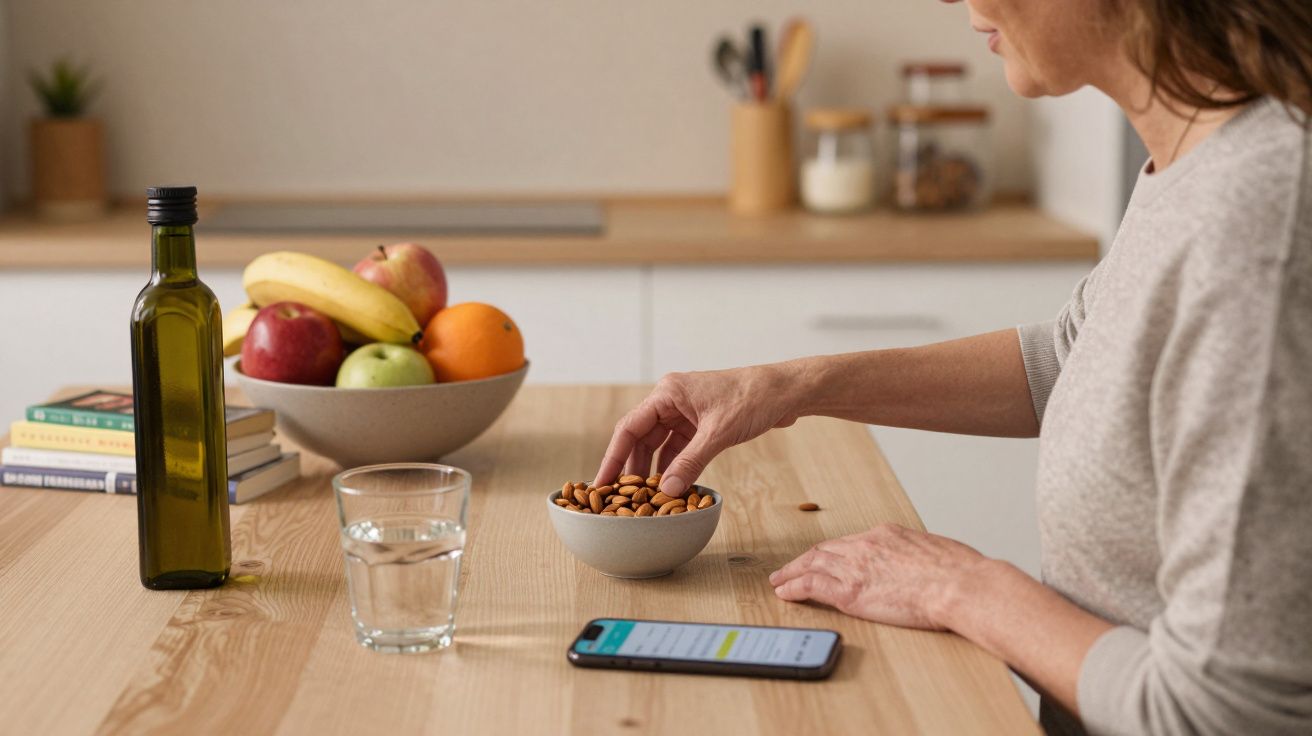
It starts the same way most nights. The house is finally quiet, the last email has been ignored on purpose, and the clock has slid past nine. Your stomach isn’t roaring, just whispering. You wander to the kitchen, open a cupboard, and stare down the usual suspects: biscuits, crisps, “a bit of cheese”, the ice cream that was “for the grandchildren”. Being over 50, every choice suddenly feels like a committee meeting about your waistline, your sleep, and your cholesterol.
Somewhere you read that nuts are healthy, and somewhere else you read that they’re “full of fat”. You pick up the jar, put it down again, and wonder if a handful is a heart-healthy snack or tomorrow’s guilt. Dietitians will tell you there is one nut that earns its place in an evening routine - because it helps you feel full and satisfied, without driving up cholesterol. It’s the plain, unglamorous almond.
Why evening snacks get trickier after 50
Your body does not run on the same settings at 55 as it did at 25. Metabolism slows, muscle mass quietly shrinks, hormones shift, and your risk for high cholesterol and type 2 diabetes edges upwards. That doesn’t mean you can’t snack; it means the quality of what you nibble matters more.
Sugary biscuits, white toast and jam, or a big bowl of crisps hit quickly and fade quickly. Blood sugar surges, then drops. You may fall asleep fast, only to wake hungry at 3am. Heavy, high-fat takeaways eaten late can trigger reflux, leave you bloated, and nudge cholesterol in the wrong direction. The goal isn’t to ban snacks. It’s to pick something that takes the edge off hunger, steadies blood sugar, and looks after your heart while you’re on the sofa.
That’s where almonds quietly shine.
The one nut dietitians keep recommending
Ask a few cardiovascular dietitians what they reach for at 9.30pm, and almonds come up again and again. Not smoked, honey-roasted, or sugar-dusted - just plain, dry-roasted or raw. Almonds are naturally rich in:
- Protein and fibre, which help you feel fuller for longer
- Monounsaturated fats, the same heart-friendly fats found in olive oil
- Vitamin E and magnesium, useful for muscles, nerves, and general recovery
Several studies have linked daily almond intake with lower LDL (“bad”) cholesterol and unchanged or improved body weight, even when calories are similar. Part of the reason? We don’t absorb every calorie from whole almonds; some of the fat stays locked in the fibrous structure and simply passes through.
Picture Elaine, 61, who swapped her nightly two chocolate biscuits for a small handful of almonds and a sliced apple. She thought she would miss the chocolate. Three weeks in, she noticed she stopped rummaging in the cupboard for “just one more thing” at 10.30pm. Same calories on paper, different story in her body.
“We see it all the time,” says one dietitian who works with patients over 50. “A measured handful of almonds in the evening keeps people satisfied, and their cholesterol numbers often thank them for it.”
What makes almonds such a good evening choice?
Almonds tick three boxes that matter more with age: fullness, heart health, and blood sugar control.
- Fullness: Around 23–28 almonds (a small handful, ~30g) give you 5–6g of protein and 3–4g of fibre. That combination tells your brain, “You’ve had something,” instead of “Keep foraging.”
- Heart health: Their fat is mostly monounsaturated, the type linked with lower LDL cholesterol and a reduced risk of heart disease when it replaces saturated fat (from things like fatty meats, butter, and some cheeses).
- Blood sugar: Almonds are low in carbohydrate, rich in fibre, and have a low glycaemic impact, which helps keep blood sugar steadier - useful if you’re managing prediabetes or type 2 diabetes.
Crucially, they do this without the sugar rush of typical evening treats. You get gentle release, not a spike and crash. This matters because your insulin response tends to be less efficient as you age, and late-night sugar surges can muddy both sleep and long-term health.
Almonds aren’t magic, but they are remarkably efficient: a small amount, chewed properly, delivers a lot of satisfaction.
How to snack on almonds without overdoing it
Nuts are healthy, but they are energy-dense, so portion is the quiet key. Dietitians tend to give simple, visual rules rather than grand calculations:
- A snack serving = a small cupped handful, about 20–25 almonds (roughly 25–30g)
- Tip them into a small bowl rather than eating from a large bag or jar
- Eat them slowly, ideally away from your screen, so your brain notices you’ve snacked
Then pair your almonds with something light to round things out:
- A piece of fruit (apple slices, pear, a few berries)
- A small pot of plain or Greek yoghurt
- Carrot sticks or cucumber batons if you prefer savoury
- A herbal tea, warm milk, or fortified plant drink as a cosy, sleep-friendly partner
What to skip most evenings? Almonds coated in chocolate, toffee, or thick layers of salt. Let’s be honest: nobody is weighing out exactly 28 grams every night. But choosing mostly plain almonds, mostly reasonable portions, most of the time is where the gains come from.
Step-by-step: build a heart-friendly evening snack after 50
Use this as a simple template rather than a strict rulebook. It takes under two minutes.
Decide if you’re actually hungry.
Pause for 10–20 seconds. Are you thirsty, bored, or genuinely peckish? If it’s habit, a warm drink might be enough.Measure your almonds once.
Put a small handful (about 20–25) into a ramekin or tiny bowl. Notice how that looks; over time you’ll eyeball it easily.Add one “supporting act”.
- Sweet mood: fruit or yoghurt
- Savoury mood: raw veg sticks or a few cherry tomatoes
- Sweet mood: fruit or yoghurt
Sit down to eat them.
Not at the fridge door, not while standing by the sink. Sitting down slows you just enough for fullness signals to register.Close the kitchen afterwards.
Rinse your bowl, turn off the light, and make that the symbolic end of eating for the day. Your digestion - and sleep - will thank you.
If you like a bit of variety, rotate between raw and lightly dry-roasted almonds, or mix in a few unsalted pistachios or walnuts while keeping almonds as the backbone.
| Key point | Detail | Why it helps after 50 |
|---|---|---|
| Almonds as the “base” snack | 20–25 plain almonds in the evening | Protein, fibre, and good fats boost fullness with heart benefits |
| Pair wisely | Add fruit, yoghurt, or veg, not biscuits or sweets | Balances blood sugar and curbs late-night grazing |
| Portion, not perfection | Small bowl, kitchen closed after | Keeps calories sensible without rigid dieting |
Keep your cholesterol happy in the background
Food works best for cholesterol when it’s part of a pattern, not a one-off rescue. Swapping in almonds a few nights a week will work even better if:
- You’re using olive or rapeseed oil instead of butter in most of your cooking
- You keep processed meats and fatty cheeses as occasional, not nightly, visitors
- You’re getting some movement most days - a brisk 20–30 minute walk counts
Think of almonds as one easy lever: reachable, affordable, requiring no recipe and almost no washing up. For many people over 50, that’s the kind of habit that actually sticks.
FAQ:
- Won’t almonds make me gain weight if they’re so high in fat?
Not necessarily. Studies show that people who add a measured handful of nuts like almonds often don’t gain weight, partly because they feel fuller and naturally eat less of other foods. Some of the fat isn’t fully absorbed, and the protein and fibre help regulate appetite.- Are salted almonds alright in the evening?
Lightly salted is fine occasionally, especially if your blood pressure is well controlled. If you have high blood pressure or are watching your salt, pick unsalted or dry-roasted versions and add flavour with spices (paprika, chilli, rosemary) instead.- Is it better to eat almonds earlier in the day?
You can benefit at any time. The evening works well if it replaces less healthy snacks and stops you going to bed hungry. If reflux is an issue, keep the portion modest and allow 1–2 hours between snacking and lying down.- What about almond butter on toast instead of whole nuts?
Pure almond butter (100% nuts, no added sugar or palm oil) is a good option, but it’s easy to spread more than you’d grab as whole nuts. Stick to a thin layer on wholegrain toast or apple slices, and think “cover the surface” rather than “thick icing”.- I have high cholesterol already – is it safe to snack on almonds daily?
For most people, yes, and it may even help. Almonds are naturally cholesterol-free and rich in heart-healthy fats. If you have a nut allergy or very specific medical advice, follow your clinician’s guidance, but for the average person with raised cholesterol, almonds are considered a heart-friendly choice.






Comments (0)
No comments yet. Be the first to comment!
Leave a Comment