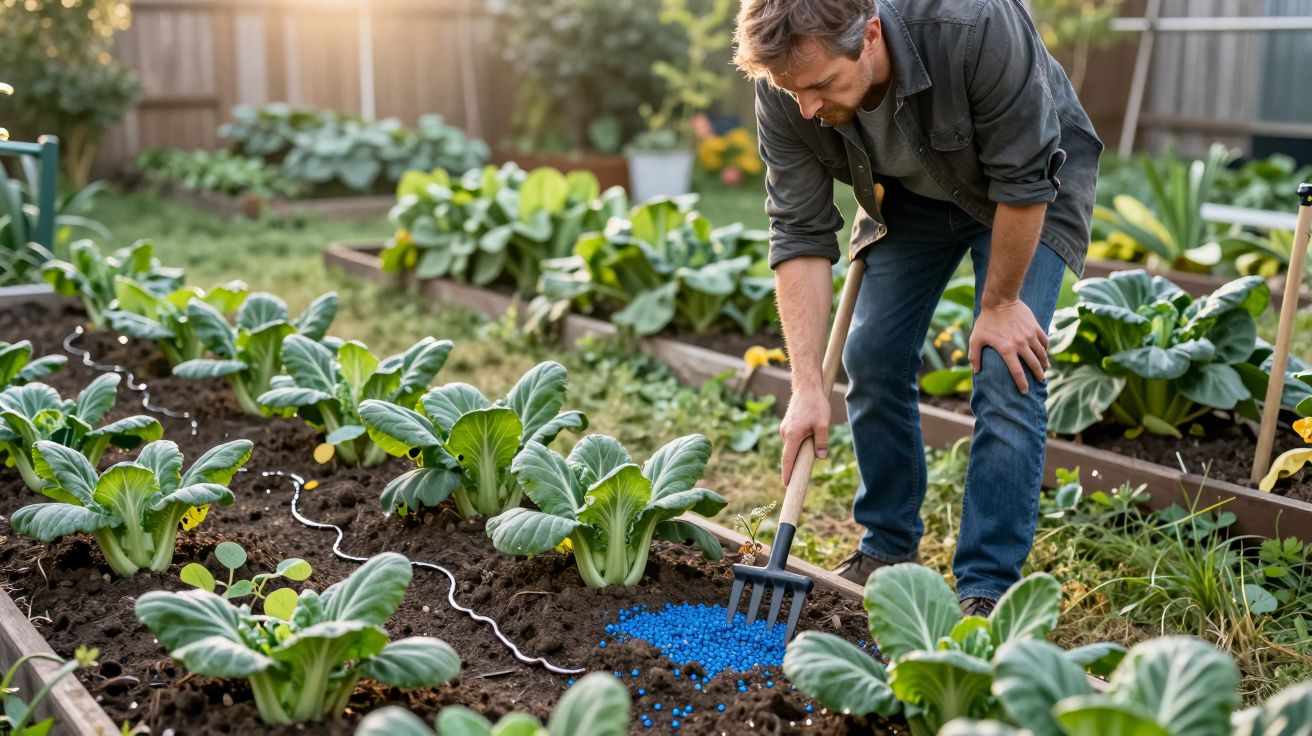
A wet lawn, silvery trails and blue pellets scattered like confetti.
Across the UK, growers are reporting the same odd scene: slug pellets sitting untouched while one particular crop is chewed to lace. The slugs are clearly active. They are just not going where the pellets are supposed to lure them.
Instead, they are making a beeline for pak choi.
A soggy summer, a baffling pattern
In a normal year, ferric phosphate pellets quietly do their job in the background. You sprinkle a light dusting, the bait disappears overnight, and damage eases off. This season, in many gardens and allotments, the script has flipped.
Growers walk out in the morning to find:
- blue or brown pellets still visible on the soil,
- classic rasping damage on leaves,
- and a suspicious cluster of shredded pak choi in an otherwise healthy bed.
“They have marched straight past the pellets, over the sawdust ring and into the pak choi,” one exasperated plot‑holder in Sheffield wrote on a local gardening forum. “It’s like a buffet sign only they can read.”
The pattern is not yet a formal scientific finding. It is, however, being spotted often enough in community gardens, polytunnels and back gardens that people have started treating pak choi as an accidental “slug magnet”.
The vegetable slugs choose over pellets
Pak choi – also spelled bok choy – is a fast‑growing Asian brassica with tender stems and mild, juicy leaves. To humans, it is a versatile stir‑fry staple. To slugs, it may be an all‑you‑can‑eat salad bar.
Across reports, one detail repeats: where lettuces, beetroot seedlings and even young cabbages show moderate nibbling, pak choi plants are often reduced to bare midribs within a single damp night.
Slugs are not just eating pak choi when they stumble across it – they seem to be actively seeking it out, even when bait is available nearby.
Other leafy brassicas, such as tatsoi and some mustards, do get hit. Yet the most consistently devastated plant in many accounts is pak choi, particularly:
- very young seedlings,
- compact “baby” varieties,
- and plants kept under cover in consistently moist soil.
What gardeners are actually seeing at night
Those who have gone out with a torch to check have noticed several recurring behaviours:
- Slugs travelling in clear lines from damp hideouts to the pak choi bed.
- Trails crossing directly over, or within millimetres of, slug pellets without visible feeding on the bait.
- Clusters of multiple slugs feeding on a single pak choi plant while neighbouring crops show little to no activity.
A few have even tried small “choice tests” of their own: one pak choi seedling on a plate, one lettuce on another, with pellets placed in between. In many of these informal experiments, pak choi still takes the bulk of the damage.
Why pak choi beats blue pellets
Slug pellets, especially the ferric phosphate types now widely used in the UK since metaldehyde was phased out, work as a bait plus toxicant. Slugs are meant to eat them because they smell and taste like food, then retreat underground and die.
For that system to work, one thing has to be true: the pellets need to be at least as attractive as what else is on offer.
With pak choi, that assumption appears to be breaking down.
Several factors may be tipping the balance:
- Texture: pak choi leaves and stems stay crisp and thin‑skinned, even as they mature. Slugs favour soft tissues that are easy to rasp.
- Water content: like lettuces, pak choi holds a lot of moisture, helping slugs rehydrate while feeding.
- Mild flavour: compared with strongly flavoured kales or rocket, pak choi is relatively gentle, which may make it easier for slugs to process.
- Chemical cues: plants release scent compounds when damaged or wet. Those from pak choi might carry further on damp air than we realise.
None of this means pellets no longer work at all. In areas without highly attractive fresh growth, they can still reduce slug populations. The issue arises when a bed offers something so desirable that bait simply loses the competition.
Turning a weakness into a trap
Once you accept that pak choi is a slug favourite, a different idea emerges: use it on purpose as a trap crop.
Instead of scattering pellets throughout a mixed bed and hoping for the best, some growers are now:
- sowing a dense strip of pak choi at the edge of the plot,
- keeping that strip consistently moist and lush,
- and then concentrating their slug control efforts right there.
“I gave up trying to protect every single plant,” says an urban gardener in Bristol. “Now I sacrifice a ‘slug row’ of pak choi at the front and focus pellets, beer traps and night‑time picking in that one line.”
The results, for many, have been quietly impressive. Damage on lettuces, beans and dahlias has fallen, even though the total amount of bait used has not increased. What changed was where the bait – and the slugs – were concentrated.
How to set up a pak choi “slug bar”
If you want to try turning this preference to your advantage, a few simple tweaks help:
- Choose the right spot: sow or plant pak choi along the dampest, shadiest edge of your beds, close to walls, compost heaps or hedges where slugs naturally hide.
- Sow thickly: a dense, leafy patch is more inviting than a few isolated plants. Treat it as sacrificial from the start.
- Keep it watered: consistent moisture keeps the plants tender and the slugs interested, particularly in dry spells when other foliage toughens.
- Concentrate controls: place pellets, beer traps or upturned grapefruit halves only within and around this strip. Check them regularly.
- Hand‑pick when it is worth it: on very wet evenings, a quick 10‑minute round with a torch in that one area can remove scores of slugs.
By drawing slugs into a predictable zone, you reduce the sense that they are attacking from all sides. It also makes non‑chemical methods more practical, because you know where to focus your time.
If you would rather keep your pak choi
Not everyone wants to sacrifice their stir‑fry supplies. If you are determined to harvest rather than donate pak choi to the local mollusc population, you will need a layered defence.
Consider combining:
- Physical barriers: copper tape around pots, copper rings around individual plants, or gritty collars made from crushed eggshells or horticultural sand. These do not stop every slug, but they slow and deflect.
- Elevation: growing pak choi in tall containers, on benches or tables, reduces access for slugs travelling along the soil surface.
- Timing: sow in modules under cover and plant out when the seedlings are sturdy, rather than leaving tiny, paper‑thin leaves exposed for weeks.
- Companion planting: surround pak choi with less favoured plants such as strongly scented herbs (rosemary, sage, thyme) and allow some distance to your most slug‑riddled crops.
Pellets, if you choose to use ferric phosphate types, should sit just outside these barriers rather than directly against stems. That way, any slug that does cross the line is likely to meet bait before fresh foliage.
Rethinking slug control in British gardens
The pak choi puzzle highlights an awkward truth many gardeners already sense: slugs are not mindless eating machines. They are choosy, they learn routes, and they adapt quickly to the landscape we give them.
When one crop becomes a guaranteed feast, behaviour follows – even if we scatter pellets like roadblocks along the way.
For UK growers facing milder winters and wetter springs, that means control will rely less on single magic bullets and more on thoughtful design:
- accepting that some plants are irresistible,
- using those as decoys or trap crops where possible,
- and protecting priority crops with a mix of barriers, predators and, if desired, carefully targeted baits.
In that wider shift, pak choi has accidentally become both a warning and a tool. It shows what happens when a vegetable is more tempting than the pellets we trust to protect it. Used deliberately, it can also herd those same glistening raiders into a place where we finally have the upper hand.
FAQ:
- Does this mean slug pellets no longer work at all? No. Ferric phosphate pellets can still reduce slug numbers, especially when spread before seedlings emerge or where there is little other fresh growth. The problem arises when very attractive plants, such as pak choi, offer a better meal than the bait.
- Is pak choi the only vegetable slugs prefer to pellets? Probably not. Anecdotally, very young lettuces, marigolds and some dahlias can also pull slugs away from pellets. Pak choi stands out because it is so consistently shredded in many different gardens.
- Can I rely on pak choi trap crops instead of pellets? You can use pak choi to concentrate slug activity, which makes hand‑picking or beer traps more effective. Whether you still need pellets depends on your slug pressure, garden layout and tolerance for some damage.
- Are slug pellets safe for pets and wildlife? Metaldehyde pellets, once common in the UK, are now banned for outdoor use due to risks to wildlife and pets. Ferric phosphate pellets are generally considered safer when used as directed, but they should still be applied sparingly and kept away from ponds and bird feeding areas.
- Will this behaviour be the same every year? Not necessarily. Slug behaviour shifts with weather, alternative food sources and local conditions. Pak choi is likely to remain attractive, but the degree to which it out‑competes pellets can vary from season to season.





Comments (0)
No comments yet. Be the first to comment!
Leave a Comment