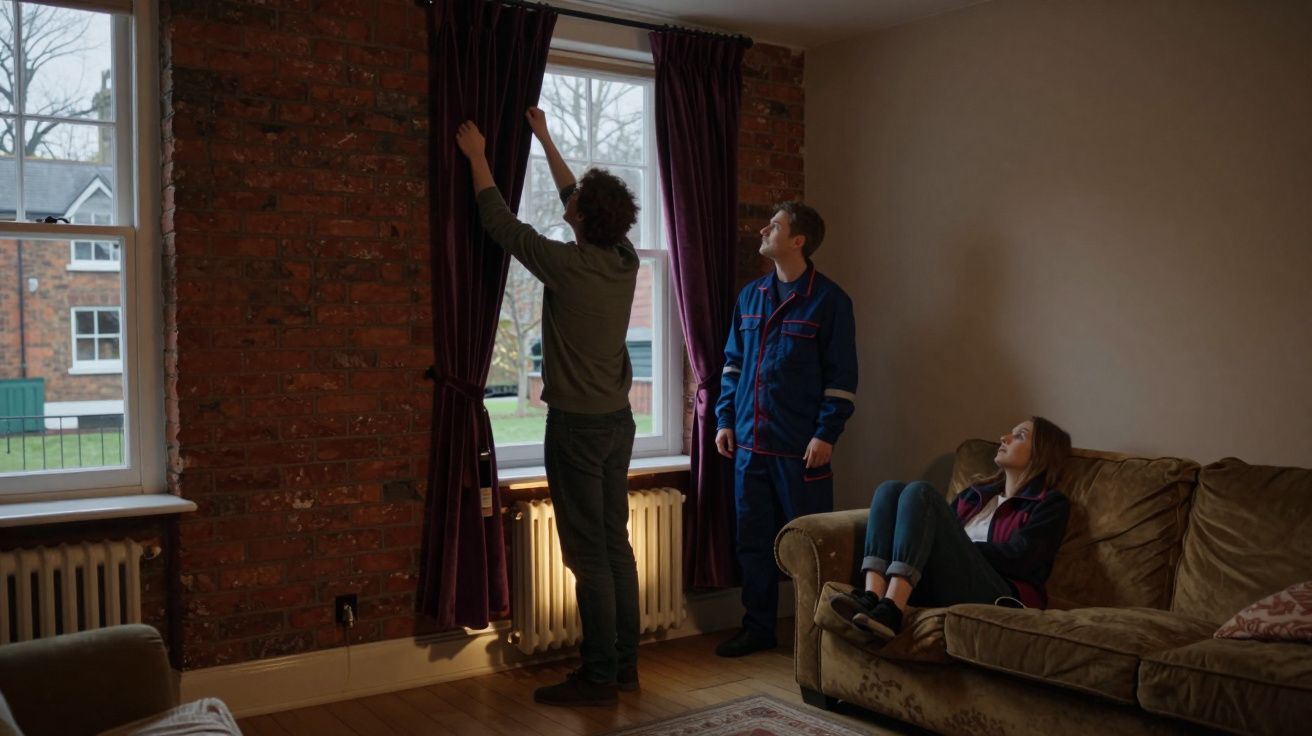
At 4:37 p.m. on a damp January afternoon in Leeds, the streetlights blinked on outside a red‑brick terrace and the radiators finally felt hot to the touch. Yet the living room still had that familiar chill around the ankles, the kind that makes you tuck your feet under you on the sofa and nudge the thermostat up a notch.
A heating engineer friend glanced over, clocked the long velvet curtains spilling over the radiator and pooling on the sill, and raised an eyebrow. He didn’t touch the boiler, the valves or the room stat. He just moved the curtain so it sat on the window ledge instead of draping over the radiator, and slid it a few centimetres wider across the wall.
Twenty minutes later, the room felt genuinely warmer - same boiler, same settings, same outside temperature.
The trick wasn’t new pipework. It was the way the fabric met the heat.
The quiet curtain mistake wasting heat in old terraces
Most Victorian and Edwardian terraces were built with radiators under the windows, especially in front rooms with big bays. It made sense when coal fires and heavy drapes were the norm, but with central heating it sets up a common problem: the radiator heats the back of the curtain more than the air in the room.
Long, full curtains that hang over the radiator create a warm pocket against the cold glass. The hot air rises behind the fabric, hits the window, cools quickly and drops back down as a draught. You get a perfect little “chimney” sending money out through the glass while the rest of the room stays stubbornly cool.
“You’re not paying to heat the curtains,” as one Sheffield heating engineer put it. “You want the radiator talking to the room, not the window.”
The fix many engineers recommend is disarmingly simple: make sure your curtains stop at, or just below, the sill instead of covering the radiator, and let them overlap the wall by a few centimetres on each side. That one tweak changes where the warm air goes.
Why old terraces feel cold at knee height
Terraced houses bleed heat in familiar places: single or early double‑glazed windows, uninsulated external walls, chimney breasts, and timber floors with gaps that sip cold air from below. The result is often the same story: it feels stuffy at head height, but your shins are freezing.
Curtains can help with two of the biggest culprits:
- Cold glass and frames that radiate a chill into the room.
- Downdraughts – cold air sliding off the window, flowing down like a waterfall and spreading across the floor.
Done badly, curtains make both worse. They trap the radiator’s warmth away from the room and funnel it straight at the window. Done well, they act like a padded jacket over the cold surface, while leaving a clear route for hot air to wash into the room.
The goal is not just “thick curtains”. It’s thick curtains, in the right place, with a deliberate gap for heat to escape.
How heating engineers want your curtains set up
You don’t need bespoke carpentry or new glazing to use this. Most terraces can get a noticeable comfort boost with a few low‑tech nudges.
1. Keep curtains off the radiator
If your curtains hang over the radiator, you’ve built a fabric radiator cover without meaning to.
- Aim for the bottom of the curtain to finish at the window sill or just below it, not draped over the metal.
- If replacing curtains isn’t an option, use iron‑on hemming tape to shorten them by 10–20 cm. It takes one ironing session and no sewing.
- In deep bays, consider a separate short curtain or blind inside the bay, and let the outer, decorative curtains stay open.
This simple change lets hot air rise off the radiator, hit the front of the curtain at sill height and spill into the room, rather than being trapped behind fabric.
2. Close them like a lid, not like a scarf
Engineers often talk about curtains as if they’re a lid on a saucepan: they only work when they’re properly on.
- Close curtains as soon as it gets dark, not “whenever you remember later”. Once the sun has gone, the window is almost always a net heat loser.
- Make sure they overlap the wall by 10–20 cm on each side of the window, not stopping exactly at the frame edge. That overlap cuts edge draughts.
- If there’s a noticeable gap at the top, a simple wooden pelmet or even a strip of card covered in fabric can block the flow of warm air escaping up behind the curtain and into the window recess.
Think of it as sealing the cold surface in a soft box while still letting the radiator breathe into the room.
3. Use a shelf to throw heat into the room
For radiators directly under windows, many heating engineers recommend a shallow shelf.
- Fit a solid shelf 5–10 cm above the radiator, running just past its ends.
- Keep it narrower than the sill so it doesn’t block the curtain’s drop to the sill.
- Avoid cluttering it with plants and photos; it’s there to deflect warm air out into the room.
The shelf acts like a small canopy, catching the rising warm air and pushing it away from the glass. It also helps if you absolutely must keep slightly longer curtains: the fabric rests on the shelf instead of swallowing the radiator.
4. Tuck, clip or tie back while the heating is on
If shortening curtains isn’t realistic right now, small daily habits matter.
- Use simple curtain tie‑backs or clips to hold fabric clear of the radiator while the heating is running.
- Once the room is warm and the heating cycles off, you can untie them to cover more of the window overnight.
- In boxy terraces with narrow rooms, even hooking the curtain edge behind a radiator pipe can redirect heat into the room instead of up the window.
It’s not as ideal as a proper sill‑length curtain, but it’s far better than a heavy drape sealing the heat in behind it.
The savings: more comfort, lower dial
You won’t see a new line on your energy bill labelled “curtain tweak”. What you may notice is that you’re comfortable at a slightly lower thermostat setting, or that the room reaches its target temperature faster and stays there longer between boiler cycles.
Dropping the thermostat by just 1°C can cut heating costs by around 8–10% over a season, according to UK energy advisers.
If a small fabric adjustment lets you nudge the dial from 21°C down to 20°C without feeling short‑changed, that’s real money over a winter in a draughty terrace.
Here’s a quick map of the most effective tweaks:
| Tweak | What you change | Main benefit |
|---|---|---|
| Lift curtain off radiator | Hem or tie curtains to sill height | Hot air reaches the room, not just the window |
| Close at dusk with overlap | Draw curtains fully across with side overlap | Reduces downdraughts and cold radiation |
| Add a radiator shelf | Shallow board above radiator | Throws heat into room, protects from cold glass |
None of these require planning permission, scaffolding or a new boiler. They just make better use of the heat you already pay for.
Common traps to avoid
A few well‑meant habits quietly undo all this:
- Furniture jammed in front of the radiator – the classic sofa‑against‑the‑window layout blocks the convection loop. Leave at least 5–10 cm of space behind furniture.
- Net curtains crammed against the pane – fine, as long as the thicker curtain still seals in front and doesn’t cover the radiator. If nets are heavy, treat them like any other curtain when it comes to length.
- Blocking trickle vents completely – sealing every gap can create condensation and mould in older terraces. Keep purpose‑made vents usable, and fight draughts where they’re random, not designed.
- Curtains in front of air‑brick vents – those grills low down in some walls help avoid damp. Don’t smother them with fabric.
The aim is a warm room and a controlled, gentle supply of fresh air, not a plastic‑wrapped house that grows mould over winter.
Small fabric tweaks, large comfort gains
Old terraces aren’t doomed to be chilly. Many simply waste the heat they already have through tiny, daily inefficiencies - where the sofa sits, how wide the curtains close, whether fabric is warming its own little microclimate instead of the people in the room.
Rehanging or hemming a pair of curtains won’t give you the instant thrill of a new boiler, but it often delivers something quietly more useful: evenings where you don’t automatically reach for a second jumper, and mornings where the living room doesn’t feel like a corridor.
You may still want better glazing or insulation one day. Until then, a tape measure, an iron and a differently placed curtain pole can help your heating system feel like it finally understands the house it’s in.
FAQ:
- Does this only work with thick, lined curtains? No, even lighter curtains help if they’re the right length and fully closed at dusk. That said, adding a cheap thermal lining can significantly improve how much cold they block from single‑glazed or older double‑glazed windows.
- What if I have blinds instead of curtains? Close blinds fully at dusk and, if possible, fit them close to the frame to cut draughts. In very cold rooms, combining blinds with short curtains to the sill gives a better seal without covering the radiator.
- My terrace has tall windows almost down to the floor. What then? In that case, a radiator shelf plus reliable tie‑backs while the heating is on become more important. If you can, fit a separate blind inside the recess to handle most of the insulation, and keep curtains decorative and tied back during heating hours.
- Is it worth buying “thermal” curtains just for this? If your existing curtains are very thin and the room is hard to heat, a reasonably priced thermal or blackout curtain can make a clear difference in an old terrace. But fixing the length and positioning usually brings a win even before you spend on new fabric.


Comments (0)
No comments yet. Be the first to comment!
Leave a Comment