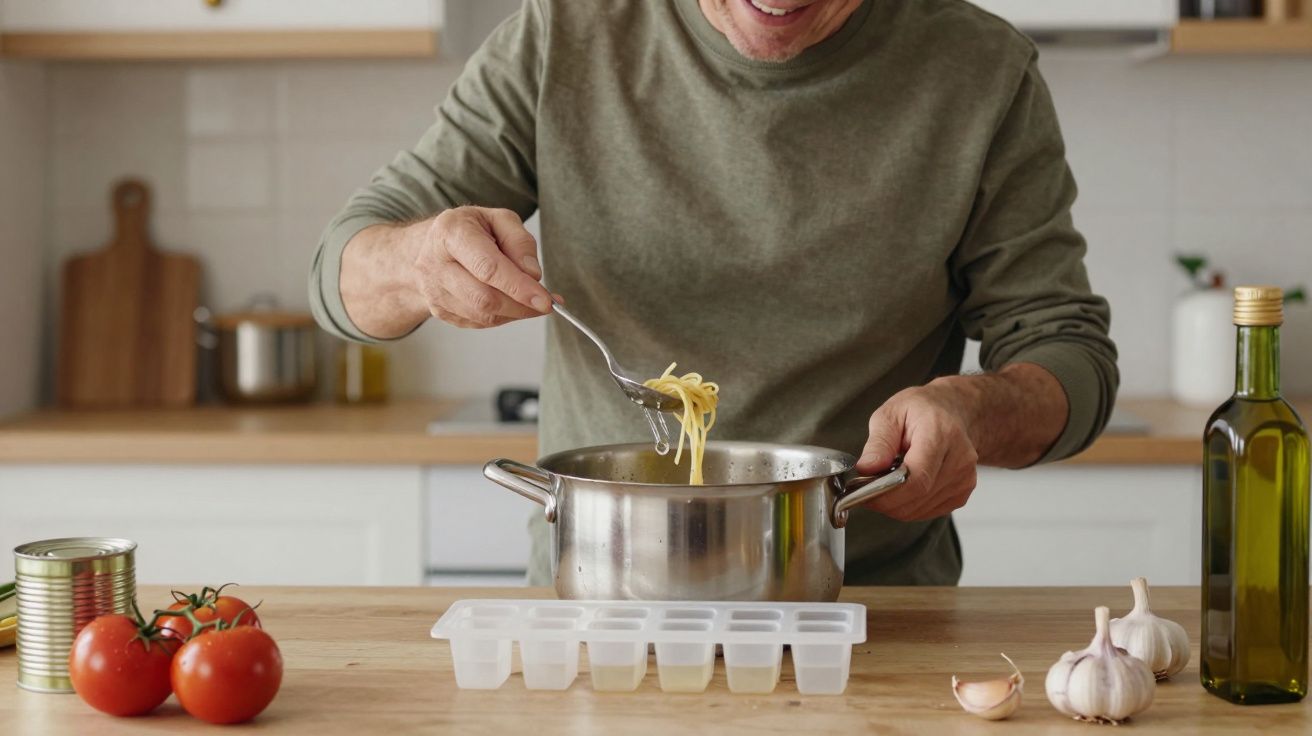
The nights draw in, the hob goes on and suddenly a bowl of pasta feels less like a quick dinner and more like central heating from the inside. You grate the cheese, open a tin of tomatoes, swirl some olive oil – and then, almost without thinking, you tip the cloudy cooking water straight down the sink.
That is the moment Italian grandmothers would like a quiet word.
Because the thing you are throwing away is not waste: it is an ingredient. And once you start freezing it in an ice cube tray, it becomes the simplest upgrade for almost every pasta dish you cook on a weeknight.
I tried it out of sheer curiosity after hearing an Italian nonna describe pasta water as “our stock, our butter, our secret”. Now there is a tray of savoury, salty cubes living in my freezer – and they rescue sauces, stretch leftovers and make humble suppers taste restaurant‑level with almost no effort.
Why this trick works (and why nonnas already knew)
Pasta water looks unpromising: cloudy, a bit viscous, smelling quietly of wheat and salt. What matters is the starch. As pasta cooks, it releases starch into the water. That starch turns ordinary water into a natural thickener and emulsifier.
Italian home cooks have always used it instinctively. They splash it into the pan with tomatoes and garlic, swirl it into cacio e pepe, keep a ladle to hand when finishing a pan of seafood linguine. It is what makes sauces cling to the pasta instead of sliding sadly to the bottom of the bowl.
Starchy pasta water is “liquid gold”: it binds, glosses and seasons sauces without cream, flour or extra butter.
Freezing that “liquid gold” simply makes it available whenever you need it – even if you are not actually boiling pasta at that moment, or you forgot to reserve a ladleful before draining the pot. One cube can rescue a split sauce, loosen a leftovers lunch or turn tinned tomatoes into something that tastes like a slow Sunday ragù.
The one ingredient to start freezing: pasta water
What you need
You do not need special equipment, only:
- The salted water left after boiling pasta
- A clean ice cube tray (silicone works well)
- A jug or ladle
- Labels or a marker pen
Aim to work with water from pasta cooked “al dente”, not overdone. The more the pasta has released starch without collapsing, the more effective your cubes will be.
Step-by-step: pasta-water cubes
- Cook pasta as usual in well‑salted water. The water should taste pleasantly seasoned, not like the North Sea.
- Just before draining, scoop out 250–500 ml of the cloudy water with a jug.
- Let it cool for 5–10 minutes so it does not warp the tray.
- Fill the ice cube tray almost to the top of each cavity.
- Freeze until solid, ideally overnight.
- Pop out the cubes and store them in a freezer bag or box, labelled “pasta water” with the date.
Three ingredients, five minutes’ work, and you have a stash of flavour and texture on call for the next month.
For the most concentrated result, some cooks simmer the pasta water for 5–10 minutes before cooling and freezing, so it reduces slightly and the starch and salt are more intense. That is optional, but one reduced cube can work like half a ladleful of fresh water.
How long they keep
Pasta-water cubes keep well for around 4–6 weeks in an airtight container. After that they are still safe, but the flavour dulls and ice crystals can build up. Make them regularly in small batches rather than filling half the freezer once a year.
How these cubes transform your pasta
The beauty of pasta-water cubes is not drama; it is small, cumulative improvements. A sauce that looked fine suddenly looks glossy. Cheese that wanted to clump becomes silky. Leftovers go from claggy to reassuringly saucy.
Everyday ways to use pasta-water cubes
Silkier tomato sauces
Add 1–2 cubes to a basic tomato and garlic sauce as it simmers. The starch helps the olive oil and tomato juices emulsify, giving that faint sheen you see in trattorie.Rescuing dry pesto pasta
If your pesto pasta looks chalky or seized, toss in 1 cube over low heat and stir. The cube loosens the sauce without drowning it in extra oil.Better cheese sauces (without a roux)
For cacio e pepe, four-cheese sauce or a simple Parmesan and butter dressing, melt 1–2 cubes into the pan then whisk in the cheese off the heat. The starch protects the cheese from splitting.One-pan dinners with veg and pancetta
When you sauté veg, garlic and bacon, a cube or two in the pan creates an instant, lightly thickened “fond” that clings to the pasta you toss in at the end.Stretching leftovers
Cold pasta with a clumped‑up sauce? Warm gently with a cube and a splash of olive oil. The starch re-activates the original emulsion, so yesterday’s lunch tastes freshly cooked.
Think of each cube as a tiny insurance policy: against split carbonara, grainy cheese, dry penne and sauce left behind on the plate.
A 10-minute silky tomato pasta using one cube
For two bowls of comforting pasta on a busy evening:
Ingredients
- 180–200 g short pasta
- 1 small onion or a shallot, finely chopped
- 1 clove garlic, sliced
- 1 tin (400 g) chopped tomatoes
- 1 pasta-water cube
- 2 tbsp olive oil
- 30–40 g finely grated Parmesan or Pecorino
- Salt, black pepper, pinch of chilli flakes (optional)
Method
- Cook the pasta in salted water. While it boils, warm the oil gently in a wide pan, soften the onion with a pinch of salt, then add garlic and chilli.
- Tip in the tomatoes, simmer 5 minutes, then drop in the pasta-water cube and swirl until melted. The sauce should look slightly glossy and thicker.
- Drain the pasta, keeping a small mug of fresh cooking water aside just in case. Toss pasta straight into the sauce, off the heat, with the cheese. Stir until everything is coated.
- Adjust with a spoonful of fresh pasta water if it seems tight, and serve with extra cheese and black pepper.
You have just used the same simple emulsion trick that Italian nonnas apply as second nature, without needing cream or butter by the ladleful.
When (and how) to use them – and when not to
These cubes are not a universal cure‑all, and a little care keeps them firmly in the “upgrade” category.
Good matches
- Tomato‑based sauces
- Oil‑based sauces (aglio e olio, pesto, seafood)
- Cheese‑based sauces that risk splitting
- Quick pan sauces for gnocchi or filled pasta
Use with caution
- Very delicate sauces: With fresh seafood or lemon‑only dressings, use half a cube so the starch and salt do not dominate.
- Already salty ingredients: Anchovies, bottarga, guanciale and hard cheeses all bring salt. Taste before adding a whole cube.
- Gluten‑free diets: Pasta water from wheat pasta contains gluten. For coeliacs, use water from gluten‑free pasta instead, or skip this trick.
| Situation | How many cubes | Effect |
|---|---|---|
| Dry pesto pasta | 1 cube | Loosens and glosses |
| Tomato sauce for 2 | 1–2 cubes | Thicker, more clinging |
| Cheese sauce (no flour) | 1 cube | Helps cheese melt smoothly |
| Reheating leftovers | 1 cube | Restores creaminess |
If you cook for someone watching their sodium intake, you can deliberately salt the cooking water a little less when you know you will be freezing it later, and adjust seasoning in the pan.
Small variations nonnas might forgive
Purists will say the only thing to freeze is straight pasta water. Once you have a tray or two under your belt, you can bend the rules slightly.
- Herb‑pasta cubes: Drop a basil stalk or a few parsley leaves into each cavity before freezing. The flavour is faint but pleasant in tomato sauces.
- Garlic‑pasta cubes: Swirl a lightly crushed garlic clove in the hot pasta water for a minute before cooling and freezing, then fish it out. The cubes carry a gentle garlic note.
- Double‑starch cubes: When cooking gnocchi, mix their cooking water 50:50 with regular pasta water before freezing. You get an ultra‑starchy cube ideal for very glossy sauces.
None of this replaces tasting as you go, or the old‑fashioned trick of finishing pasta in its sauce instead of serving them separately. The cubes simply make it easier to cook like someone’s Italian grandmother, even when you have only ten minutes and a half‑empty cupboard.
FAQ:
- Can I use unsalted pasta water for the cubes? You can, but you will lose much of the flavour advantage. Better to salt the cooking water lightly and then be more restrained with extra salt in the pan.
- Do these cubes work for non‑pasta dishes? Yes. They add light body to soups, broths and stews, and can deglaze a pan after searing chicken or veg, much like a mild stock.
- What if my sauce still looks split after adding a cube? Take the pan off the heat and stir vigorously, adding a little grated cheese or a drizzle of olive oil. Too much heat is the enemy of emulsions; the starch needs gentle persuasion, not a hard boil.




Comments (0)
No comments yet. Be the first to comment!
Leave a Comment