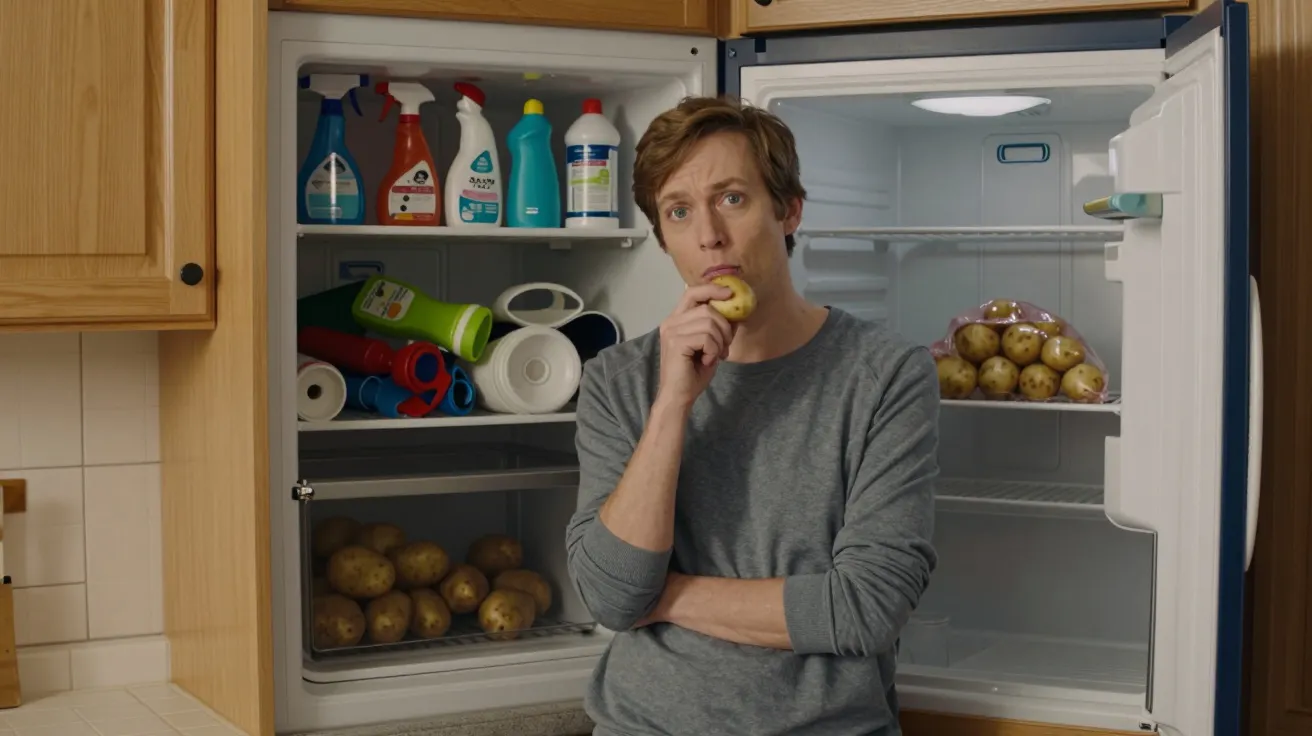
The evening I finally broke up with my under-sink potato stash, I’d just come back from the supermarket with a fresh 2.5kg bag.
I bent down to squeeze them into the usual spot by the cleaning sprays and spare sponges… and froze.
Behind the new bag was last week’s one, forgotten, every potato covered in pale, rubbery shoots like something from a low-budget sci‑fi film. A couple had started to collapse in on themselves, soft and faintly sweet-smelling. I’d bought them less than ten days ago.
I pulled everything out: bin bags, glass cleaner, rogue tea towels. At the back, by the warm pipework, was another straggler potato, long white roots curling around a bottle of washing-up liquid. It hit me then that this wasn’t bad luck. This cupboard was doing something to them.
The next week, almost on a whim, I moved the new bag to a cooler cupboard on the opposite wall, away from the sink and oven. Same supermarket, same potatoes, same house. Three weeks later, they were still firm, barely a sprout in sight. That was the day I stopped storing my potatoes under the sink for good.
Because that quiet little cupboard? It’s basically a potato ageing chamber.
Why the under-sink cupboard makes potatoes sprout twice as fast
On paper, the space under the sink looks perfect. It’s dark, out of the way, near the worktop where you actually peel and chop things. That’s exactly why generations have slipped their potatoes in there without thinking.
The problem is the microclimate. Every time you run the hot tap, the pipes and surrounding air warm up. A tiny leak or even normal condensation adds moisture. Cleaning products and dishwashers nearby bump the temperature up again. You end up with a warm, slightly damp, poorly ventilated box.
To a potato, that doesn’t feel like storage. It feels like spring.
Potatoes are living things, not inert lumps of starch. Inside that skin, they’re constantly “deciding” whether to stay dormant or start growing. Warmth and moisture are their main green light. Add the occasional flare of light when you open the doors and you’ve basically told them, “Wake up, it’s time to grow new plants.”
So they oblige. Those tentative little nubs at the supermarket turn into long, pale sprouts almost overnight. The potato burns through its stored energy to feed that growth, which is why your once-firm Maris Pipers end up wrinkled, sweet and useless for a decent roast.
What potatoes secretly want (and what they really hate)
If potatoes could write a room specification, it would look surprisingly simple:
- Cool, but not freezing: roughly 6–10°C.
- Dark, or very low light.
- Dry-ish air with a bit of movement.
- No strong companions giving off gases (like onions or apples).
In those conditions, they stay in “sleep mode” longer. The starches stay put, the skins stay firm, and sprouting slows right down. Old-fashioned larders and stone cellars nailed this by accident.
Normal British homes… not so much.
Here’s what pushes them into overdrive:
- Heat: Anything much above room temperature speeds up sprouting. Under-sink cupboards next to hot pipes, beside dishwashers, or above radiators are classic culprits.
- Damp: Extra moisture in the air tells the potato there’s water available for new roots. Think leaky pipes, steamy kitchens, or storing them in sealed plastic bags where condensation forms.
- Light: Even a bit of stray light each day can signal “growing time”. That’s why potatoes left on open shelving go green and bitter.
- Ethylene gas: Onions, apples and some other fruits release gases that nudge neighbouring produce to ripen and age faster. Potatoes stored right next to them don’t stand a chance.
Soyons honnêtes: nobody is measuring cupboard temperatures with a thermometer. But you can feel it. Open your under-sink doors after you’ve cooked and washed up; that whoosh of warm, slightly clammy air? That’s your answer.
Where to store them instead (realistic places in a normal house)
You don’t need a Victorian pantry to keep potatoes happy. You just need a cooler, calmer spot than the sink cupboard.
Good options in a typical UK home:
- A low cupboard against an outside wall, away from the oven and hob. These stay noticeably cooler, especially in winter.
- A utility room or porch cupboard that doesn’t get direct sun and isn’t above a dryer or boiler.
- The bottom of a pantry or tall cabinet, ideally in a paper bag, hessian sack or open basket.
Spots that seem logical but quietly ruin them:
- Under the sink: Warm, damp, minimal airflow. Sprouting central.
- Next to or above the oven or dishwasher: Those appliances throw out more heat than you think.
- The fridge: Too cold. The starches convert to sugars, which affects flavour and can lead to excess browning and acrylamide when you roast or fry them.
- On the counter in a clear bowl: Looks pretty for a few days, then you’ll get green patches and rubbery sprouts.
If you really have no cool cupboard, go for “least bad” rather than “perfect”. A shaded corner away from appliances, in a breathable bag or box, is still far better than the piping-hot area under the sink.
A simple storage routine that actually works
You don’t need a complex system. Just a few tweaks that fit into how you already cook.
Buy the right kind of bag.
Loose potatoes you bag yourself, or ones sold in paper or mesh, generally breathe better than sealed plastic. If you do buy plastic, pierce a few extra holes when you get home.Get them out of the supermarket plastic.
Tip them into a paper bag, cloth sack, or a ventilated basket. Plastic traps moisture; moisture wakes them up.Pick a single, dedicated spot.
Choose your coolest reasonable cupboard and declare it the potato home. The less you scatter them around, the less likely you are to forget a stray spud turning into a biology experiment.Keep them away from onions and fruit.
Separate shelf, separate bag, or at least a decent gap. That ethylene-rich “neighbours’ meeting” is not in your favour.Don’t wash before storing.
Brush off obvious soil, but keep them dry. Wash only just before cooking; clean, wet skins in storage are practically an invitation to rot.Do a quick weekly check.
Once a week, have a 30-second rummage. Use up any starting to sprout, remove any that have gone soft or smelly. À vrai dire, this saves you from the horror of discovering one liquified potato silently destroying the whole lot.
Over time, this becomes as automatic as putting the milk in the fridge. The only difference you’ll notice is fewer last-minute dashes to the shop because your spuds have gone swampy.
What this tiny cupboard swap really changes
On the surface, we’re talking about potatoes. In practice, it’s about waste and small, daily frustrations.
A bag of potatoes that used to last you a week can suddenly stretch to three, sometimes four, if you cook through them regularly. That’s fewer sprouts, fewer slimy casualties at the bottom of the bag, and fewer “I was going to make mash but now I can’t” evenings. Over a year, it’s quite a bit of money and food saved.
There’s also a strange satisfaction in cracking these quiet, domestic puzzles. You realise the problem was never that potatoes “go off quickly”, or that you’re disorganised. It was just one sneaky cupboard with the climate of a mild greenhouse.
Once you move them, the under-sink space opens up for what it’s actually good at: ugly bottles, cleaning cloths, the odd rogue carrier bag. Your potatoes, meanwhile, are off living a calmer, cooler life somewhere else - and your Sunday roast tastes better for it.
Quick reference: where to keep your potatoes
| Place | Conditions | Effect on potatoes |
|---|---|---|
| Under-sink cupboard | Warm, damp, low airflow | Fast sprouting, quicker rot |
| Cool, low interior cupboard | Cooler, darker, drier | Slower sprouting, longer life |
| Fridge | Very cold, dark, dry | Texture and flavour change |
FAQ:
- Is it safe to eat sprouted potatoes if I cut the sprouts off?
Small, fresh sprouts can be removed and the potato used if it’s still firm and not green. However, if the potato is very wrinkled, soft, or has green patches under the skin, it’s safer to bin it due to increased levels of solanine, which can be toxic in higher amounts.- Why are green potatoes a problem?
Green colouring means the potato has been exposed to light and is producing chlorophyll and more solanine. Chlorophyll itself is harmless, but solanine can cause nausea and other symptoms if eaten in quantity. If a potato is distinctly green, especially under the skin, don’t eat it.- Can I store potatoes and onions in the same cupboard if they’re in different containers?
Yes, as long as there’s some distance and airflow between them. Keeping each in its own bag or box and not piling them together reduces the effect of onion gases on potato sprouting.- What about those “potato keeper” pots and bags you can buy?
Many are fine, as long as they’re breathable and kept in a cool, dark place. A stylish ceramic pot on a sunny worktop will still give you green, sprouty potatoes; the location matters more than the container.- Do different potato varieties store differently?
They do. Floury maincrop potatoes (like Maris Piper or King Edward) generally keep longer than waxy “new” potatoes. Whatever the type, though, the under-sink cupboard will still shorten their life compared with a cooler, darker spot.

Comments (0)
No comments yet. Be the first to comment!
Leave a Comment