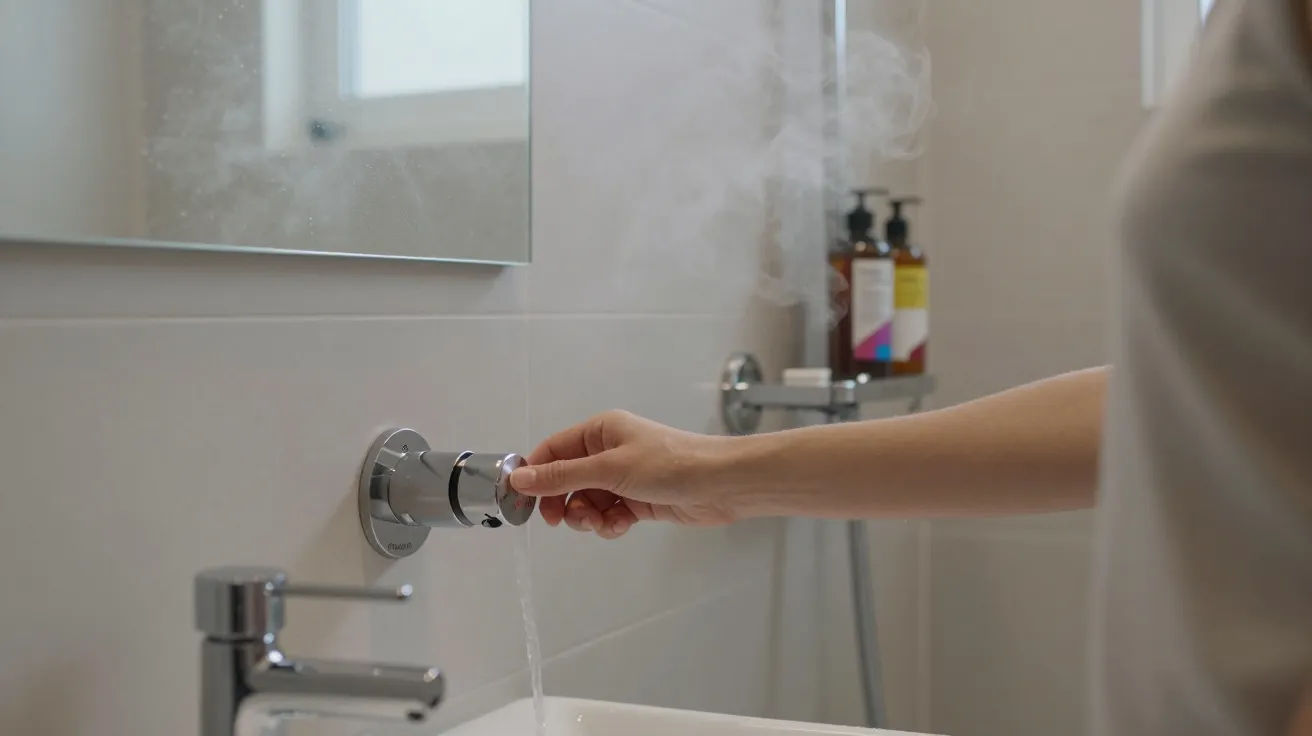
Steam fogs the mirror, the bathroom door is half open to stop the paint peeling, and the water is just this side of too hot because it’s January and you’re cold to the bone. You turn your face into the spray, rub it quickly with whatever’s nearest - shower gel, shampoo suds, a foaming cleanser that smells reassuringly “clean” - then step out pink, tight and weirdly squeaky.
Ten minutes later, your cheeks are burning, your nose is flaking and the moisturiser that used to work now feels like it’s doing nothing. You tell yourself it’s “just winter skin”. You blame the heating, the wind, maybe age. You don’t blame the 90 seconds you spent under the shower head.
Dermatologists do. They see the pattern so often they can almost recite your routine before you describe it: water too hot, cleanser too harsh, wrong order, no time for a proper moisturiser while skin is still damp. The fix isn’t a 10‑step routine or an expensive serum. It’s a different sequence, at a calmer temperature, that quietly protects your skin barrier instead of ambushing it.
The trick is simple. The logic is better.
When your shower turns on your face
There’s a human thing happening here. A hot shower feels like armour against grim weather and grey mornings. You stand there until your shoulders drop and your fingers prune, and it feels like self‑care. Your face is just… there, so it gets the same treatment as your shins and your scalp.
Skin doesn’t work like that. Your facial skin is thinner, with a more finely balanced barrier of oils and lipids that keep water in and irritants out. Winter cranks up central heating, lowers humidity and adds windburn into the mix, so that barrier is already under pressure before you even turn the tap.
Now add prolonged hot water, strong surfactants from shampoos and shower gels, and a loofah or cloth for good measure. You dissolve the very fats holding your skin together, swell and then dehydrate the outer layer, and leave nerve endings closer to the surface. The result is that familiar mix of tightness, stinginess and random dry patches that make make‑up sit badly and moisturiser pills on top instead of sinking in.
We’ve all had that moment in the mirror, prodding at a red patch and wondering why your “hydrating” routine seems to make things worse. The shower sequence is usually the bit nobody suspects.
Why order matters more than products
Dermatologists talk a lot about the “acid mantle” and the “barrier”. Translated, that’s the slightly acidic film and the brick‑and‑mortar structure of your outer skin layer. Healthy skin keeps water inside and trouble outside. Winter showers, done badly, punch small holes in that wall every morning.
Order matters because different products and temperatures either help the wall rebuild or keep knocking bricks out. Shampoo and foaming body washes are designed for tougher skin and oily scalp; they’re efficient at stripping. Face cleansers sit on a narrower pH range and often have gentler surfactants that are kinder to a compromised barrier.
If you wash your face first in hot water, then let shampoo, conditioner and body wash run over it, you’ve essentially cleansed three times. If you turn the heat up high and linger, you extend the window where your barrier is softened, swollen and vulnerable but not yet repaired. Swap the order, shorten the exposure, and seal things in quickly afterwards, and the same products suddenly behave better.
“Lukewarm, gentle, quick - in that order,” as one consultant dermatologist summed it up. “Most winter flares are timing problems disguised as skin problems.”
The dermatologist‑approved order (step by step)
Here’s the shower sequence dermatologists quietly teach patients who turn up with red, itchy, “mystery” winter faces. Think of it as choreography for your barrier.
Start with hair and body – face out of the spray
Turn the water on, let it warm to comfortable, not scalding - roughly where you could bathe a baby or a pet. Step in, but keep your face mostly away from the direct stream.
Shampoo, condition and wash your body first. That way, any harsher surfactants rinse off before your facial cleanse, not after it.Turn the temperature down a notch
Before you touch your face, nudge the tap cooler. Lukewarm water feels almost underwhelming after a hot blast, but your skin’s proteins and lipids prefer it.
Dermatologists often describe it as “no hotter than your hands can tolerate without turning pink”.Wet the face briefly, not for minutes
Tilt your head so the water runs over your face for about 5–10 seconds, or splash from your hands. Avoid having the high‑pressure stream hit your cheeks directly; that mechanical force plus heat is a quiet irritant.Cleanse once with a gentle, non‑stripping formula
Use a small amount of fragrance‑free, non‑foaming or softly foaming cleanser labelled for sensitive or dry skin. Gel‑to‑cream, milk or oil cleansers tend to behave best in winter.
Massage with your fingertips for 20–30 seconds - enough to lift sunscreen, sweat and city air, not enough to scrub off your barrier. No loofahs, no exfoliating mitts, no “micro‑bead” scrubs. Save acids and retinoids for after the shower, at the sink, where you control contact time.Rinse thoroughly but quickly
Rinse with the same lukewarm water, again avoiding the full force of the shower head. A few handfuls of water from your palms often does the job. Check hairline, jaw and sides of nose for leftover cleanser, which can cause irritation if it lingers.Get out; don’t linger thinking about your day
Once you’ve rinsed, turn the water off. That last “just standing there” minute feels nice but keeps leaching moisture from softened skin. Winter is not the season for daydreaming in the steam.
The 60‑second rule that saves winter skin
What you do in the minute after you step out is as important as the wash itself. Damp skin loses water fast into dry bathroom air, especially with radiators humming.
Pat - don’t rub - your face with a soft towel. Think gentle presses, leaving it slightly damp rather than bone‑dry. That thin film of water is your friend; it lets humectants like glycerin or hyaluronic acid pull hydration in instead of out.
Within 60 seconds:
- apply a hydrating layer (a mist, essence or simple serum with glycerin, hyaluronic acid, urea or panthenol), then
- seal it with a moisturiser that contains lipids your barrier recognises (ceramides, cholesterol, fatty acids, shea butter).
If your skin is very dry or eczema‑prone, dermatologists often suggest a “moisture sandwich”: hydrating serum, cream, then a whisper of an ointment or balm on the cheeks and around the nose. Morning only, add SPF as the final layer once your moisturiser has settled.
Let’s be honest: nobody actually does a perfect 10‑step routine every day. The realistic non‑negotiable is this: something moisturising on within a minute of leaving the shower, before you check your phone, before you tidy the tiles, before you do anything else.
What people get wrong (and what to do instead)
Most shower mistakes happen in a hurry or on autopilot. Dermatologists see the same offenders over and over.
Water too hot, for too long
Hot water feels good in the moment and terrible an hour later. Over time it worsens redness, rosacea and eczema flares. Swap to comfortably warm and cut shower time to 5–10 minutes.Using body wash or shampoo on the face
Those products are built to cut through oil and sebum on tougher skin and scalp. On your face, they strip. Keep a dedicated, gentle cleanser in the shower if you must wash there.Face first, then shampoo
This is the big “order” trap. Any conditioner and shampoo that runs down afterwards acts like a second, harsher cleanse. Always do hair and body before your face.Scrubbing until it squeaks
That squeaky‑clean feeling is your barrier waving a white flag. Swap flannels and exfoliating gloves for fingertips on the face. Limit physical scrubs and acid exfoliants to 1–2 evenings a week, at the sink, not under hot water.Skipping moisturiser because skin feels “oily in the shower”
Oiliness under running water is misleading. Stripped skin often overproduces oil later to compensate. A light, barrier‑supporting moisturiser after every wash usually reduces long‑term shine and breakouts.
Adjusting the order for different skin types
You don’t need a completely different routine for every skin label, but small tweaks help.
Dry or eczema‑prone skin
- Consider cleansing your face at the sink once a day, and just rinsing with lukewarm water in the shower on non‑make‑up days.
- Use cream or oil cleansers; avoid foaming gels.
- Within that 60‑second window, go in with a thick cream and, on sore patches, a layer of bland ointment your dermatologist approves.
- Consider cleansing your face at the sink once a day, and just rinsing with lukewarm water in the shower on non‑make‑up days.
Oily or acne‑prone skin
- Stick to the same order, but choose a gentle gel cleanser with salicylic acid no more than once daily.
- Keep showers short; hot water still inflames oil glands and can worsen post‑acne marks.
- Moisturiser should be non‑comedogenic and light, but still present. Hydrated skin handles active spot treatments better.
- Stick to the same order, but choose a gentle gel cleanser with salicylic acid no more than once daily.
Rosacea or very sensitive skin
- Make lukewarm water non‑negotiable; heat is a major trigger.
- Avoid fragrance, menthol, eucalyptus and “tingling” cleansers.
- Moisturise immediately with products labelled for sensitive or rosacea‑prone skin, and shield your face from direct spray entirely if possible.
- Make lukewarm water non‑negotiable; heat is a major trigger.
What you take back to your own bathroom
Beyond calmer cheeks and fewer flaky patches, there’s a small mindset shift on offer. You stop treating your face like an afterthought in the shower and start giving it its own set of rules. You’re not at the mercy of “winter skin”; you’re a few tweaks in water temperature, order and timing away from something softer and less dramatic.
The sequence is simple: hair and body first, cooler water, quick gentle cleanse, out, pat, moisturise within a minute. Once that loop is automatic, everything else - serums, actives, fancy masks - sits on a more stable base.
And if a friend texts you in February, moaning about tight, angry skin that “came out of nowhere”, you’ll know exactly what to send back: hair first, face last, lukewarm, moisturise fast.
| Key point | Detail | Why it helps in winter |
|---|---|---|
| Change the order | Hair and body first, face last, then out | Avoids accidental double‑cleansing and extra stripping |
| Cool things down | Lukewarm water, brief face contact | Protects the skin barrier and reduces redness |
| Seal within 60 seconds | Hydrating layer then moisturiser on damp skin | Locks in water before dry air wicks it away |
FAQ:
- Do I have to stop washing my face in the shower altogether? Not necessarily. Dermatologists mainly care about temperature, product choice and order. If you keep the water lukewarm, wash your face last with a gentle cleanser and moisturise straight after, washing in the shower can be fine for most people.
- Is double‑cleansing in the shower bad in winter? It can be too much for already dry or sensitive skin, because you’re combining long water exposure with two rounds of surfactants. If you wear heavy make‑up, remove it with a balm at the sink first, then use a single gentle cleanse in the shower.
- How can I tell if my cleanser is too harsh? Signs include tightness that lasts more than 10–15 minutes after washing, stinging when you apply moisturiser, new flaking or a sudden increase in redness. If that sounds familiar, switch to a fragrance‑free, non‑foaming cleanser and see if things calm down over two to three weeks.
- Does cold water close pores and help? Pores don’t open and close like doors. Very cold water can reduce redness briefly but may aggravate rosacea and doesn’t fix barrier damage. A steady lukewarm temperature is kinder in winter than extremes.
- How quickly should I see a difference if I change the order and temperature? Many people notice less tightness and stinging within a few days, and fewer flaky patches after one to two weeks. Deeper issues like eczema or rosacea may take longer and should be discussed with a dermatologist if they’re not improving.





Comments (0)
No comments yet. Be the first to comment!
Leave a Comment