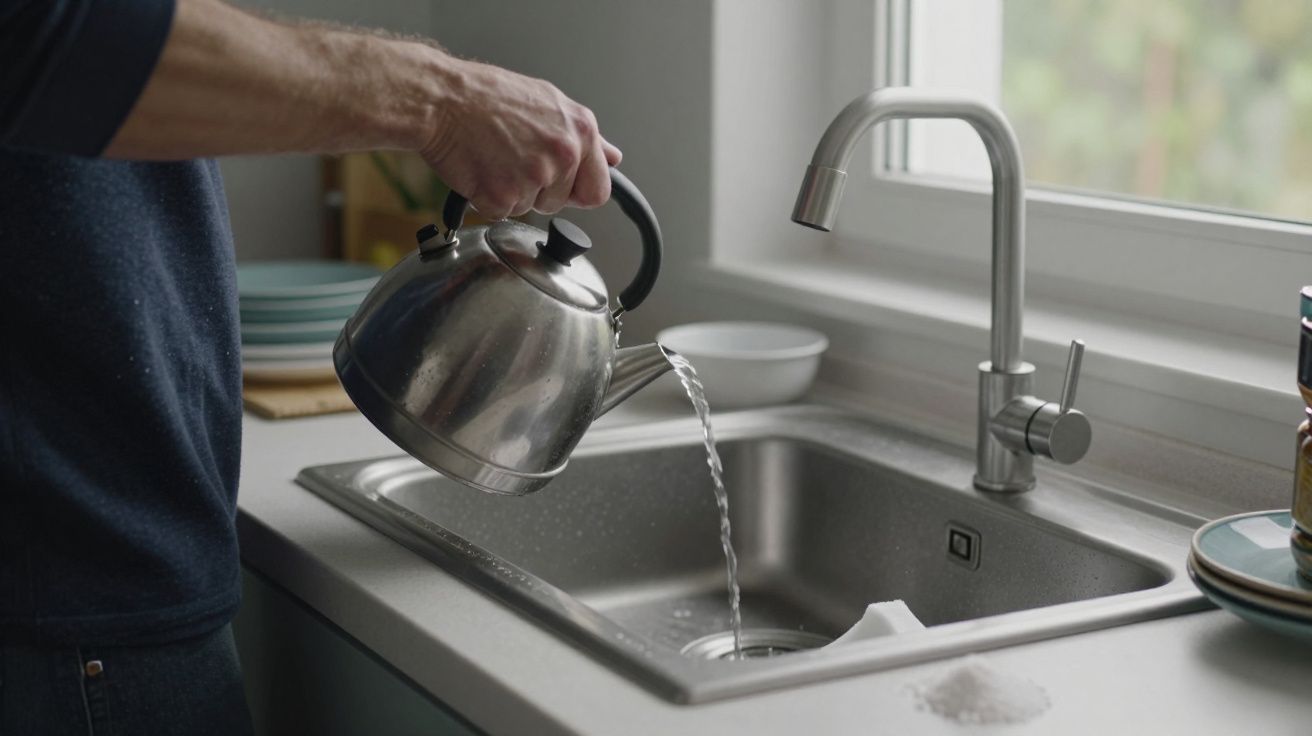
Across the UK, kitchen sinks are being stripped back to basics. Instead of reaching for bleach or a harsh drain unblocker at the first whiff of a bad smell, more households are trying a much simpler routine: a kettle of hot water and a handful of salt. The promise is modest but appealing – keep pipes clear‑smelling with what you already have by the hob.
Plumbers are not surprised. They see what really lives inside kitchen waste pipes: a slow layering of fat, food particles and soap scum that cling to the sides and start to ferment. Most of the time it is not a dramatic blockage, just a slimy “biofilm” that smells. For that kind of build‑up, they say, regular, gentle flushing beats the once‑a‑year panic pour of chemicals.
“Think of it as brushing your sink’s teeth,” one London plumber put it. “Small, regular scrubs stop the nasty surprises later.”
Why kitchen drains start to smell
Every time you rinse a greasy pan, tip coffee grounds into the sink, or wash plates with a slick of gravy still on them, a little of that residue heads into the pipes. Hot water keeps it moving for a bit, but as it cools, fats solidify and stick. Detergent binds to it, crumbs lodge in it, and bacteria move in.
The result is a soft layer lining the pipe walls. It may not block the pipe fully, but it creates tiny pockets where water stagnates and organic matter breaks down. That is what you smell when the plughole “burps” or the odour wafts up when you run the tap.
Under‑used sinks smell too. Traps dry out if a sink sits for weeks without being run, letting drain odours drift back. In busy family kitchens, the problem is usually the opposite: traps stay full, but the film inside the horizontal pipework keeps growing until something changes it.
The kettle‑and‑salt method in under five minutes
The appeal of the kettle‑and‑salt method is that it fits into ordinary routines. You do not need to suit up, vacate the room, or worry about fumes. You piggyback on a kettle you were boiling anyway.
Mode d’emploi, version évier
You do not need special gear, just:
- 1 full kettle of freshly boiled water (about 1–1.5 litres)
- 2–4 tablespoons of coarse salt (table, rock or dishwasher salt all work)
- A tea towel or oven glove to steady the kettle
Step‑by‑step:
- Clear the sink. Remove the plug, food catcher and any obvious scraps sitting in the strainer.
- Add the salt. Tip 2–4 tablespoons of salt directly into and around the plughole so some crystals settle just inside the opening.
- Boil the kettle. As soon as it clicks off, wait 10–20 seconds so the furious boiling settles, reducing splash risk and thermal shock to older pipes.
- Pour slowly. Using both hands if needed, pour the hot water in a steady stream straight into the plughole, taking 20–30 seconds to empty the kettle so it has time to work along the pipe.
- Run the hot tap. Let the hot tap run for another 30–60 seconds to push everything through.
- Finish with cold. A quick blast of cold water helps re‑fill the trap and set a “seal” against odours.
Done regularly – weekly for busy kitchens, fortnightly for lighter use – plumbers say this is often enough to keep mild smells at bay.
Why salt and hot water work together
The method sounds almost too simple, but the mechanics are straightforward.
- Heat softens grease. Hot water loosens and partially melts congealed fats so they lose their grip on the pipe walls.
- Flow gives a flush. A full kettle poured in one go creates a small “surge” that helps shift loosened debris along, instead of letting it re‑settle nearby.
- Salt adds gentle abrasion. Coarse grains drag lightly along the inside of the pipe, disturbing the slimy biofilm so it is easier to wash away.
- Salt changes the micro‑environment. A brief, salty rinse makes the surface less comfortable for some odour‑producing bacteria, buying you time between cleans.
“You’re not dissolving a solid fat plug like magic,” a Bristol drainage engineer explained. “You’re stopping the slime from ever becoming a solid plug in the first place.”
What plumbers say it actually does – and doesn’t – fix
Professionals are clear: this is a maintenance trick, not an emergency rescue for a fully blocked drain.
It works best when:
- Water is still draining, just a bit slower than usual.
- The main issue is smell, gurgling, or a light ring of slime around the plughole.
- You use it as a routine, not a last resort.
It is unlikely to solve:
- Long‑standing blockages where water stands in the sink.
- Pipes choked with years of hardened fat or coffee grounds.
- Problems caused by bad pipe fall, collapsed sections, or tree roots.
In those cases, you may only move the blockage further along or partly loosen it, which can make professional clearance trickier. If the water is already backing up into the sink, plumbers recommend stopping DIY chemical experiments and calling someone in.
Cost, impact and effort compared
A kettle and a few spoonfuls of salt are not just gentler on pipes – they are cheaper and calmer on the household budget too.
| Method | What you use | Best for |
|---|---|---|
| Kettle + salt | Tap water, kettle energy, 2–4 tbsp salt | Regular odour control, light slime, routine maintenance |
| Bleach rinse | Cup of bleach + cold water | Short‑term smell masking, disinfecting surfaces (not ideal for fat) |
| Chemical unblocker | Proprietary gel or crystals | Stubborn, partial blockages caused by hair/grease, occasional use only |
On a typical UK tariff, boiling a full kettle costs only a few pence. Salt bought in bulk for cooking or dishwashers is also inexpensive. By contrast, branded drain unblockers can run several pounds per bottle, and repeated use is where plumbers start to see damage to older metalwork, rubber seals and septic systems.
How often to do it (and small upgrades that help)
Most plumbers who back this method suggest tying it to habits you already have.
- Once a week after Sunday lunch or a bigger cook.
- After any session where you have fried food, roasted fatty meats or done a lot of baking.
- When you first notice a faint whiff or gurgle – not weeks later.
Small, optional upgrades that stay bleach‑free:
- Strainers: Keep a sink strainer in place to catch food scraps before they enter the pipes.
- Wipe, then wash: Wipe greasy pans with kitchen roll into the bin before washing.
- Very hot tap run: Once a day, run the hot tap for 30–60 seconds to sweep minor residues away.
If you have a waste disposal unit, check the manufacturer’s guidance – some advise against large amounts of salt. In those cases, a plain hot‑water flush alone is safer.
Precautions and limits
The kettle‑and‑salt approach is mild, but a few ground rules matter.
- Mind the material. Modern plastic (PVC) pipes and standard kitchen traps tolerate hot tap and kettle water well when poured steadily. Very old metal pipes, or sinks with visible cracks, prefer slightly cooled water to avoid sudden temperature shocks.
- Watch your hands. Use a tea towel or oven glove to steady the kettle, and keep children and pets clear while you pour.
- Do not mix with other chemicals. If you have recently used a strong drain cleaner, avoid following it immediately with more DIY brews. Let the system flush through with plain water first.
- Septic systems: Salt in these quantities, used weekly, is usually fine, but if you rely on a sensitive septic tank, check with your installer before making it a habit.
Plumbers often say the riskiest part is not the pipes, it is the person trying three different products in a row in frustration.
When to stop DIY and call a professional
There are clear red flags that mean it is time to put the kettle down.
- Water is standing in the sink and not draining at all.
- You hear gurgling in other fixtures (like the dishwasher or downstairs loo) when you run the kitchen tap.
- There is a persistent, sewage‑like smell that does not shift after a week of gentle maintenance.
- You have repeated, fast‑return blockages in the same spot.
These can signal a problem further along – in shared stacks, external gullies or underground pipes – that hot water and salt will not touch. Early intervention usually makes repairs cheaper and less disruptive.
FAQ:
- Does this method replace professional drain cleaning? No. It helps delay and reduce problems in a healthy system, but it will not fix structural faults or heavy, long‑term blockages. Think of it as good hygiene between check‑ups.
- Can I add bicarbonate of soda or vinegar for more power? Some people do, but if you mix ingredients, do so in tiny amounts and never alongside bleach or chemical unblockers. The basic kettle‑and‑salt routine is usually enough for everyday odour control.
- Is boiling water safe for all kitchen sinks? Most modern sinks and pipework are designed to handle hot water, but older ceramic sinks and very old metal pipes prefer slightly cooled water. If in doubt, let the kettle sit for a minute before pouring.
- How quickly should I notice a difference in smell? For mild odours caused by light slime, many households report an improvement after the first flush, with bigger gains over a few weeks of regular use. Persistent or worsening smells suggest a deeper issue that needs inspection.

Comments (0)
No comments yet. Be the first to comment!
Leave a Comment