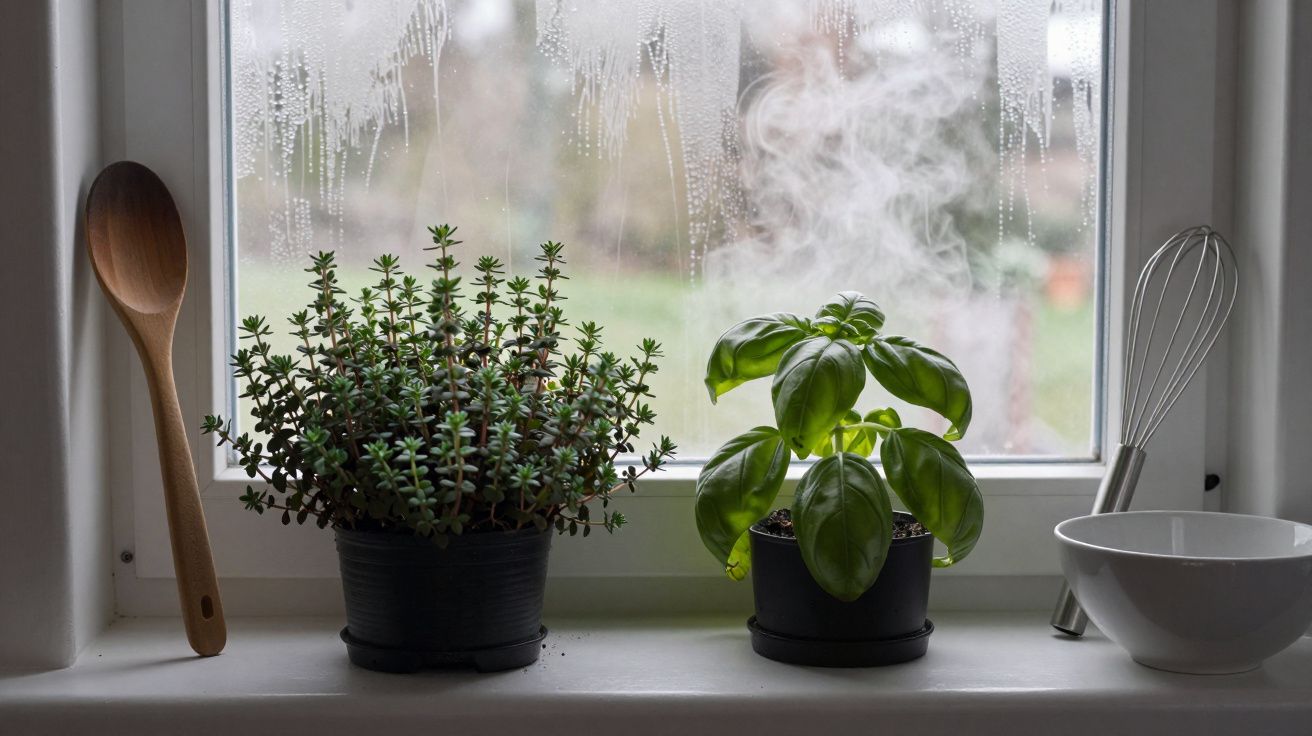
Cold light, steamy windows, and a pot of supermarket basil slowly collapsing next to the washing-up bowl. It is a familiar midwinter scene in British kitchens: the herbs that look lush under supermarket strip-lights rarely last once they meet real weather and radiators. Within days, the leaves yellow, droop and die, leaving you back at square one with a jar of dried “mixed herbs” and a slightly guilty conscience.
Ask working chefs what survives their own kitchen sills in January, though, and a different green name comes up again and again. Not basil, not parsley, but thyme: small-leaved, woody and almost impossible to offend. It is the herb they say every winter cook in Britain should grow.
Thyme does something basil and parsley struggle with in a typical British winter: it just keeps going. It tolerates central heating, draughty frames and short days, and still manages to lift stews, roasts and traybakes with a flavour that tastes like you have tried much harder than you really have.
The windowsill workhorse chefs actually use
In restaurant kitchens, thyme is the quiet constant. It goes into the roasting tray with chicken, into the stockpot with onion and carrot, into the pan when butter is foaming around a steak or a pan of mushrooms. It is rarely the star, but everything tastes flatter without it.
Talk to chefs about herbs in winter and many admit they stop bothering with tender plants indoors. Coriander bolts or rots, basil sulks, mint attracts aphids. Thyme, by contrast, accepts neglect with grace. If you forget to water it for a few days, it forgives you. If the window gets icy overnight, it shrugs and carries on.
As one London chef puts it, “If I could only have one herb in January, it would be thyme. It’s like adding a wintry backbone to whatever’s in the pan.”
For home cooks who feel herbs are “a summer thing”, this is the shift: thyme is not the garnish you sprinkle at the end of a tomato salad. It is the winter engine room of flavour, especially in a season of beige food.
Why thyme beats basil and parsley in winter
Basil is a Mediterranean plant that wants long, bright days and air that feels like late June in Italy. A British windowsill in February offers the opposite: low light, condensation, and a nightly temperature drop when the heating clicks off. No wonder the leaves blacken at the first draught.
Parsley is tougher, but it grows slowly in low light and often becomes leggy and pale indoors. You can keep it going, but it demands more space and care for a flavour that is mostly fresh and grassy. In deep winter, when dishes lean towards roasts, root vegetables and one-pot suppers, many cooks find they use it less.
Thyme takes a different approach. It is woody, evergreen and adapted to poor, stony soils. In a pot, this translates to roots that stay happier when they dry slightly between waterings, and leaves that stay green even when light is weak. As long as it is not waterlogged and has some light, it endures.
Think of thyme as a tiny shrub on your windowsill: slow, steady, and there when you need to break a few sprigs off.
Flavour-wise, it brings a gentle but persistent savoury note that stands up to long cooking. Basil disintegrates in a stew; thyme infuses it. Parsley brightens a dish right at the end; thyme quietly seasons it all the way through.
Choosing the right plant
The easiest way to start is not from seed, but with a small plant. Garden centres and even supermarkets often sell potted thyme alongside rosemary and mint. Look for a plant with woody stems and lots of small, firm leaves rather than soft, floppy growth.
Avoid the densely packed “living herbs” in flimsy plastic that sit next to bags of salad. Those are usually forced in warm greenhouses, with many seedlings crammed in one pot; they tend to collapse quickly in a normal home. A sturdier plant in a slightly bigger pot will last far longer.
There are a few common types worth knowing:
| Type of thyme | Flavour & best uses |
|---|---|
| Common / English thyme | Classic, savoury, ideal for roasts, stews, stocks |
| Lemon thyme | Bright, citrusy; great with fish, chicken, roast veg |
| French thyme | Slightly milder; good all-rounder for sauces and soups |
For a first plant, common thyme is the safest bet. If you have space for two small pots, pairing common and lemon thyme covers most winter dishes you are likely to cook.
Keeping a thyme pot alive on a cold British sill
Thyme does not demand much, but a few small habits will double its lifespan indoors. Think more “tough little shrub” than “delicate houseplant”.
- Light: Give it the brightest window you have, ideally south or west facing. It will manage on an east-facing sill, but may grow more slowly.
- Water: Let the top of the compost dry out before watering again. When you do water, give it a good drink, then let the excess drain away. A saucer of standing water is the quickest route to root rot.
- Pot and compost: If it comes in a very small pot, move it to one slightly larger, with drainage holes. Use ordinary multi-purpose compost mixed with some grit if you have it; thyme dislikes heavy, soggy soil.
- Temperature: Normal room temperatures are fine. The main thing is to avoid the plant baking directly above a roaring radiator with no airflow. A bit of distance from the hottest spot helps.
- Harvesting: Snip off whole sprigs rather than stripping every leaf from a few stems. Regular, modest cutting encourages bushier growth.
If the plant gets a bit woody and tired towards spring, you can either trim it back lightly to encourage new shoots or use it up generously and replace it with a fresh plant once the days lengthen. Even then, it will likely have given you months of use from a few pounds.
What thyme does to winter food
Beyond staying alive, thyme earns its spot because it quietly transforms very ordinary ingredients. A couple of sprigs in a pan of onions changes the base of a sauce. A handful thrown in with roasting vegetables makes the kitchen smell like Sunday lunch, even on a Tuesday.
Where basil loves tomatoes and raw salads, thyme loves heat. It is particularly good with:
- Roast chicken and potatoes: Toss potatoes with oil, salt and thyme sprigs; stuff a few inside the bird too.
- Root vegetables: Carrots, parsnips, swede and beetroot all take well to thyme in a hot oven tray.
- Beans and lentils: A bay leaf and a few thyme sprigs turn a simple pot of lentils or white beans into something that tastes slow-cooked and savoury.
- Mushrooms: Fry mushrooms in butter or oil with garlic and thyme; pile onto toast or tuck into an omelette.
- Creamy things: Thyme cuts through the richness of dauphinoise potatoes, gratins and creamy pasta sauces.
Five quick ways to use your thyme tonight
- Stir a teaspoon of leaves into mashed potatoes with butter and black pepper.
- Add a sprig or two to tinned tomatoes as they simmer for pasta sauce or shakshuka.
- Tuck whole sprigs under sausages on a traybake with onions and peppers.
- Infuse a knob of butter with garlic and thyme, then spoon over pan-fried fish or chicken.
- Scatter leaves over roasted carrots or squash right at the end for a hit of aroma.
None of these require a recipe, just the willingness to snip a few stems as you cook. That is the real advantage of a living pot within arm’s reach: you use herbs promiscuously, not sparingly.
If you grow only one herb this winter
You could fill your sill with pots that complain all season and give little back, or you could plant one that behaves like a small, steady machine for flavour. Thyme is not as showy as basil or as familiar as parsley, but it suits the way Britain actually eats in winter: soups, stews, roasts, leftovers revived in a frying pan.
It will not solve the dark evenings or the damp, but it will make a tray of odds and ends taste like a plan. And when the basil has long since given up, the thyme will still be there, a small green hedge by the glass, waiting to be clipped.
FAQ:
- Can I grow thyme from seed on a windowsill? Yes, but it is slow and fiddly. For winter cooking, buying a small established plant is easier and gives you usable sprigs within days rather than months.
- Is dried thyme good enough instead of a plant? Dried thyme is useful for long-cooked dishes, but fresh thyme has a brighter aroma and is better for quick sautés and finishing. A living pot also encourages you to use herbs more often.
- Will my indoor thyme cope outside later in the year? Once the risk of frost has passed, you can harden it off by putting it outside for a few hours a day, gradually increasing the time. Many thyme plants then thrive in a sunny pot or border.
- Is lemon thyme as hardy as common thyme? Lemon thyme is almost as tough and usually survives well indoors. It prefers just as much light and the same “water, then dry a little” routine, with the bonus of a fresh citrus note in the kitchen.





Comments (0)
No comments yet. Be the first to comment!
Leave a Comment