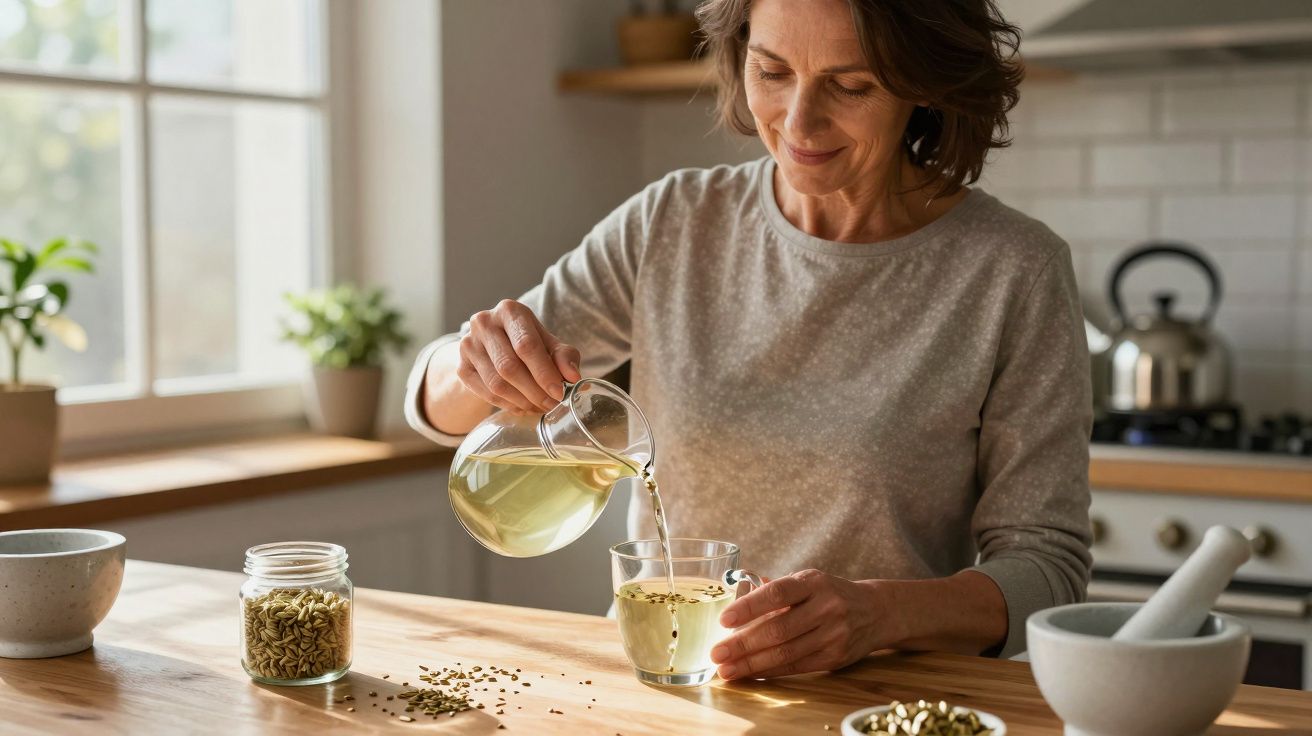
The bloat crept up so slowly that Anna, 57, almost believed it was “just age”. By mid‑afternoon her waistband dug in, dinner sat stubbornly under her ribs, and she’d catch herself loosening her bra in the loo at work just to breathe properly. She tried peppermint tea, then chamomile, because that’s what everyone suggests when your gut starts talking back. They tasted fine. Her stomach, however, carried on like a hot air balloon at closing time.
At her annual check‑up, after the usual bloods and blood pressure, her GP asked a question she hadn’t heard before: “What do you drink after meals?” Anna shrugged. Tea. Coffee. Whatever’s on hand. The GP nodded, then said, almost casually, “You might get on better with fennel. As a tea. Plain seeds, nothing fancy. A lot of my patients over 50 find it genuinely calms the bloating.”
It sounded too simple, and not nearly Instagrammable enough. Fennel was something she associated with the odd salad or Italian sausage, not a solution to an everyday discomfort she’d started organising her wardrobe around. But two weeks and one small jar of seeds later, she realised she’d made it through a workday without silently unbuttoning her trousers under the desk.
This is the herbal infusion quietly doing the job that peppermint and chamomile don’t always manage alone-especially after 50.
Why bloating changes after 50 (and why teas matter more)
The gut does not read birthdays, but it does notice decades. After 50, digestion tends to slow a little. We often move less, produce slightly less stomach acid, and may be on long‑term medications that nudge bowels one way or the other. Hormonal shifts around menopause can add extra wind and water retention for many women, and prostates, hernias and gallbladders add their own storylines for men.
The result is familiar: a feeling of fullness after ordinary meals, trousers that fit in the morning and bite by evening, more burping or flatulence, and an uncomfortable sense that food just “sits”. Peppermint can help some people with cramping, chamomile can be soothing if anxiety is a big driver, but they are not magic bullets. When bloating is mild but frequent, GPs often look first at simple, low‑risk tweaks that nudge the whole system in the right direction.
This is where fennel slips in-not as a cure‑all, but as a small, well‑tolerated tool that has history, plausible science and, in many clinics, a quiet track record of helping with gas and post‑meal discomfort.
Meet fennel: the wallflower of the herbal shelf
Fennel is that feathery, anise‑scented plant you’ve probably walked past a hundred times in the supermarket. The seeds are what matter for bloating: tiny, ridged and aromatic, they’ve been chewed after meals in India, the Middle East and southern Europe for centuries to ease “wind” and freshen breath. In other words, fennel has been doing digestive support long before wellness became a hashtag.
Modern herbalists class fennel as a carminative: a plant that helps trapped gas move along and relaxes the smooth muscles of the gut. In plainer English, it can make it easier to pass wind without the gripping cramps that sometimes accompany it. The taste is gently liquorice‑like-softer than pure aniseed, more savoury than a sweet.
What surprises many people is that some very mainstream GPs and gut specialists are happy to recommend it. Not as a substitute for proper medical assessment, but as a first‑line home measure when tests are normal, diet is reasonable and the main complaint is that persistent, balloon‑under-the-ribs feeling.
What the evidence (and gut doctors) actually say
Research on herbal teas is rarely glamorous or lavishly funded, but fennel has quietly racked up a modest evidence base. Small studies in adults with functional bloating and indigestion have found that fennel, often used as a tea or in capsule form, can reduce:
- feelings of post‑meal fullness
- upper abdominal discomfort and mild cramping
- how “tight” and distended the abdomen feels
Some trials combine fennel with other herbs, which muddies the water a little, but the overall pattern fits what clinicians see: in people without serious gut disease, fennel can make gas move more easily and cramping less bossy.
Mechanisms that researchers point to include:
- Antispasmodic effects – fennel’s volatile oils seem to help gut muscles relax instead of clenching.
- Carminative action – helping small gas bubbles coalesce and move along, so they’re less painful.
- Mild pro‑motility support – nudging sluggish digestion, which matters if your gut has slowed with age, medication or less movement.
No serious GP will tell you that a herbal tea replaces investigation for red‑flag symptoms. But when blood tests, coeliac checks and stool tests look fine, and the diagnosis is “functional bloating” or a mild irritable bowel pattern, many are comfortable suggesting fennel as one of the safest, cheapest experiments you can run at home.
Think of fennel tea as a low‑risk nudge: not a fix for disease, but a practical way to make a gassy, overfull gut a little more civil.
How to try fennel tea for bloating
You can buy fennel “digestive” blends in most supermarkets, but using the seeds themselves is often stronger, cheaper and easier to adjust. Whole seeds keep their oils better than pre‑crushed versions in a dusty tea bag.
A simple fennel infusion
- 1–2 teaspoons whole fennel seeds
- 250 ml freshly boiled water
- Mug with a saucer or small plate to cover it
- Lightly crush the seeds with the back of a spoon or in a pestle and mortar to release the oils.
- Place them in your mug, pour over the hot water, and cover.
- Steep for 8–10 minutes, then strain.
- Sip slowly while it’s warm, ideally after meals or when you first notice bloating building.
Most adults start with one cup a day for a few days, then increase to up to three cups spread through the day if it suits them. You can combine it with a little fresh ginger or lemon if you dislike the liquorice notes, as long as those sit well with your stomach.
A gentle “fennel protocol” many over‑50s use
- Have one cup after your heaviest meal of the day.
- If evenings are your worst time, add a second cup mid‑afternoon.
- Give it at least 7–10 days; gut patterns respond to consistency more than one‑off efforts.
- Keep other habits steady so you can actually tell if fennel is helping.
If you take regular medication, particularly for blood pressure, epilepsy or hormone‑sensitive cancers, run it past your GP or pharmacist first, just as you would with a new over‑the‑counter supplement.
Small habits that help fennel actually work
Fennel tea cannot out‑run a diet and routine that constantly stoke bloating. The people who report the best results usually pair it with simple, unflashy tweaks that make any gut happier, fennel or no fennel.
Helpful pairing habits include:
- Slowing meals down – 15–20 minutes per meal, with proper chewing, reduces swallowed air.
- Watching fizzy drinks and sugar‑free gums – both can ramp up gas production.
- Moving after eating – a 10–15 minute walk after lunch or dinner acts like a natural massage for the intestines.
- Tweaking fibre, not removing it – gently increasing oats, fruit and vegetables while watching which ones set you off.
- Reviewing new meds – some blood pressure tablets, diabetes drugs and painkillers list bloating as a side effect; your GP can often switch brands or timings.
Fennel works best as part of this gentler terrain, not as a lone ranger battling three cans of diet cola and a takeaway wolfed down in the car.
When fennel tea is enough – and when it absolutely is not
A useful way to think about fennel tea is as support for familiar, stable bloating, not a shield against serious disease. The table below gives a rough feel for where it fits:
| Situation | Fennel tea’s role | What else to do |
|---|---|---|
| Long‑standing mild bloating that gets worse after big or rushed meals, no other worrying symptoms | Reasonable self‑care option to try for a few weeks | Track what you eat, adjust pace and portions, see if things ease |
| Bloating plus clear triggers like beans, onions, large salads, or lots of fizzy drinks | May reduce discomfort while you experiment with triggers | Consider a dietitian review; adjust cooking methods and portion sizes |
| New, persistent bloating over weeks or months, especially after 50, plus weight loss, blood in stool, vomiting, fever, or a big change in bowel habit | Not appropriate as a first response | See your GP promptly; you may need tests for coeliac disease, ovarian or bowel issues, infection or medication side effects |
If in doubt, err on the side of talking to a professional. UK GPs would much rather you came in “too early” than waited months while self‑managing something that needs scanning, not steeping.
Who should be cautious with fennel
For most healthy adults, moderate fennel tea (1–3 cups a day) is considered low‑risk. That said, there are groups who should tread carefully or get explicit medical advice first:
- Anyone with a known allergy to fennel, celery, carrot, mugwort or other members of the carrot family.
- People with a history of hormone‑sensitive cancers (such as some breast, ovarian or uterine cancers), because fennel has mild oestrogen‑like compounds.
- Those on blood‑thinning medication or with seizure disorders, who should check interactions.
- Pregnant people – evidence is limited; many doctors suggest erring on the side of minimal herbal intake beyond ordinary food use.
There has been some concern in lab studies about a fennel constituent called estragole at very high doses over long periods. Regulatory bodies generally consider culinary and light medicinal use safe for adults, but the advice is the same as for strong liquorice or green tea: enjoy it, but don’t drink litres a day or take concentrated extracts indefinitely without guidance.
If you notice rash, itching, breathing changes, worsening stomach pain or your bloating suddenly becomes severe and constant, stop the tea and seek medical help.
A small ritual that helps your gut and your pace
One of the reasons fennel tea lands so well with people in their fifties and sixties is that it builds in a pause. Taking ten minutes to steep, sit and sip after a meal is itself a digestive intervention, signalling to your nervous system that the rush is over and it can divert more energy to the gut.
Anna now jokes that her fennel mug is her “elastic waistband in a cup”. She still has days when she eats in a hurry or forgets to bring seeds to work. But more evenings now end without her lying on the sofa, clutching her middle and silently undoing buttons. The tea did not rewind the clock. It simply gave her body a kinder way to do what it was trying to do all along.
If peppermint and chamomile have never quite lived up to their promises for you, fennel might be the quiet, overlooked ally your midlife digestion has been waiting for-best used with curiosity, not desperation, and always with one eye on what your gut might be trying to tell you.
FAQ:
- Is fennel tea better than peppermint for bloating? They work differently. Peppermint can be excellent for cramping but can worsen reflux in some people. Fennel tends to focus more on easing gas and a sense of fullness, and many over‑50s who find peppermint too “strong” tolerate fennel better. Some people use both at different times of day.
- How quickly should I notice a difference? Some people feel less tight and gassy after the first few cups; for others it’s more gradual over one to two weeks. If nothing has changed after three weeks of regular use and simple lifestyle tweaks, it’s worth checking back with your GP.
- Can I drink fennel tea every day long‑term? For most healthy adults, 1–3 cups a day is considered reasonable. Take a break if you feel any new symptoms, don’t exceed that regularly without advice, and have a chat with your GP if you plan to use it daily for months alongside regular medications.
- Will fennel tea help with constipation too? It can sometimes help indirectly by easing gas and gentle cramping, which makes it more comfortable to move your bowels, but it isn’t a laxative. For persistent constipation, you’ll likely need fibre, fluids, movement and sometimes prescribed treatments.
- Is fennel tea safe with IBS? Many people with IBS do find fennel soothing, particularly for wind. However, very sensitive guts can react to any new herb. Start with a weak cup, note any changes, and speak to your GP or dietitian if you’re following a low‑FODMAP plan, as they can help you fit it in sensibly.



Comments (0)
No comments yet. Be the first to comment!
Leave a Comment