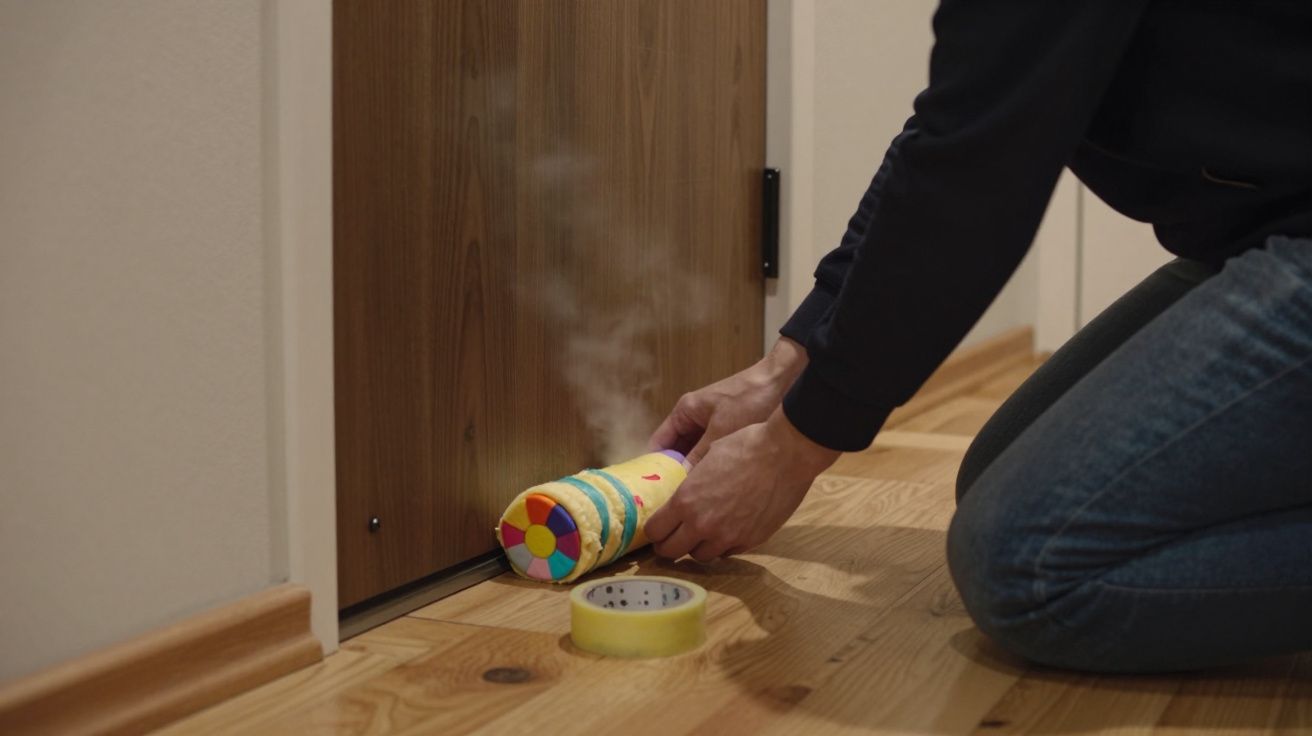
Icy floorboards, a howling gap under the front door and a landlord who “will absolutely not be changing the flooring this year”. If that sounds familiar, you’re far from alone. Renters are searching for ways to stop cold air creeping in without breaching the terms of their tenancy – and without spending more than a couple of quid.
Out of that mix has come a very specific hack: a home‑made draught stopper you can build for around £2, slide into place in seconds and lift away on moving day without leaving a trace. No screws, no glue, no arguments about “alterations” on the checkout inventory.
The idea is simple: seal the biggest gaps at floor level so you keep the heat you’re already paying for, instead of watching it leak straight under the door – while keeping everything technically temporary and reversible.
A £2 draught‑stopper can shave the edge off icy floors in minutes, using nothing stronger than tape and an old pair of tights.
Why your rental’s floors feel colder than they look
Most rental homes bleed heat at ground level. Even if the room looks neat, there are often hidden pathways where cold air slides in and warm air escapes.
Common culprits include:
- Gaps under external doors and between floorboards
- Unsealed letterboxes and keyholes
- Loose skirting boards and vents into unheated hallways or stairwells
If you’re in a Victorian or 1930s terrace with suspended timber floors, the boards often sit above a chilly void. Any gap – however slim – acts like a mini wind tunnel drawing that air into your living space. The thermostat lives higher up the wall, so the heating shuts off while your toes still feel like ice.
For renters, the frustration is double. You’re losing heat you’re paying for, but you usually can’t rip up floors, add insulation or plane the bottom of doors to fit commercial seals.
The £2 draught‑stopper renters swear by
The most shared version of the hack uses two very cheap items and one thing you already own:
- A length of foam pipe insulation or a budget pool noodle
- Strong tape (gaffer or parcel tape both work)
- An old pair of tights, leggings or a long sock
Pipe insulation from a DIY shop often costs around £1–£1.50 a length. A basic roll of tape from a discount shop is similar. Everything else tends to come from the back of a drawer.
You’re essentially building a soft, double‑sided “tube” that hugs the bottom of the door. One foam roll sits either side of the door; the tights or fabric sleeve hold them in place, and the tape keeps the whole thing snug.
Think of it as a removable cushion that follows the door as it opens and closes - without scratching paint or needing a single screw.
Because nothing is fixed to the frame, you can slide the whole thing away in summer or take it with you when you move.
Step‑by‑step: five minutes, no tools
You don’t need sewing skills for the quick version. A pair of scissors is as technical as it gets.
Measure the door width
Use a tape measure, piece of string or even the tights themselves to see how wide the door is. Cut two pieces of pipe insulation or pool noodle to roughly that length.Prepare the fabric sleeve
Cut the legs off the tights or leggings. If they’re very narrow, you can carefully slit along one side and re‑wrap them around the foam later. Aim for two tubes that are slightly longer than your foam pieces.Slide the foam into place
Push one foam length into each leg of the tights. If they’re loose, wrap the fabric tightly and fix with tape every 10–15cm to stop it twisting.Join the two legs
Lay the two padded legs side by side. Tape them together along their full length, leaving enough space between them for the bottom of the door to sit. You’re aiming for a “dumbbell” or glasses‑case shape when viewed from the end.Fit it under the door
Open the door, slide the joined tubes under so that one sits on each side of the door, then close it gently. Adjust until the foam rests snugly against the floor on both sides.Test for draughts
Run the back of your hand or a lit stick of incense along the bottom of the door. If you still feel or see movement, nudge the stopper closer or add a strip of rolled towel along any stubborn gap.
If your door sits very high above the floor, you can stack two thinner pieces of foam in each “leg” to bulk it out. For a neater look, people often pull an old pillowcase or a cut‑down trouser leg over the whole thing as a final cover.
Where it works best (and what to pair it with)
Sealing one gap properly is often more effective than half‑fixing five. Start where the cold air is most aggressive.
- Front doors opening to communal hallways or the street – biggest heat loss; can transform a freezing hallway.
- Doors to unheated corridors, stairwells or garages – stops cold air spilling into living spaces.
- Balcony or patio doors with obvious gaps at the bottom – as long as you’re not blocking a formal air vent.
- Bedroom doors in shared houses – useful when housemates keep windows open or heat off in other rooms.
A simple way to plan your efforts:
| Spot to treat | Main benefit | Good add‑on |
|---|---|---|
| Front door | Warmer hallway, less “whoosh” of cold | Letterbox brush or cover |
| Living room door | Toastier evenings on the sofa | Throw down a rug near the gap |
| Bedroom door | Less draught on feet at night | Thicker curtains or lining |
Once the worst floor‑level draught is tamed, smaller tweaks – like moving a rug closer to the skirting or drawing curtains earlier – have a much bigger impact.
Will my landlord mind?
Most tenancy agreements frown on drilling holes, sanding doors or gluing anything to painted surfaces. The £2 draught‑stopper sidesteps that neatly.
You’re not:
- Altering the door or frame
- Sticking tape to walls, paint or varnish
- Blocking any permanent vents or trickle grills
You are simply placing a soft object on the floor that happens to fit snugly around the bottom of the door. When you leave, you pick it up, wipe the floor and the property is unchanged.
As a rule of thumb: if you can remove it in ten seconds without leaving a mark, it’s unlikely to trigger a deposit dispute.
If your landlord is particularly strict, you can still mention it in passing as a “door snake” or draught excluder that just sits on the floor. Many will be relieved you’re trying to cut condensation and mould risk by keeping the place a bit warmer.
Safety checks and what not to block
Not every gap should be sealed, even if it feels cold.
- Don’t block permanent vents for boilers, gas fires or air bricks. These are there for combustion and moisture control.
- Keep fire exits usable. Your draught‑stopper should slide easily if you need to open the door quickly; avoid wedging doors shut.
- Watch out near open‑flame heaters or candles. Foam and synthetic tights can melt or burn if exposed directly to heat or sparks.
If you’re unsure whether a grille or hole is a safety vent, treat it as one and leave it open – focus on obvious gaps at the base of doors instead.
Other renter‑friendly warmth tweaks under a fiver
The draught‑stopper does the heavy lifting at floor level. A few small extras can help your room feel noticeably cosier without major spend.
- Foil behind radiators – a cheap roll of kitchen foil and some cardboard can reflect heat back into the room rather than into an external wall.
- Rugs and runners – even a thin mat over bare boards cuts the “ice block” feeling underfoot.
- Curtain hacks – clip‑on thermal linings or simply pinning a fleece blanket behind flimsy curtains helps at night.
- Strategic door closing – keep doors shut to rooms you don’t heat; your draught‑stopper then seals the gap and traps warmth where you actually sit or sleep.
Layering two or three of these measures usually beats splurging on a single expensive gadget, especially in a short‑term rental.
FAQ:
- Does this hack work on carpeted floors as well as bare boards? Yes, as long as there’s a visible gap under the door. On thick carpet, you may need slightly slimmer foam so the door still moves freely.
- What if my door is very tight to the floor? In that case you’re lucky: you probably don’t need a draught‑stopper. Focus instead on window seals, curtains and any gaps around the letterbox or skirting.
- Can I buy a ready‑made version instead of DIY? Yes – shop‑bought double‑sided draught excluders exist, but they typically cost more. The DIY version lets you customise length and thickness for awkward rental doors.
- Will this actually lower my heating bill? It won’t transform a leaky house on its own, but stopping a strong draught means rooms stay comfortable for longer between boiler cycles. Over a winter, that can trim how hard and how often you run the heating.





Comments (0)
No comments yet. Be the first to comment!
Leave a Comment