The hallway smelt faintly of wet umbrellas and toast. The radiators were on, the smart thermostat swore the house was “cosy”, and yet the strip of floor by the front door felt like a platform at Euston. Cold crept under the letterbox, along the skirting and, oddly, right through the middle of the door where nothing obvious was moving.
I did the usual dance: blamed the boiler, checked the windows, nudged the thermostat up one more guilty notch. Still, a mean little breeze nipped at my ankles every time I walked past the doormat. Out of habit more than science, I put my hand over the keyhole and felt it: a thin, determined stream of icy air, like the outside world had found a secret straw into my hallway.
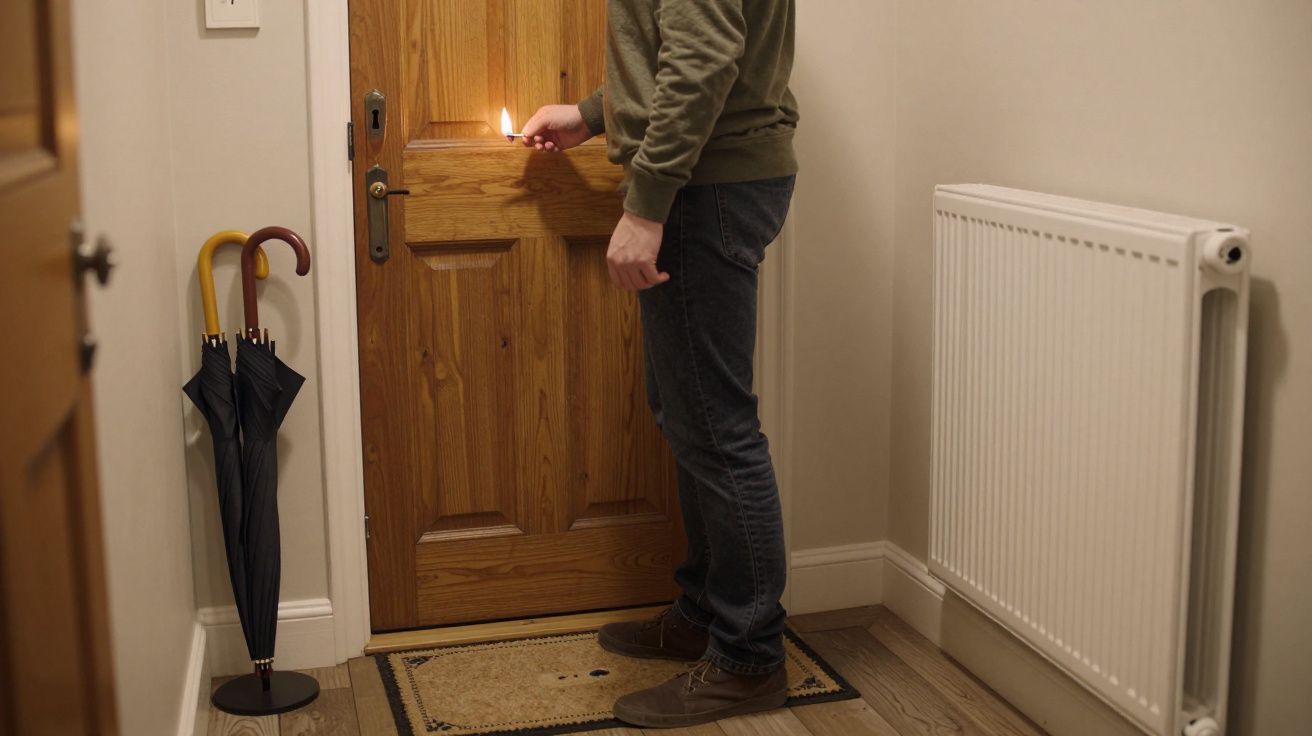
Later, a neighbour mentioned the “match test” – one lit match, held carefully by the door, to show where the heat is leaking. Five minutes, a slightly singed thumb and a wobbly flame later, the culprit was clear. The keyhole danced like a tiny wind tunnel, even with the door shut and locked.
The fix? A piece of hardware that costs less than a bus fare and takes longer to unwrap than to fit. A 50p keyhole cover will never trend on social media, but it can quietly stop that icy draught and shave a little off your heating bill.
The tiny hole that behaves like an open window
Most front doors in the UK were never designed with modern energy prices in mind. A solid timber or uPVC slab looks reassuring, but the places where it actually moves – the letterbox, the perimeter gap, the keyhole – are where the cold sneaks in.
A traditional mortice lock is essentially a tunnel straight through the wood. In winter, warm air in your hallway pushes upwards and out, pulling cold air in through any convenient gap. Your keyhole becomes a miniature chimney in reverse. It’s small enough to ignore, big enough to matter when the heating is running for hours.
One gap might not sound like much, but add it to the letterbox, the door threshold and that bit where the frame no longer quite meets the wall, and you’ve built a permanent, unpaid ventilation system. The boiler works harder, the thermostat sulks, and you still wonder why the hallway never feels as warm as the living room.
Meet the 50p keyhole cover
A keyhole cover – sometimes sold as an escutcheon or draught-excluding escutcheon – is a simple plate that sits over the keyway. Most have a little swinging flap that you push aside with the key, then falls back to block the gap when you’re done.
They come in plain brass, chrome or painted steel. Some are self-adhesive, some screw in with two tiny fixings. If your front door lock looks like an old-fashioned keyhole rather than a round euro cylinder, there’s almost certainly a cover that will fit it.
You can put one on the inside, one on the outside, or both if the lock design allows. In rented homes, an adhesive version means you can remove it later without drama. They’re usually under a pound each at DIY shops and online. If you already have a decorative escutcheon, it may be purely cosmetic – check whether it actually closes over the hole.
What a keyhole cover actually does
A surprisingly large amount for a scrap of metal:
- Blocks airflow: it interrupts that direct tunnel of cold air into the hallway.
- Reduces noise and light: less whistling on stormy nights, and no eerie keyhole glow from outside lights.
- Adds a bit of privacy and security: it stops anyone having a completely clear line of sight through your door.
On its own, it won’t turn a draughty Victorian terrace into a passive house. But as part of a small stack of fixes – brush strips, foam seals, letterbox brushes – it’s one of the cheapest wins you can buy.
The one match test: is your door leaking heat?
Before you spend even 50p, it helps to know where the worst of the draught is coming from. That’s where the “match test” comes in: low tech, strangely satisfying and revealing in seconds.
If you’d rather avoid open flames, you can swap the match for a tealight in a holder or a stick of incense – the principle is the same.
How to do the match test safely
Pick the right moment
Wait for a chilly, still day or evening when the heating is on and the outside air is noticeably colder than indoors. Turn off any extractor fans nearby so they don’t confuse the results.Prepare the space
Close the front door fully and lock it. Move coats, post, mats and anything flammable well away from the area. If you have curious pets or children, involve them from a safe distance or wait until they’re in another room.Light your match or candle
Hold a lit match, lighter or tealight in a stable holder. Keep it about 5–10 cm away from the door surface. You’re watching the flame, not trying to scorch the paint. Keep one hand on the door frame for balance and be honest about your coordination – if you’re at all unsteady, use an incense stick instead.Test the keyhole first
Slowly move the flame in front of the keyhole, top to bottom. If the flame leans sharply, flickers wildly or is almost blown out, you’ve found a serious draught. Compare it with how the flame behaves in the middle of the hallway, away from the door.Scan the rest of the door
Slide the flame along the edges of the door, around the letterbox and near the threshold. Take your time, always keeping enough distance to avoid scorching or catching anything.Blow out safely
When you’re finished, extinguish the flame fully. Check there’s no lingering smoke, smouldering match ends or hot wax where it shouldn’t be.
If the flame barely moves anywhere except at the keyhole, that 50p cover just moved up your priority list.
What the flame is telling you
| Flame behaviour | What it likely means |
|---|---|
| Stays mostly upright | Little to no draught at that spot |
| Gently leans in one direction | Mild, constant airflow – seal could help |
| Flickers hard, almost goes out | Strong draught – main heat leak |
| Moves at edges more than keyhole | Focus first on perimeter seals and threshold |
The match test is not a formal survey, but it’s a quick way to see whether your front door is basically sound with one weak spot, or whether the whole thing is behaving like an open vent.
How to fit a keyhole cover in five minutes
Once you know the keyhole is guilty, fitting a cover is more fiddly than difficult.
Tools and prep
- A keyhole cover that matches your lock style
- Small screwdriver (and possibly a drill if screw holes need starting)
- Pencil or masking tape for marking
Then:
Check your lock type
If you have a long, thin keyhole for a mortice lock, you want a classic escutcheon. If you have a round cylinder that the key goes straight into, you may already have a built-in cover and not need another.Decide inside, outside or both
For most homes, an inner cover is enough, as that’s where the warm air is. On very exposed doors, adding one outside too can double up the protection.Mark the position
Hold the cover over the keyhole, make sure the flap swings freely, and mark where the screws or adhesive pad will sit. Don’t block the key path.Fix in place
- For screw-on covers: gently start the screw holes with a small drill bit if the manufacturer suggests it, then tighten the screws until the plate is snug, not bent.
- For adhesive covers: clean and dry the door surface, peel the backing and press firmly for 30 seconds.
- For screw-on covers: gently start the screw holes with a small drill bit if the manufacturer suggests it, then tighten the screws until the plate is snug, not bent.
Test with the key
Try locking and unlocking the door several times. The flap should move aside easily and fall back on its own. If it scrapes, adjust the cover slightly.
That’s it. No joinery, no special tools, and no need to turn the heating off.
Other tiny fixes that stack up
A keyhole cover deals with one obvious leak. While you’re already staring at the door, it’s worth tackling the rest of the usual suspects.
- Letterbox brushes or flaps: internal brush plates or spring-loaded covers stop cold air gusting straight in through the post slot.
- Draught excluder at the bottom: a brush strip or rubber seal fixed to the door, or even the classic “sausage dog” fabric draught excluder, can block the gap at the threshold.
- Self-adhesive foam or rubber seals: run around the door frame where daylight or the match test showed movement. Close the door gently afterwards to check it still latches without force.
- Keyhole covers on back doors too: if you’ve a similar lock on a side or back door, give it the same treatment.
Individually, each fix might save only a few pounds a year. Together, they can turn a perpetually chilly hallway into somewhere you’re not sprinting through in a dressing gown.
How much difference can a “tiny” draught make?
Exact numbers depend on your house, your tariff and how often the heating’s on. Energy charities estimate that uncontrolled draughts can account for up to 15–20% of heat loss in some older homes. Front doors are often one of the worst offenders simply because we notice them last.
If a handful of cheap seals and covers let you turn the thermostat down by even one degree, many households will shave £50–£80 off their annual heating bill. You also stop wasting energy just to warm the air that immediately escapes under the door.
A 50p cover will not solve fuel poverty or rewrite your energy bill. It will, however, close off a silly, avoidable leak in a place you walk past every day.
FAQ:
- Is the match test safe to do with a wooden door? Yes, if you keep the flame a few centimetres away, clear the area of anything flammable and stay focused. You are looking for movement in the flame, not trying to touch the door with it. If you’re at all nervous, use an incense stick or watch how a strip of tissue paper moves instead.
- Will a keyhole cover stop my key working or jam the lock? Fitted correctly, no. The cover should sit flat on the surface and the flap should swing easily out of the way. Always test the lock several times after fitting and adjust if there’s any scraping or stiffness.
- What if I have a modern uPVC or composite door? Many newer doors use euro cylinder locks with integrated escutcheons that already cover the keyway quite well. You can still do the match test; if the flame barely moves around the cylinder, you’re probably fine and should focus on the seals and letterbox instead.
- Can I fit a keyhole cover if I rent? In most cases, yes – especially if you choose a self-adhesive version that can be removed without leaving screw holes. If your tenancy agreement is strict about alterations, take a quick photo of the existing lock, ask your landlord, and keep the old hardware so you can put it back later.
- Is it really worth bothering for such a small gap? If the match test shows a strong draught, then yes. Warm air escaping through even a small tunnel runs 24/7 in cold weather. For the cost of 50p and five minutes, blocking it is one of the easiest wins you can get.





Comments (0)
No comments yet. Be the first to comment!
Leave a Comment