He stood in the doorway of his bedroom, light switch already half‑pressed, then hesitated. The main ceiling light flared on: bright, cool, every corner suddenly exposed. He checked his pills, set the alarm on his tablet, sat on the edge of the bed and murmured, “I’m exhausted… so why can’t I sleep?”
Down the road, his neighbour did something different. At nine‑thirty she walked through the living room turning things off: the big overhead, the kitchen strip light, the glaring bathroom mirror. One by one, she left only two lamps on – low, amber, almost like old tungsten bulbs. By ten, she was yawning over a book. By ten‑fifteen, she was asleep.
Both of them were over sixty. Neither had changed their diet. Neither took sleeping tablets. Only one of them had changed the light.
And that quiet choice in the last hour of the evening is where the science gets interesting.
Why light after sixty quietly hijacks your sleep
Ageing changes how we sleep, but it also changes how light hits the brain.
Once past sixty, the lens of the eye tends to yellow and stiffen. Less blue light gets through in the daytime, yet many people sit under bright, cold LEDs and television glare well into the evening. The body clock ends up nudged later and later, even as morning waking drifts earlier. The result is familiar: tired but “wired”, then wide awake at two in the morning.
Inside the brain, a tiny clock in the hypothalamus reads light as if it were weather. Bright, white, overhead light? That’s noon. Soft, low, warm light? That’s dusk. The hormone melatonin, which helps you fall asleep, rises only when the brain is convinced that night has truly started.
A strong hit of “daylight” indoors at ten p.m. can delay melatonin release by one to two hours in older adults.
Sleeping tablets and herbal blends try to push against that signal from the outside. Lighting works from the inside out. It changes the message the eye sends to the brain in the first place.
There is another, more practical layer. Over‑60s are often told two things at once: “Keep the home bright to avoid falls,” and “Avoid screens and blue light before bed.” The tension is obvious. No one wants to choose between their hip and their sleep.
The goal isn’t to live in a cave. It’s to give your body one clear, consistent message in the hour before you go to bed: the day is over now.
The one tweak: turn your evenings from “office bright” to “sunset dim”
The most effective change isn’t a gadget or an app. It’s this:
In the last 60–90 minutes before bed, switch from any bright, overhead, cool‑white light to one or two low, warm lamps at sofa or bedside height.
Three elements matter: how bright, how high, and what colour the light is.
- Brightness: Aim for gently lit rather than “clinic clean”. You should be able to read a book comfortably, but the room should feel noticeably softer than daytime. If your lamps have dimmers, this is where they earn their keep.
- Height: Light shining down from above the eyes tells the brain it is still daytime. Light coming from lower down – table lamps, wall sconces, shaded floor lamps – is read more like sunset.
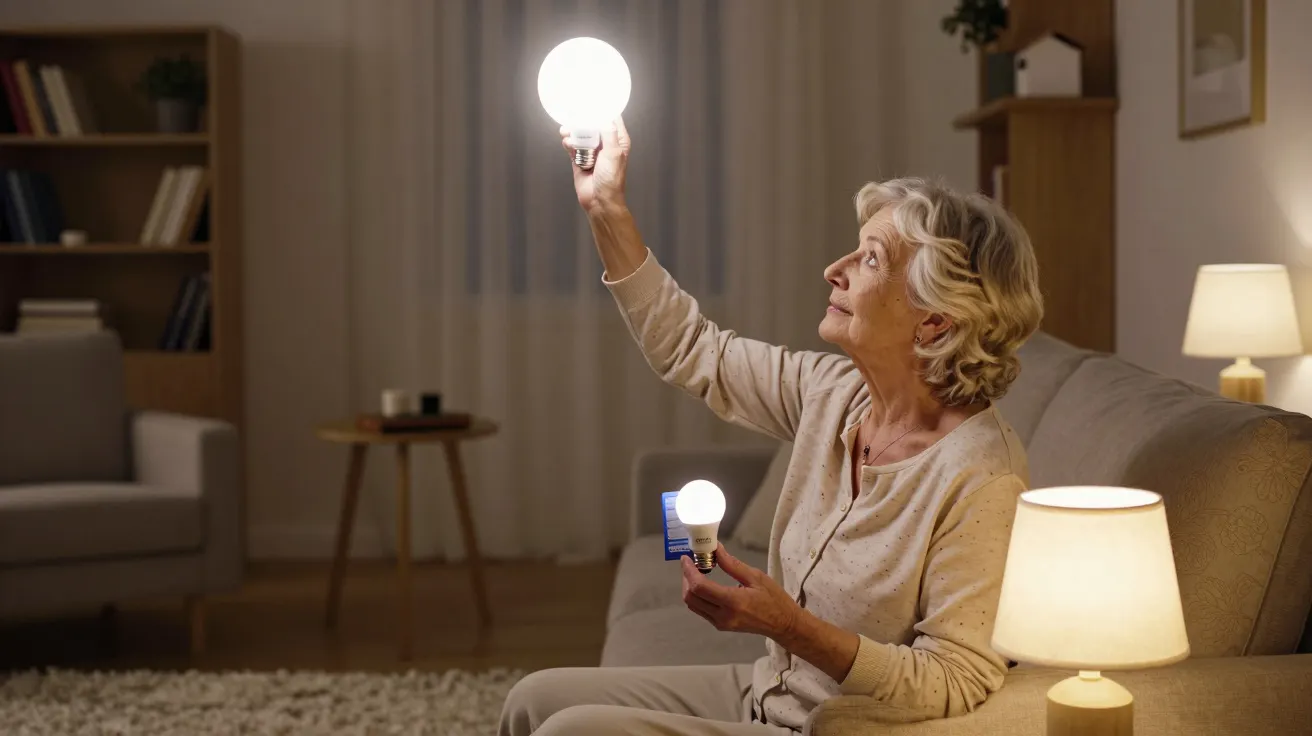
- Colour: Pick “warm white” or “soft white” bulbs (on the box, around 2200–2700 K), not “daylight” or “cool white” (4000 K and above). Warm light has more amber and less blue, so it interferes less with melatonin.
Most homes end up with the opposite: hard white spots in the ceiling, bright kitchen strips and a big television throwing blue‑white light across the room. Good for chopping onions at six; terrible for nodding off at ten‑thirty.
You don’t have to refit the house. You just need a different “night mode” for your lights.
What to change tonight in under fifteen minutes
Start with what you already own. Walk through your usual evening routine and ask one question in each room: Could I do this with a lamp instead of the main light?
- In the living room: choose one or two lamps that can stay on after nine p.m. Put warm‑white bulbs in them. Make them your default, and leave the ceiling light for cleaning and guests.
- In the bedroom: swap any harsh bedside bulbs for softer ones and, if possible, use lamps with shades that hide the bare bulb from view.
- In the hallway to the loo: plug in a low‑level night light or use a dim motion‑sensor light. Enough to see where you’re going; not so much that it blasts you awake.
- In the kitchen: once the washing‑up is done, try using just the cooker hood light or a small lamp if you go in for a glass of water, instead of the full strip.
Then pick a time – for example, 9 p.m. – and treat it as your “light curfew”. After that, no more overheads, no more cold‑white spots. Only the warm, lower lamps.
It feels almost too simple. That’s exactly why people overlook it in favour of pills and podcasts.
Tablets, TVs and the glow in your lap
Many over‑60s will say, “I don’t stare at my phone in bed,” and they’re right. But then they fall asleep in front of a large television, or read on a bright tablet under a ceiling light.
Screens matter in two ways: their light and their content. Sleep‑tracking apps and blue‑light filters adjust the first, not the second.
Even with a “night mode” on, a tablet held close to the face can be as bright as a small lamp. The brain doesn’t just see the colour; it sees the intensity. A drama that raises your heart rate at half‑past ten doesn’t help, either.
A realistic compromise:
- Keep the big, bright TV for earlier in the evening.
- In the last 45–60 minutes, switch to:
- radio or an audiobook plus warm lamp, or
- a paper book or e‑reader with front‑lit, amber setting and low brightness.
If you like your tablet, tilt the screen slightly away, drop the brightness until it feels just shy of “too dim”, and keep your warm bedside lamp on so the screen isn’t the only light source. That mixed lighting is gentler on the brain than a lone rectangle in a dark room.
Let’s be honest: no one is going to live by candlelight every night. The target isn’t perfection; it’s less harsh, less late, more warm.
Safety, confidence and that fear of falling in the dark
For many over‑60s, the idea of dimming lights at night clashes with a very real fear: tripping over the rug or missing the top stair.
You shouldn’t have to choose between broken sleep and broken bones.
The answer is to separate ambient light (the general glow of a room) from guiding light (the path you actually walk). Evening lighting for sleep should soften the first and protect the second.
- Keep pathways – bed to bathroom, bed to kitchen – clear and familiar.
- Use low‑level lights along those routes: plug‑in night lights, LED strips under skirting, or motion‑sensor lights at ankle height.
- Avoid sudden blasts from mirror lights or exposed bulbs at eye level when you get up at night.
Think: soft, continuous breadcrumbs of light, not a floodlight that resets your body clock at three in the morning.
Many people find that once the main glare is gone, they actually move more calmly and confidently at night. The brain isn’t being jolted awake by contrast; it’s following a quiet, predictable route.
Making the tweak stick in real life
In theory, everyone nods along. In practice, someone has to remember to actually turn off the big light.
The most resilient habits are the ones that hitch a lift on routines you already have.
- Tie the “light curfew” to something you never forget: the end of the nine o’clock news, taking evening medication, or feeding a pet.
- Put a small note by the main switches: “Lamps after nine”.
- If you live with someone, agree a phrase: “Shall we go to lamp mode?” It sounds silly. It works.
- Ask visiting family to respect it: they can have all the bright light they want earlier; after a certain time, you control the switches.
A simple way to remember the logic:
| Time of day | Light you want | Message for your brain |
|---|---|---|
| Morning to mid‑afternoon | Bright, cool possible, overhead fine | “Wake up, it’s daytime” |
| Late afternoon to early evening | Moderate, mixed lamps and overheads | “Winding down” |
| Last 60–90 minutes before bed | Dimmer, warm, mostly low lamps | “Sunset, time to sleep” |
You don’t need a smart home. You need a clear story that your lights tell your body, every single evening.
When to think beyond lighting
For many over‑60s, changing evening light is enough to knock ten, twenty, even thirty minutes off the time it takes to fall asleep. For others, it’s a helpful base layer rather than a cure‑all.
If you snore heavily, stop breathing in the night, wake drenched in sweat, or feel dangerously sleepy during the day, lighting alone is not the answer. Nor is it a substitute for medical advice if you’re already on sleeping tablets.
What it does offer is a kinder starting point. Tablets and supplements try to override a mixed message from your environment. Getting the message right first – with light, timing and routine – means any further help you need has a fairer chance to work.
Think of it as brushing your teeth for your body clock: basic, daily, unglamorous, quietly powerful.
FAQ:
- Does changing my lighting really matter more after sixty? Yes. Ageing eyes, a more fragile body clock and earlier natural wake times mean late, bright light has a stronger impact on when you can fall asleep and how often you wake.
- How warm should my evening bulbs be? Look for “warm white” or “soft white” on the box, usually 2200–2700 K. Avoid “daylight” and “cool white” bulbs, especially in lamps you use after nine p.m.
- Will this replace my sleeping tablets? Not by itself. It can make it easier to fall asleep and may support any plan you discuss with your GP to review medication, but you should never stop tablets without medical advice.
- Is it safe to dim lights if I get up at night? Yes, provided you keep clear routes and use low‑level guide lights (for example, plug‑in night lights or motion‑sensor strips). The aim is softer, steadier light, not darkness.
- What if my partner prefers everything bright? Agree a time in the evening to switch to “lamp mode” together, and focus the warm, dimmer lighting on your side of the bed or seating area. Even partial changes help your own body clock.



Comments (0)
No comments yet. Be the first to comment!
Leave a Comment