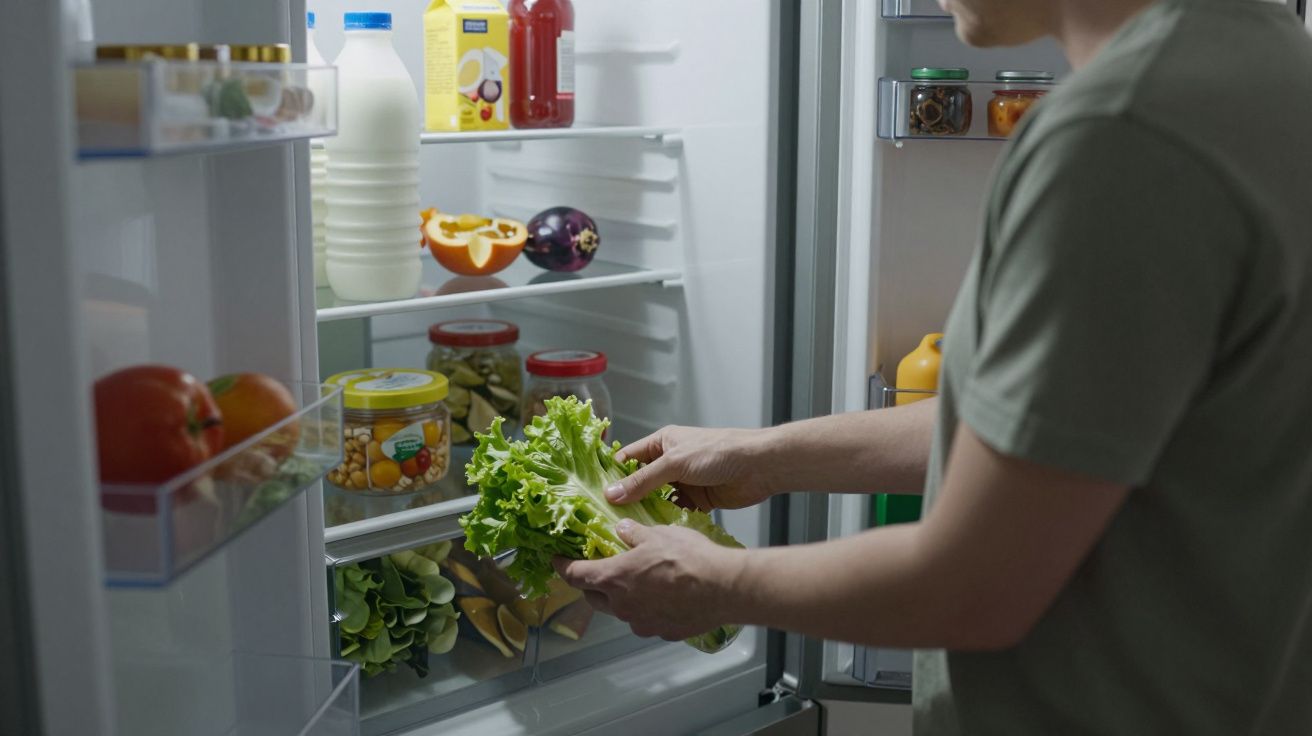
The door opens, the light flicks on, and for a second your fridge looks like a promise: yoghurt lined up, leftovers stacked, a bag of mixed leaves slumped on the very top shelf. You shut the door, feeling vaguely virtuous for buying salad at all. Two days later you reach for it and find… a damp, greyish tangle that smells faintly of drain.
You blame the supermarket, or the date on the packet, or your own optimism about weeknight cooking. You tell yourself salad just “never lasts”. What almost nobody blames is the quiet culprit in the background: where in the fridge those leaves actually lived.
There’s a spot up there that turns crisp into clammy faster than you think.
The one shelf that ruins your salad
In most upright fridges, cold air sinks and warmer air rises. That means:
- The back of the lower shelves and the salad drawer are usually coldest and more humid.
- The top shelf and the door are often slightly warmer and drier, especially near the light and vents.
It doesn’t sound like much – a degree or two here, a bit more airflow there – but for salad leaves that thin difference is the line between perky and pathetic. Leaves are mostly water, wrapped in very delicate cell walls. Warm, dry air pulls that water out. Once those cells collapse, you get that familiar sad flop.
The forgotten top shelf sits right where:
- Warm air rushes in each time you open the door.
- The interior light gently heats its surroundings when it’s on.
- Air from the cooling system can blow directly across anything sitting in its path.
Put a bag of salad there and you’ve created the perfect set‑up for slow dehydration. The bag fogs, drips, then the damp patches become slime patches. Any tiny bruises from shopping or packing spread like gossip.
You haven’t bought “bad” salad. You’ve parked it in the wrong climate.
How supermarkets actually store your leaves
Now picture the salad aisle in a supermarket. The bags are upright, cool to the touch, and the air feels almost chilly on your hands. Nobody’s cracked the door open to stand and think about dinner for a full minute.
Behind that aisle sits an unbroken cold chain:
- Leaves are cut and cooled quickly after harvest.
- They travel in chilled lorries at a steady low temperature.
- They’re stored in stock rooms that feel more like giant fridges than back cupboards.
- The display units run at around 1–4°C with constant cold air circulation.
On top of that, most bagged salads sit in modified‑atmosphere packaging – clever plastic that lets just enough gas in and out to slow down wilting and browning. The supermarkets also:
- Avoid stacking bags too high, so they’re not crushed.
- Rotate stock so the oldest bags go first.
- Keep them well away from warm spots like bakery ovens or sunny windows.
At home, that system ends the moment the bag hits your kitchen. The walk back from the shop, the time on the worktop while you unpack, the repeated temperature swings of a domestic fridge – all of it chips away at the short life of those leaves.
Then we quietly finish the job by tucking them on the top shelf “so we can see them”.
Where your salad actually wants to live
Salad leaves are happiest when two things line up: cold and slightly humid, but not wet. Most home fridges already have a place designed for that.
It’s the drawer you ignore until carrots fossilise in it.
The salad drawer (or crisper drawer) sits low down, away from the warm gusts every time you open the door. The plastic sides trap a bit more humidity, so moisture stays around the leaves instead of being sucked out of them by fast‑moving air.
To copy the supermarket logic in a home kitchen, use this order of preference:
- Top choice: In the salad drawer, in a loose container or bag.
- Second best: Bottom shelf, towards the back but not pressed against the freezer wall (risk of freezing).
- Avoid if you can: Top shelf and door shelves – they’re made for milk and condiments, not delicate leaves.
The goal is simple: give salad the coldest, calmest corner you’ve got.
Simple tweaks that keep leaves crisp for days
You don’t need special gadgets. A few small shifts turn “always slimy” into “still good on Thursday”.
1. Get them cold quickly
- Unpack salad first, not last.
- Don’t leave bags sweating on the worktop while you scroll through recipes.
- If you’ve walked home in summer heat, pop salad into the fridge before you even take your coat off.
2. Move them off the top shelf
- Slide bags straight into the salad drawer, not the eye‑level shelf.
- If your fridge has two drawers, reserve one for fruit and one for veg and leaves, so apples and pears (which give off ethylene) don’t speed up wilting.
3. Give them room to breathe
Once a bag is opened:
- Tip the leaves into a container lined with a sheet of kitchen roll.
- Lay another sheet gently on top and close the lid loosely, or leave a small corner of the lid cracked for a bit of airflow.
- Or, pop them back in their bag, squeeze out most of the air, add a dry piece of kitchen roll inside and clip it shut.
The paper catches excess surface moisture – the stuff that turns into slime – without letting the whole container dry out.
4. Keep them away from fridge draughts
- Avoid placing leaves right under a fan vent or in the direct path of cold air from the back wall.
- If your top shelf is the only clear space, at least slide salad towards the front and shield it with a box of milk or leftovers behind it.
5. Wash wisely
- Pre‑washed salad really doesn’t need another rinse; any extra washing adds water that’s hard to dry off properly.
- If you do wash whole heads or unwashed leaves, spin or pat them bone dry before storing. Damp clumps rot from the inside.
Tiny changes; big difference. You’re not fighting the salad, just the environment you drop it into.
What this means for your weeknight salad
Once you see the fridge as a landscape with climates, not just shelves, the limp‑salad mystery stops being a personality flaw and starts being physics.
Instead of “I never manage to eat salad in time”, it becomes:
- “This lives in the cold drawer, not on the warm top shelf.”
- “I open it into a box with a paper towel, not leave it stewing in a half‑deflated bag.”
- “I keep it away from the draught and the door.”
You won’t save every leaf, and there will still be weeks when life wins and the rocket loses. Nobody does this perfectly all the time. But shifting where and how you store salad easily buys you two or three extra days of good texture – enough to actually use what you paid for.
And the next time you pull out a bag of leaves that still crackle faintly when you squeeze them, you’ll know it wasn’t luck. It was simply not exiling them to the wrong shelf.
| Key point | Detail | Why it matters |
|---|---|---|
| Top shelf trap | Warmer, drier air dehydrates thin leaves | Turns crisp salad limp in a day or two |
| Salad drawer zone | Colder, more humid, fewer temperature swings | Extends shelf life and keeps texture |
| Smart storage | Box + kitchen roll, minimal washing, avoid draughts | Less slime, more usable portions, less waste |
FAQ:
- Isn’t the top of the fridge always the coldest? In most upright fridges, the coldest spots are the lower shelves and the salad drawer because cold air sinks. The top shelf and door tend to be slightly warmer and drier, which is bad news for delicate leaves.
- Can I keep salad in the original bag? Unopened, yes – just move the bag to the salad drawer quickly. Once opened, you’ll usually get better results tipping the leaves into a container with a piece of kitchen roll to manage moisture.
- How long should bagged salad last if I store it properly? It varies by mix and date, but with prompt chilling and storage in the salad drawer, many will stay fresh for 3–5 days after opening instead of collapsing overnight.
- Why do some leaves go slimy faster than others? Tender mixes like lamb’s lettuce, rocket and baby spinach have thinner cell walls and more surface area, so they wilt and rot faster than sturdier leaves like romaine or little gem – especially on a warm, draughty shelf.
- Is it worth buying whole heads instead of bags? Whole lettuces often last longer because less surface is exposed and they’re less bruised. If you’re happy to wash and prep them, they’re more forgiving – but they still prefer the salad drawer over the top shelf.



Comments (0)
No comments yet. Be the first to comment!
Leave a Comment