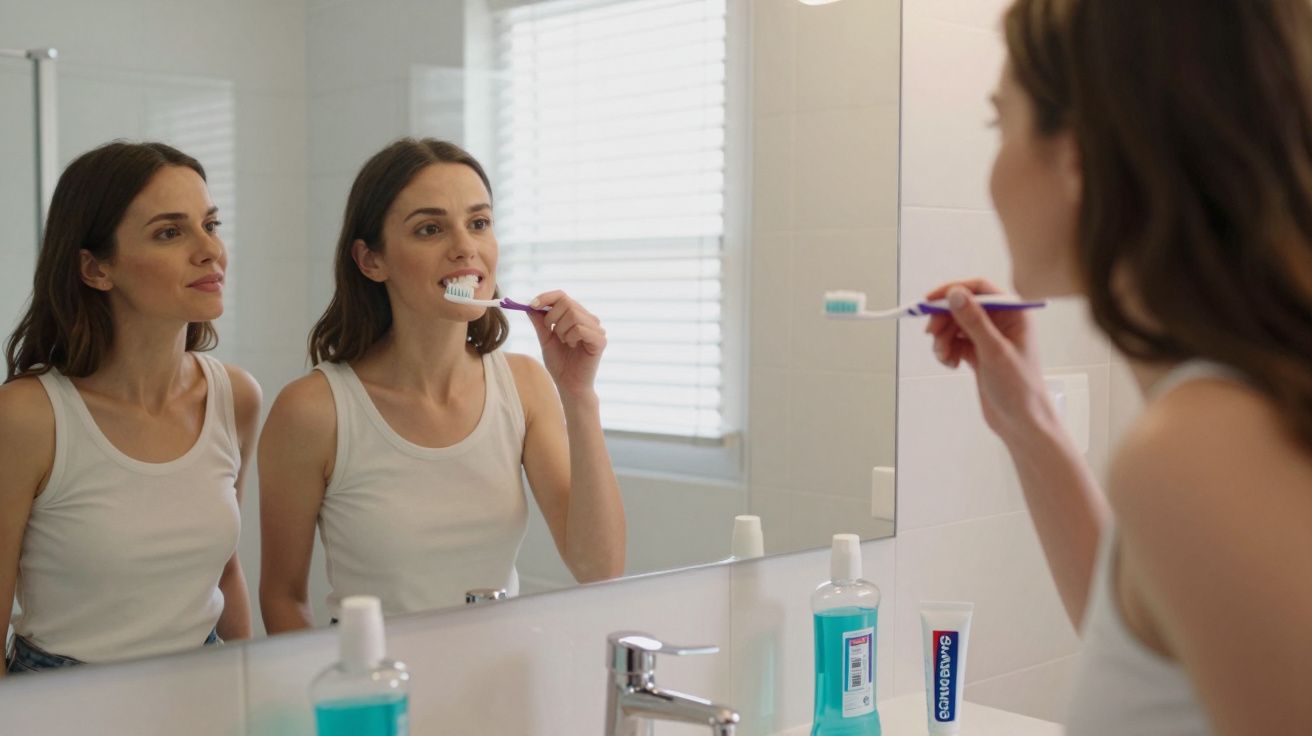
The first thing the hygienist did was tilt the mirror so I could see. “You’re doing this to yourself,” she said, pointing to the tiny notches near my gums and the way my canines looked longer than they should. I braced for the usual lecture about tea and coffee. Instead, she asked how hard I brushed.
I told her proudly I gave my teeth a “good scrub”, especially at night. I used a medium‑bristle brush and really went at the fronts, because that’s what everyone sees. I swirled mouthwash after every coffee. I’d even cut back on red wine. In my head, I was doing everything right for a whiter, younger smile.
Then she said the sentence I can’t unhear: “Your toothbrush is ageing your smile faster than your flat whites.”
Tea and coffee can stain. But the thing that makes teeth look old – the long, yellowish, sensitive, slightly uneven look – often comes from years of over‑enthusiastic brushing. Not glamorous. Not obviously “bad”. Just too much force with the wrong technique, twice a day, for years.
Once you see it, you can’t unsee it either.
The hidden damage behind a “really good scrub”
Dentists have a love–hate relationship with our toothbrushes. They love that we’re using them. They hate what happens when we treat them like scouring pads.
When you scrub hard, especially with a medium or hard brush, you’re not just removing plaque. You’re also slowly sanding away enamel and irritating the gums that frame your smile. The results don’t show up overnight. They creep in over a decade.
Here’s what that one habit quietly does:
- Wears away enamel at the neck of the tooth, near the gumline, creating tiny grooves or “ditches”.
- Pushes gums back (recession), making teeth look longer and exposing darker root surfaces.
- Exposes yellower dentine under the enamel, so teeth look more yellow even if you barely drink coffee.
- Triggers sensitivity to cold air, water and sweet foods, which makes brushing properly even harder.
Tea and coffee stains mostly sit on the surface and can often be polished away. Enamel and gum loss are structural changes. Once gone, they’re difficult – and expensive – to disguise.
Think of enamel like the glaze on a tile. You want to clean it, not sand it.
Why dentists blame the brush, not the brew
From a cosmetic point of view, most people worry about colour. “My teeth are yellow from coffee” feels like the obvious story. Dentists see something else first: shape, length and where the gumline sits.
A smile reads “younger” when:
- The edges of the front teeth are smooth and fairly even.
- The gumline is full and gently scalloped, not shrunken or notchy.
- The surface catches light with a natural gloss.
Aggressive brushing works against all three. It flattens edges, carves little scoops near the gums and thins the enamel so light doesn’t bounce the same way. The paradox is brutal: the harder you chase a squeaky‑clean look, the more you risk a worn, older‑looking smile.
Tea and coffee work differently:
- They stain the outer surface.
- They rarely change the shape of the tooth.
- Hygienists can usually lift most staining with a professional clean.
So while cutting back on dark drinks may brighten things a shade or two, it’s your daily brushwork that decides whether your smile keeps its youthful outline or not.
How to know if you’re brushing too hard
Most people who over‑brush have no idea they’re doing it. In fact, they’re often the patients who say, “I’m really good with my teeth. I brush really well.”
Look for these quiet warning signs:
- Your toothbrush bristles splay out or fray within a couple of months.
- You can see a clear step or notch near the gumline on one or more teeth.
- Your gums look higher on some teeth, especially canines and premolars.
- Your teeth look yellower near the gums, even if the tips look fairly white.
- You get a sharp “zing” with cold water or when air hits certain spots.
- Friends or partners say you “saw at your teeth” when you brush.
If you use an electric toothbrush and regularly trigger the pressure sensor, that’s also a clue. You’re not meant to make it beep every time.
The gentler routine that actually keeps teeth younger
The fix isn’t to brush less. It’s to brush smarter – lighter pressure, softer tools, better angles. You still get rid of plaque; you just stop treating enamel like burnt bits on a roasting tin.
Your 2‑minute template
Use this as a baseline twice a day:
Choose the right brush
- Go for soft or extra‑soft bristles only.
- Manual: small head, straight handle.
- Electric: a reputable sonic or oscillating brush with a soft head and pressure sensor if possible.
- Go for soft or extra‑soft bristles only.
Use a pea‑sized blob of fluoride toothpaste
Sensitive or “enamel care” pastes are fine. Whitening pastes should be low‑abrasion; your dentist can advise.Angle, don’t attack
- Tilt the bristles at about 45° to the gumline.
- Use tiny circles or gentle jiggles, not long scrubbing strokes.
- If it feels like you’re colouring in with a felt‑tip, that’s about right. If it feels like scrubbing pans, it’s too hard.
- Tilt the bristles at about 45° to the gumline.
Lighten your grip
Try holding the brush with just your fingertips, like a pen. You’re aiming for the pressure you’d use to clean your eyelid, not your kitchen sink.Let the timer do its job
Two minutes total, roughly 30 seconds per quadrant. Electric brushes often have built‑in timers and pacers; listen to them.Spit, don’t rinse
After brushing, spit out the excess foam but don’t rinse with water. Leaving a thin film of toothpaste on your teeth gives the fluoride longer to work.Wait after acid
If you’ve just had something acidic – citrus, fizzy drinks, wine – wait 20–30 minutes before brushing. Acids temporarily soften enamel, and scrubbing then does more damage.
It feels absurdly gentle at first. Stick with it. Clean doesn’t have to feel harsh.
Small habit swaps that make a big visual difference
Tiny changes, done daily, matter more than one heroic whitening session. A few simple switches:
Swap “scrub” for “massage” in your head
Picture yourself massaging plaque away at the gum edge rather than scouring stains off the front.Let an electric brush do the work
If you’re a vigorous brusher, an electric handle with a pressure light can be a game‑changer. Place it, guide it, and stop pushing.Reserve whitening toothpastes
Many rely on abrasives. Used with a heavy hand, they accelerate surface wear. Ask your dentist which are gentle enough for daily use.Move the focus to the gumline, not just the fronts
Most plaque sits where tooth meets gum. Cleaning there thoroughly but gently keeps that pink “frame” youthful.Make the night‑time brush non‑negotiable
Skipping it lets plaque sit undisturbed for hours, driving both gum disease and staining. Night is when your mouth is driest and most vulnerable.
Quick reference: ageing habits vs younger‑smile swaps
| Habit | How it ages your smile | Swap it for |
|---|---|---|
| “Really hard” brushing with medium/hard bristles | Wears enamel, causes gum recession, exposes yellow dentine | Soft/extra‑soft brush, fingertip grip, gentle circular motion |
| Brushing straight after acidic drinks | Scrubs softened enamel, speeding up erosion | Rinse with water, wait 20–30 mins, then brush lightly |
| Obsessing over front surfaces only | Misses plaque at gumline; gums inflame and recede | Spend most time at the gum edge, inside and out |
| Using gritty whitening pastes daily with force | Microscopic scratching, dulling gloss over time | Low‑abrasion paste, occasional professional whitening/cleaning |
Where tea and coffee actually fit in
None of this means your morning brew gets a free pass. Tannins in tea and coffee do stain, and too many sugary or milky drinks aren’t great for decay either. But purely from an ageing‑smile point of view, they’re surprisingly fixable problems.
- Stains can often be polished off by a hygienist in a single appointment.
- Reducing how long you sip them (rather than cutting them out entirely) helps.
- Using a straw for iced versions and rinsing with water afterwards also makes a difference.
What dentists quietly wish more people knew is this: an extra decade of heavy‑handed brushing will change how your teeth are shaped, not just what colour they are. That’s much harder to reverse than a bit of latte tint.
Protect the enamel and the gums first. Then worry about shade.
The habit shift you’ll actually feel
The oddest part about changing how you brush is how quickly your mouth starts to feel different. After a week of lighter pressure and a softer brush, many people notice:
- Less “zing” when drinking cold water.
- Gums that look calmer and bleed less.
- A smoother, more even feel when you run your tongue along your teeth.
It’s a small, quiet upgrade, the kind you only clock when you go back to your old brush in a hotel and think, “That feels… harsh.”
You don’t need to give up coffee to stop your smile ageing before the rest of you. You just need to stop treating your toothbrush like a scourer – and start treating your enamel as something you want to last.
A younger‑looking smile isn’t about brushing harder. It’s about brushing wisely, every single day.
FAQ:
- Do I really have to buy a soft toothbrush?
Yes. Medium and hard bristles remove plaque no better than soft ones but cause more wear and gum trauma, especially with strong pressure. A soft brush plus good technique is the safer, more effective combo.- Will my gums grow back if I stop brushing so hard?
Mild inflammation can improve and look fuller when plaque is controlled gently. But true gum recession (where the gum has moved down the root) usually doesn’t grow back on its own. Stopping further damage is still hugely worthwhile.- Are electric toothbrushes always better?
They’re often better used correctly. The built‑in timer and pressure control help many people. But if you still press too hard or scrub with it, you can do damage. Place the head, let it work, and glide it slowly.- Is it safer to brush straight after coffee to stop stains?
Not if the drink is hot and acidic. Rinse with water, wait at least 20 minutes, then brush gently. You’ll still control staining without scrubbing softened enamel.




Comments (0)
No comments yet. Be the first to comment!
Leave a Comment