You lug the basket in, shake out a hoodie, drape jeans over the radiator and nudge the thermostat up “just for an hour”. By bedtime the windows are streaming, the room smells faintly of wet dog and softener, and the boiler has barely taken a breath. Somewhere in that damp forest of sleeves is the school jumper you actually needed dry.
You tell yourself it’s just winter, just British weather, just part of not owning a tumble dryer. Then a friend casually rolls a dripping jumper into an old towel, stands on it, and hangs it up bone‑light while your own clothes still drip on the rack.
The trick looks too simple to matter. It isn’t. Used right, a few scruffy towels can quietly cut hours off drying time - and nudge your gas bill down at the same time.
Dry clothes are rarely just luck.
Indoor drying isn’t bad luck - it’s physics
Drying clothes indoors is really a game of moving water. A full load can hold well over a litre of it after the spin cycle. To get that water out, you have two options: squeeze it into something else or heat the air until it’s willing to hold more moisture and let it drift away.
If you skip the extra squeeze and rely only on heat, your boiler or gas tumble dryer has to do the hard work. It warms the air, the air evaporates the water from your clothes, and then all that warm, wet air needs to go somewhere - usually out of a window you’ve just opened because the glass is running with condensation.
Every extra minute the boiler runs to keep the room pleasant while that moisture evaporates is money. It’s also mould risk, warped window frames and that lingering damp smell you pretend not to notice. Once you see drying as a water‑shuffling exercise, the towel trick stops looking like a hack and starts looking like common sense.
The goal becomes simple: remove as much water as possible before you ask heat to help.
The old‑towel squeeze that does the heavy lifting
Here’s the move people who hate high bills and damp flats quietly use.
Pick your worst offenders - jeans, hoodies, thick jumpers, bedding. These are the slow‑drying items that usually force you to keep the heating on longer or reach for the tumble dryer.
- Lay out a big, dry towel on the floor, bed or table. Old bath towels are perfect.
- Spread the garment flat on top, smoothing out big folds so it’s more or less in a single layer.
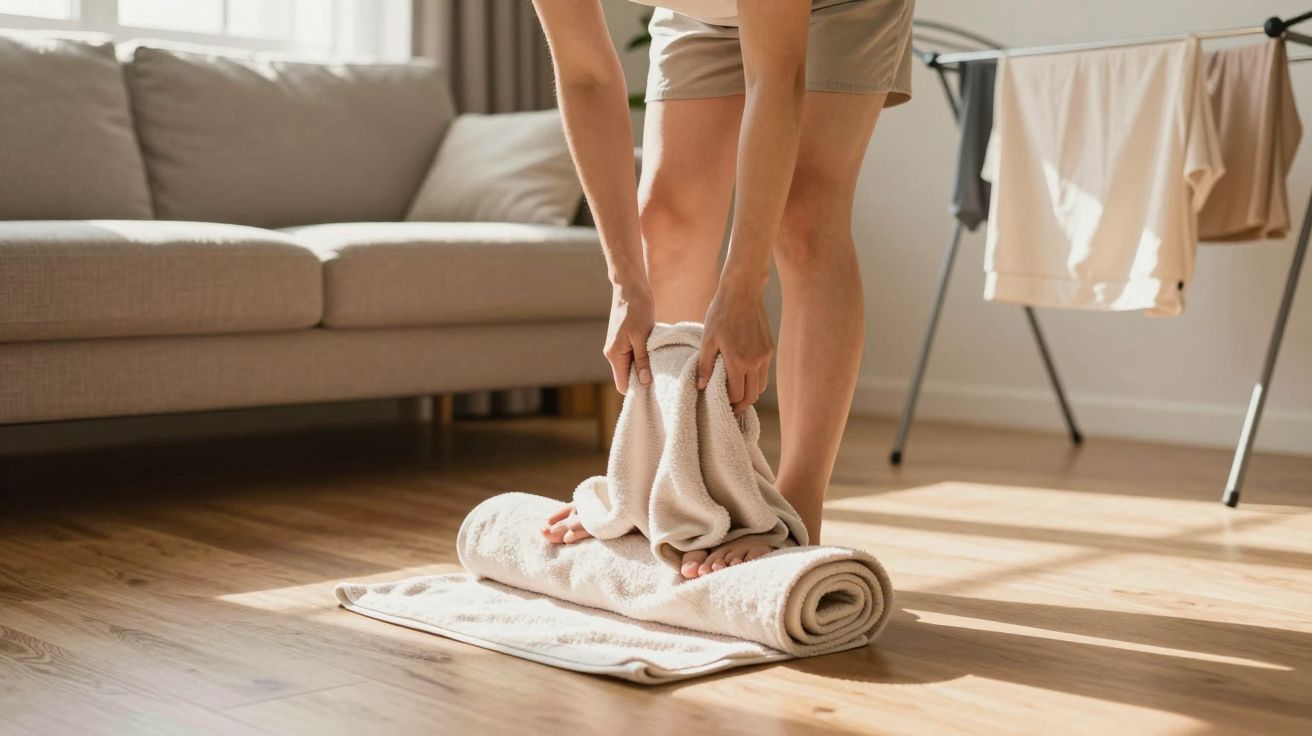
- Roll the towel up tightly with the garment inside, like a Swiss roll.
- Press or twist the roll. You can:
- walk along it in socks,
- kneel and lean your weight along the length,
- or twist from each end in opposite directions.
- Unroll and hang immediately on an airer, hanger or line.
The towel acts as a thirsty sponge with much more surface area than your hands can manage. It pulls out a surprising amount of water your washing machine left behind.
Do this for a couple of heavy items and you’ll feel the difference instantly: they go from “sodden and sagging” to “just cool and damp”. That jump cuts drying time dramatically, which in turn cuts the hours you feel obliged to keep the radiators warm or the gas dryer tumbling.
“You’re not drying clothes faster by magic,” as one energy adviser put it. “You’re just getting heat out of the picture for the wettest bit.”
A quick variation for tumble‑dryer users
If you do use a dryer - gas or electric - a towel still earns its keep.
- Pop one large dry towel in with a wet load.
- Run the dryer on your usual setting for 15–20 minutes.
- Remove the towel once it’s soaked through and finish drying the load without it.
The towel gives the first burst of drying a head start by absorbing moisture fast, so the drum doesn’t have to run as long. Shorter cycles mean less gas (or electricity) burned and less wear on your clothes.
Why a towel trick touches your gas bill
It sounds odd that leaning on old towels can show up on your energy bill, but the chain is straightforward.
Less moisture in the fabric means:
- fewer hours with the heating on just to babysit damp clothes,
- or shorter tumble‑dryer cycles if you use one.
Less damp air in the room means:
- fewer times you crack a window and dump paid‑for heat outside,
- less hidden condensation soaking into walls, which otherwise makes the house feel colder and pushes you to turn the thermostat up again.
A typical UK gas boiler spends much of winter doing two jobs: keeping rooms warm and quietly supplying the energy to evaporate litres of washing‑line water. Towels help with that second job before the boiler even gets involved.
The effect isn’t a headline‑grabbing 50% off overnight. It’s the quiet kind of saving: 20 minutes less drying here, a spared tumble‑dryer cycle there, one fewer hour of “I’ll just leave the heating on until these are dry”. Over a whole winter, those little shifts stack.
Common ways we waste heat when we dry indoors
Even without buying a gadget, most of us make the same energy‑hungry mistakes when we hang washing inside.
1. Smothering the radiators
Draping clothes directly over radiators feels efficient - heat plus damp equals dry, right? In practice you:
- block heat from circulating round the room,
- force the boiler to run longer to hit the same room temperature,
- and create a strip of intense humidity right by a cold wall or window.
A better routine:
- keep radiators mostly clear,
- place an airer near, not on, a warm radiator or in the same room,
- use the towel squeeze first so the boiler isn’t fighting soaking‑wet fabric.
2. Drying in a sealed, cold room
Shutting the door and hoping the damp stays put gives moisture nowhere to go. The air quickly hits saturation, and drying crawls to a halt. That’s when people whack the thermostat even higher “to help things along”.
What works instead:
- choose the warmest sensible room (often the living room or a spare bedroom with heating on),
- crack a window or vent slightly to let moist air escape,
- run the heating at your normal setting, not “tropical”, and let circulation do its job.
3. Overloading the airer
The more you pile on, the less air can actually move. Double‑layered T‑shirts and three jumpers on one rung can double drying time, dragging your boiler along for the ride.
If space is tight:
- dry in smaller batches,
- rotate items halfway through,
- prioritise the towel trick on anything heavy that has to be in that load.
Turn towels into a drying routine, not a one‑off hack
Like clearing a fogged windscreen, this works best when it becomes muscle memory rather than an occasional experiment.
A simple, repeatable flow might look like this:
Out of the machine
- Shake each item once to untangle.
- Set aside the “problem” pieces: jeans, thick jumpers, bedding.
Towel time (2–3 minutes)
- Roll and squeeze the worst offenders in an old towel.
- Swap to a dry towel if the first becomes obviously soaked.
Smart hanging
- Put heaviest, towel‑squeezed items on the outer edges of the airer where air moves.
- Use hangers on door frames or curtain poles for shirts to open them up.
- Leave a little space between each item.
Heat and air
- Turn the heating on to your normal setting; don’t crank it just for the washing.
- Crack a window or trickle vent in the same room.
- If you have a small fan, aim it through the airer on low - moving air beats hotter air.
Quick check‑in
- After an hour or two, flip thicker items.
- If the room feels steamy, open the window a touch more for ten minutes.
Do this a few evenings in a row and it stops feeling like extra faff. It’s just “how you hang washing” now - and your boiler quietly thanks you.
Simple tweaks that make towels work even harder
If you want to squeeze the last bit of usefulness out of those frayed bath sheets:
Keep “drying towels” separate
Don’t mix them back into your normal rotation. A dedicated pair near the washing machine stays ready and doesn’t need to look pretty.Spin your towels well too
The drier the towel at the start, the more moisture it can steal. If you add them to the wash, run an extra spin afterwards before using them for squeezing.Prioritise what you squeeze
Use towels on items that will otherwise keep the heating on: kids’ uniforms, work clothes, heavy cotton. Thin synthetics often dry quickly anyway.Watch where the damp goes
After squeezing, hang towels somewhere they can dry fully - ideally on an airer in a ventilated room. They’re part of the drying system now, not a mystery source of damp in the laundry basket.
| Tweak | What it changes | Why it helps your bill |
|---|---|---|
| Towel squeeze on heavy items | Cuts how much water has to be evaporated by heat | Shorter heating and dryer run‑times |
| Clear radiators, use nearby airer | Lets boiler heat the room, not just the laundry | Reaches thermostat quicker, fewer boiler cycles |
| Ventilate lightly while drying | Stops rooms turning into saunas you have to re‑heat | Less lost heat, fewer “boost” bursts |
FAQ:
Does the towel trick replace the spin cycle?
No. Always use the highest spin your fabrics can handle first; the towel is a bonus step that removes what the machine leaves behind, especially from thick items.Won’t towels just move the damp problem elsewhere?
They move it into a fabric that’s easier to dry: flatter, thinner and with more surface area. It’s still important to hang towels where air can move and a little ventilation is possible.Can this really affect my gas bill if I don’t own a tumble dryer?
Yes. If clothes dry faster, you spend fewer hours running the heating “just to help them along” or reheating rooms you’ve aired out because of condensation.Is it better to dry in an unheated spare room to save energy?
Often not. Clothes may take days to dry, during which moisture can build up and creep into the rest of the house. A warmer, used room with controlled ventilation and towel‑squeezed garments is usually kinder to both your home and your bill.Do I need special “microfibre drying towels”?
No. Any clean, reasonably absorbent old bath towel will do. The physics is about contact and pressure, not fancy fibres. Save your money for something else.




Comments (0)
No comments yet. Be the first to comment!
Leave a Comment