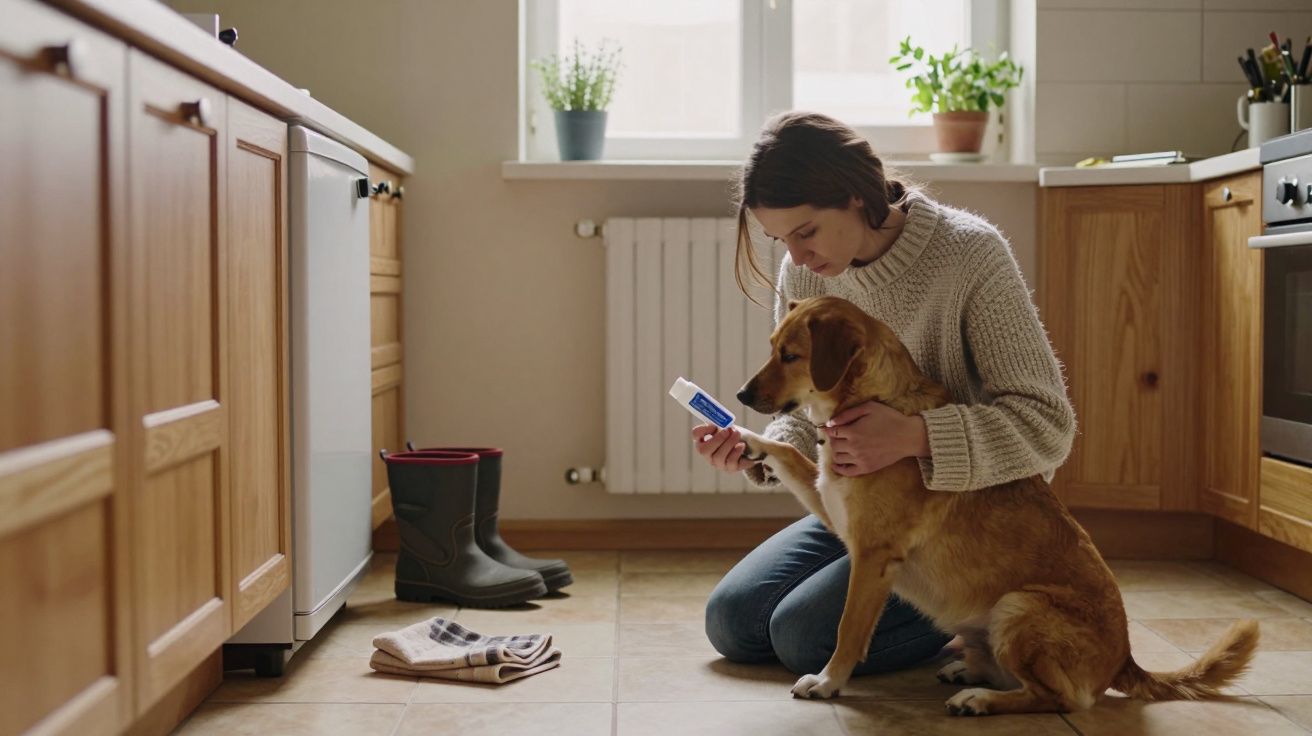
The dog came in on three legs on a wet January morning, nails skittering across the clinic floor, tail doing its best to pretend nothing was wrong. His owner was sure it was his hips “playing up with the cold”. The vet knelt, lifted a paw, and everyone saw it at once - the pads were split like overbaked bread, pale cracks rimmed in red, a crust of grey grit caught between the toes.
There was no dramatic injury, no obvious cut from glass or a thorn. Just weeks of frosty pavements, rock salt at the kerb, laminate warmed by underfloor heating, and a bucket of strong floor cleaner in a tidy kitchen. The damage had crept in day by day.
The vet wiped away the grit, reached for a plain white tub from the shelf - no paw-print logo, no fancy scent. A blob on each pad, worked in like hand cream, and a quiet sentence that turns up in surgeries across the country every winter:
“It’s the floors doing this - outside and inside. And this,” she said, holding up the tub, “costs less than your coffee.”
From icy pavements to hot tiles: why winter floors bite back
Ask vets about winter paws and they’ll talk less about snow, and more about surfaces. What your dog walks on in December and January changes overnight, in ways their skin struggles to keep up with.
Outside, pavements and kerbs collect:
- Grit and rock salt used to de‑ice roads and paths
- Sharp ice crystals on uneven ground
- Chemical de‑icers around car parks, driveways and shop fronts
Salt and de‑icers don’t just melt ice; they strip moisture. They draw water out of the paw pads and tiny cracks start to form. Every step on rough, frozen ground pulls those cracks wider.
Back indoors, another enemy waits: dry heat. Radiators, wood burners and underfloor heating turn cold tiles and laminate into warm, thirsty surfaces. They pull even more moisture out of skin that was already stressed from the walk.
Dogs don’t wear socks or slippers. Their pads are tough, but not invincible, especially when:
- The same routes are used day after day
- Floors are cleaned with strong bleach or detergent and not rinsed again
- They’re older, have allergies, or naturally drier skin
Over a fortnight of bad weather, that mix can turn perfectly healthy paws into sore, splitting pads.
The cracks vets keep treating
Most owners don’t notice cracked pads until their dog starts licking, limping, or simply digging in their heels at the front door. By then, the surface damage often runs deep enough to sting with every step.
Common patterns vets report in winter:
- Small, vertical splits in the pad surface, especially at the edges
- Red, sore skin between the toes where salt and grit collect
- Dogs licking or chewing their feet after walks or at night
- Sudden reluctance to walk on certain floors, especially rough tarmac or salt‑strewn paths
One city vet described a week in February: a spaniel who would only walk on the grass verge, a terrier who howled the moment his paw touched the pavement, and an elderly Labrador whose “arthritis flare” turned out to be raw, cracked pads under a thick coat of winter fluff.
If cracks aren’t managed, they can deepen and collect bacteria or yeast. That’s when you start seeing:
- Swelling around a split
- Discharge or a bad smell
- Warmth and clear pain on touch
At that stage, dogs may need prescription treatments, bandaging and rest. Vets would far rather see the paws earlier, before the spiral begins.
Three quiet culprits under your own roof
- Underfloor heating and hot tiles – cosy for you, drying for pads that already lost moisture outside.
- Strong cleaning solutions – bleach and concentrated floor cleaners can irritate and strip the skin barrier.
- Slippery laminate or vinyl – dogs grip harder, leading to friction and tiny abrasions on already dry pads.
None of these are dramatic on their own. Together, they’re a slow sandpaper.
The under‑£5 tub many vets recommend
When you ask what to put on those sore pads, most vets don’t start with boutique balms. They reach for something simple: a cheap, unscented, petroleum‑jelly‑based ointment.
Think of the plain tubs and own‑brand jars you find in any supermarket or chemist, often under £3:
- Petroleum jelly (Vaseline‑type products)
- Basic soft paraffin ointments
- Simple, unscented barrier creams formulated for babies
Used sparingly, these act as:
- A moisture‑trapping layer, helping dry pads re‑hydrate
- A temporary shield against salt, grit and dirty puddles
- A lubricant that reduces friction on abrasive ground
Many practice nurses use the same ointment on their own cracked winter hands. The appeal is not glamour; it’s reliability and price.
“You don’t need a £20 paw butter,” says one small‑animal vet in Leeds. “A plain, unscented jelly does the job beautifully if you use it right - and you’re more likely to use it if it doesn’t feel precious.”
What to look for (and what to skip)
Good bets:
- Unscented petroleum jelly or soft paraffin
- Paw balms with simple ingredients like beeswax, shea butter, coconut oil
- Baby barrier creams without zinc oxide or strong perfumes
Best avoided unless your vet says otherwise:
- Human moisturisers with lots of added fragrance
- Lotions containing zinc oxide (can be toxic if licked)
- Products labelled for humans only that include salicylic acid, retinol, or urea
Dogs will lick their paws. A thin layer of a simple, vet‑approved ointment is considered safe if ingested in small amounts. If your dog is obsessive about licking, booties or socks over the top for 10–15 minutes can give the product time to soak in.
The three‑step winter paw routine vets wish every owner used
You don’t need a 20‑minute spa ritual. Vets talk about a simple before–after rhythm most owners can manage, even on a busy weekday.
1. Before the walk: barrier on, not off
- Check pads quickly for existing cracks or stones caught between toes.
- Rub a pea‑sized amount of ointment between your fingers until soft.
- Massage a thin film over each pad and between the toes - it should look slightly sheeny, not claggy.
- Wipe off any excess so the paw isn’t slippery.
The goal is a light barrier, not a thick glove.
2. After the walk: rinse, dry, repair
- Rinse paws in lukewarm water to remove salt, grit and chemicals. A washing‑up bowl by the door works well.
- Pat dry thoroughly, including between toes. Damp skin plus cold air equals more cracking.
- If the skin looks dry but not raw, add a second very thin layer of ointment for the evening.
- If you see deep splits, bleeding or swelling, skip DIY creams and ring your vet.
3. Indoors: kinder floors, calmer skin
- Use mats or rugs on the hottest areas of tile or laminate where your dog likes to lie.
- Dilute floor cleaners as directed and, where possible, do a clean‑water rinse mop to reduce residue.
- Keep dogs off freshly cleaned floors until they’re fully dry.
- If you have underfloor heating, try to give at least one resting spot that’s cooler and softer.
Consistency matters more than perfection. Two minutes at the door every day beats one long session once a week.
Spot the warning signs early
A quick check when you towel your dog can catch trouble before it turns into a limp.
- Pads look dull, grey or flaky instead of smooth and rubbery
- Fine white lines or shallow cracks at the edges of pads
- Pinkness or redness between toes
- Licking feet more than usual after walks
- Hesitation on rough or salted ground
If any of these show up, it’s time to tighten up the rinse‑and‑ointment routine. If they worsen, call the vet.
Common surfaces and how they stack up
| Surface / setting | Winter risk to paws | Simple tweak that helps |
|---|---|---|
| Gritted pavements and roads | High | Rinse after walks, use barrier jelly |
| Frozen grass and fields | Medium | Shorten walks in extreme cold |
| Hot tiles / underfloor heat | Medium–High | Add rugs, limit long lounging |
Do dogs need boots – or just better habits?
Dog boots can be excellent for:
- Dogs in very cold, icy or chemically treated urban environments
- Working dogs spending hours on rough ground
- Those with existing paw disease or allergies
But many dogs hate them, and most owners never reach for them for a short evening walk. Vets stress that simple habits go further than unused gear:
- Rinse, dry, thin ointment layer
- Slightly shorter walks on the coldest, saltiest days
- Using grass verges or softer routes where possible
If your dog tolerates boots, they can sit on top of your barrier cream as an extra layer. If not, don’t panic - the cheap tub by the back door plus water and a towel does more than you think.
When to stop home care and see your vet
Self‑care has limits. Call your vet promptly if you notice:
- Cracks that bleed or gape when the paw flexes
- Swelling, heat, or discharge around the pads or between toes
- Your dog refusing to bear weight on a limb
- Persistent redness or a bad smell from the paws
Infection, foreign bodies (like glass or thorns) and underlying skin disease all need professional assessment. The ointment tub is for prevention and mild dryness, not for patching over serious problems.
FAQ:
- Is petroleum jelly really safe for dogs’ paws? In small, thinly applied amounts, unscented petroleum jelly is widely used by vets as a barrier and moisturiser for pads. Most dogs will be fine if they lick a little. If your dog obsessively chews their feet, ask your vet for a product and plan tailored to them.
- Can I use my own hand cream on my dog? Not automatically. Many human creams contain perfumes, essential oils or actives (like urea, retinol, or acids) that aren’t ideal for dogs to lick. Stick to plain jelly, simple pet paw balms, or baby barrier creams your vet is happy with.
- How often should I put ointment on in winter? For most dogs, a light layer before salt‑heavy walks and again after rinsing and drying in the evening is enough. If the pads still look dry, your vet may suggest more frequent use for a short period.
- Will this stop all cracking? No product can guarantee perfect paws. Age, allergies, activity level and weather all play a role. Ointment plus rinsing and kinder floors will usually reduce problems and make any cracks that do appear less severe.
- Are natural oils like coconut oil better? Coconut oil can help some dogs and is generally safe if licked in small amounts, but it’s less occlusive than petroleum jelly. Many vets use a mix: coconut‑based products for routine conditioning and plain jelly for serious weather protection.




Comments (0)
No comments yet. Be the first to comment!
Leave a Comment