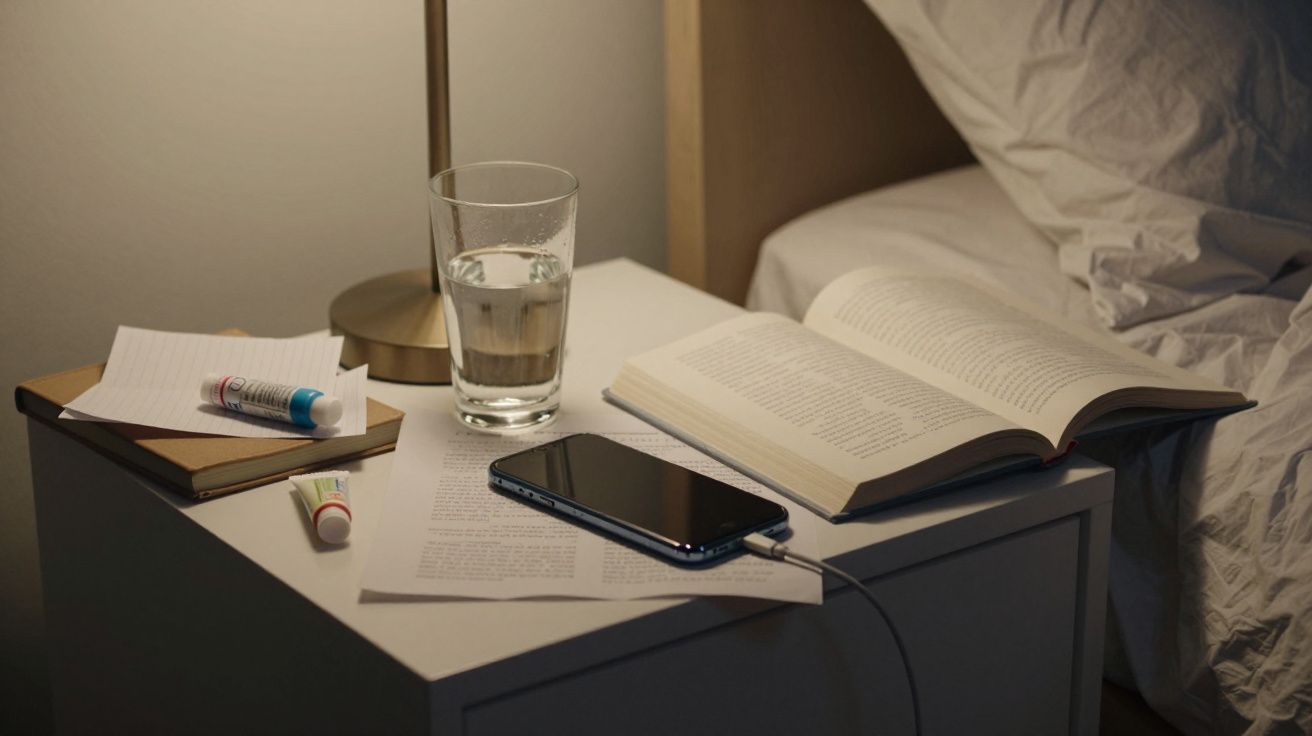
The last thing you see at night is often not the ceiling, but the small landscape around your lamp. There’s the book you meant to finish weeks ago, the half‑empty glass of water, the phone face‑down but never far away. For some people, that surface is a calm still life; for others, it’s a teetering pile of “I’ll sort it tomorrow”.
Personality psychologists pay attention to spaces like this. They see them as micro‑snapshots of how you handle demands, comfort and control. You do not need a degree in psychology to read the signs, though. If you look closely, your bedside table quietly broadcasts which kinds of stress you’re carrying - and how you tend to cope with it.
This is not about shaming the messy or worshipping the minimalist. Many high‑functioning people live with visible chaos. Instead, it’s about using one small area to notice patterns in your stress levels before they start showing up in your sleep, your relationships or your health.
What psychologists notice on a bedside table
When personality researchers study everyday environments, they look past taste and trend. They focus on patterns that repeat and objects that don’t match the room’s main purpose: rest and recovery.
Four details matter in particular:
- Volume – Is the surface breathable, or packed edge to edge?
- Variety – Are there a few clear categories, or lots of unrelated items?
- Recency – Is what’s there linked to last night, last week, or last year?
- Function – Does each item serve sleep, comfort or health, or is it a stray from another part of life?
Those clues link back to personality traits measured in labs: how prone you are to worry, how strongly you seek novelty, how organised you tend to be and how you regulate emotions.
Personality psychologists often say: don’t judge the mess, read the motive behind it.
A charging phone, for example, can be neutral in one person’s life and a round‑the‑clock stress portal in another’s. The difference lies not in the object, but in the role it plays - and how honestly you acknowledge that.
Four bedside “styles” that reveal stress patterns
Most people’s night‑time spaces blend a few themes, yet one usually leads. These four common styles show up repeatedly in personality research and clinical practice.
1. The survival stack: water, meds, chargers, snacks
This table is practical and slightly frantic. You might see:
- multiple water bottles or mugs
- several chargers, headphones, maybe a power bank
- painkillers, supplements, inhalers or prescription meds
- tissues, lip balm, eye drops, maybe emergency snacks
Psychologists link this pattern to high conscientiousness mixed with high anxiety. You anticipate problems before they happen and try to outrun stress by being prepared for every scenario. In medical or caring professions, this style is especially common.
There’s strength here: you take your body seriously and understand your limits. The risk is that bedtime becomes a pre‑battle briefing, not a wind‑down. Every extra item can quietly remind you of what might go wrong.
Try one small shift: keep the essentials (meds, water, glasses) and move “just in case” tech and snacks further from the bed. You’re not removing safety nets; you’re moving some of them out of your last and first line of sight.
2. The productivity perch: notebooks, laptops, to‑do lists
This bedside table looks like a desk that wandered into the bedroom:
- open laptop or tablet
- stack of work papers or study notes
- notebooks full of goals and ideas
- pens, highlighters, maybe a planner or post‑its
Personality‑wise, this style often appears in driven, achievement‑oriented people who find it hard to “switch off”. Neuroticism (a tendency to worry) can blend with strong ambition, pulling work deeper into private spaces.
Stress, here, wears a respectable mask. You may tell yourself you’re just making the most of quiet time. Beneath that, your nervous system never fully leaves the office. Sleep becomes a pause between tasks, not a different mode.
A psychologist would not ask you to stop being ambitious. They would ask you to move the boundary. For example: notes live on the bedside until 9pm, then into a drawer or another room. Your brain gets a clear message: there is a cut‑off, not a fade‑out.
3. The sentimental shrine: photos, mementoes, little altars
This surface feels emotionally dense. You might see:
- framed photos, ticket stubs, letters
- crystals, candles, religious or spiritual symbols
- objects linked to loved ones or to grief
- small collections (shells, figurines, tiny gifts)
Psychologists recognise this as a sign of high attachment needs and strong nostalgia. You use meaning‑rich objects to regulate emotions: to feel connected, safe or held. In times of loss or loneliness, these shrines often grow.
When stress rises, this table can become crowded with comfort items. The bedroom shifts from a place to rest your body to a place to hold your feelings. That can be healing - unless it stops you sleeping, or keeps you circling old stories every night.
A gentle tweak: choose three to five objects that currently support you most. Rotate others to a different shelf or box. Rituals work better when they’re intentional, not automatic.
4. The minimalist slab: lamp, book, maybe a plant
At first glance, this table looks like an interiors photo:
- a single book or e‑reader
- lamp, maybe a candle
- one glass of water, tidy coaster
- plant, alarm clock, not much else
Sometimes this signals low clutter tolerance and high orderliness. You might genuinely relax only when spaces are clear. For some, it also reflects a coping style: “If everything is under control out here, maybe I’ll feel safer in here.”
Personality research notes that very sparse personal spaces can belong either to calm, low‑stress people or to individuals who cope with inner chaos by stripping back their environment. Context is key.
Ask yourself: does this minimalism feel soft and kind, or brittle and policed? If you’re banning anything “messy” from sight, you may be managing anxiety through strict control. Allowing one comforting, imperfect object - a messy novel, a journal, your real glasses case instead of the pretty one - can make the space more human and less performative.
Quick clues: what your bedside might be saying
A bedside table is just one data point, yet certain combinations show up often enough that psychologists take note.
| Bedside clue | Possible stress pattern | Helpful question |
|---|---|---|
| Piles of unfinished books, skincare, half‑used products | Overcommitment, fear of missing out, restless self‑improvement | “What am I trying to fix before I let myself rest?” |
| Multiple devices, no analogue clock | Difficulty tolerating disconnection, constant vigilance | “What am I afraid I’ll miss if I fully log off at night?” |
| Old receipts, random packaging, dust | Low energy, creeping burnout or mild low mood | “What tiny task would make this surface feel more alive?” |
The goal is not to diagnose yourself from a table. It’s to spot where your environment and your nervous system are having the same conversation.
When clutter becomes a stress signal, not a quirk
A bit of everyday mess is normal. Psychologists start to pay closer attention when three things happen together:
- the clutter grows faster than you clear it
- you feel a small jolt of dread or guilt every time you see it
- changing it feels oddly heavy, even if the task is tiny
Under chronic stress, executive function - the brain’s planning and organising capacity - often dips. Your bedside table then becomes a small museum of delayed decisions. Each object represents something you haven’t yet done, processed or put to rest.
Research on sleep and mental health shows that visual noise near the bed can extend “pre‑sleep arousal”: the phase where your mind spins through thoughts instead of sliding into drowsiness. That doesn’t mean your room must be perfect. It means that the items closest to your pillow should ideally send one message: “You’re allowed to stop now.”
A 10‑minute bedside reset that matches your personality
Personality psychologists favour tweaks you can repeat, not one‑off overhauls. This simple sequence respects that approach:
- Name the role of the table. Is it mainly for sleep tools, self‑care, or storage overflow? Pick one primary purpose.
- Sort in silence for five minutes. No podcasts, no calls. Notice which items feel heavy, which feel soothing and which you didn’t realise were there.
- Create two trays or zones. One for “tonight or daily use”, one for “important but not nightly”. Everything else either leaves the room or goes into a labelled box elsewhere.
- Add one cue of calm. That might be a small plant, a simple coaster you like, or a journal that exists purely to download worries before lights‑out.
- Set a tiny rule that fits your type. For example:
- survival stack types: “Only one backup of each thing lives here.”
- productivity types: “No laptop on the table after 9pm.”
- sentimental types: “Five meaningful items max in this spot.”
- minimalists: “I allow one item that looks like real life, not a showroom.”
The aim is not a photo‑ready surface; it’s a bedside that makes your nervous system exhale when you walk into the room.
Repeat the reset once a week for a month. Many people notice their sleep quality and evening mood improve before the surface looks dramatically different.
It’s about patterns, not perfection
According to personality psychologists, your bedside table will never tell the whole story of your mental state. Yet it does offer a honest snapshot of how you treat yourself at the day’s edges, when performance drops and habits take over.
If you recognise a stress pattern in your own set‑up, take it as information, not indictment. A small change in what you see last thing at night often nudges what you feel, and over time, how you cope.
You don’t need to become a different personality type to feel less stressed. You just need your environment - lamp, books, cables and all - to work with your traits, not quietly against them.
FAQ:
- Does a messy bedside table mean I have a mental health problem? Not by itself. Clutter is common and often temporary. Psychologists look at how long it’s been there, how it makes you feel, and whether it reflects wider difficulties in daily life before drawing any conclusions.
- Can changing my bedside table really reduce stress? It won’t fix the root causes of stress, but it can remove nightly triggers and reminders that keep your nervous system on alert, which often improves sleep and emotional recovery.
- What if I share a bedside table or don’t have one? The same principles apply to whatever space you see last at night - a chair, a floor corner, a shelf. Focus on the area within arm’s reach of your pillow.
- How often should I declutter this space? Many people find a five‑minute reset once a week enough. If life feels especially hectic, a brief nightly check - removing one or two out‑of‑place items - can stop stress from piling up alongside the objects.




Comments (0)
No comments yet. Be the first to comment!
Leave a Comment