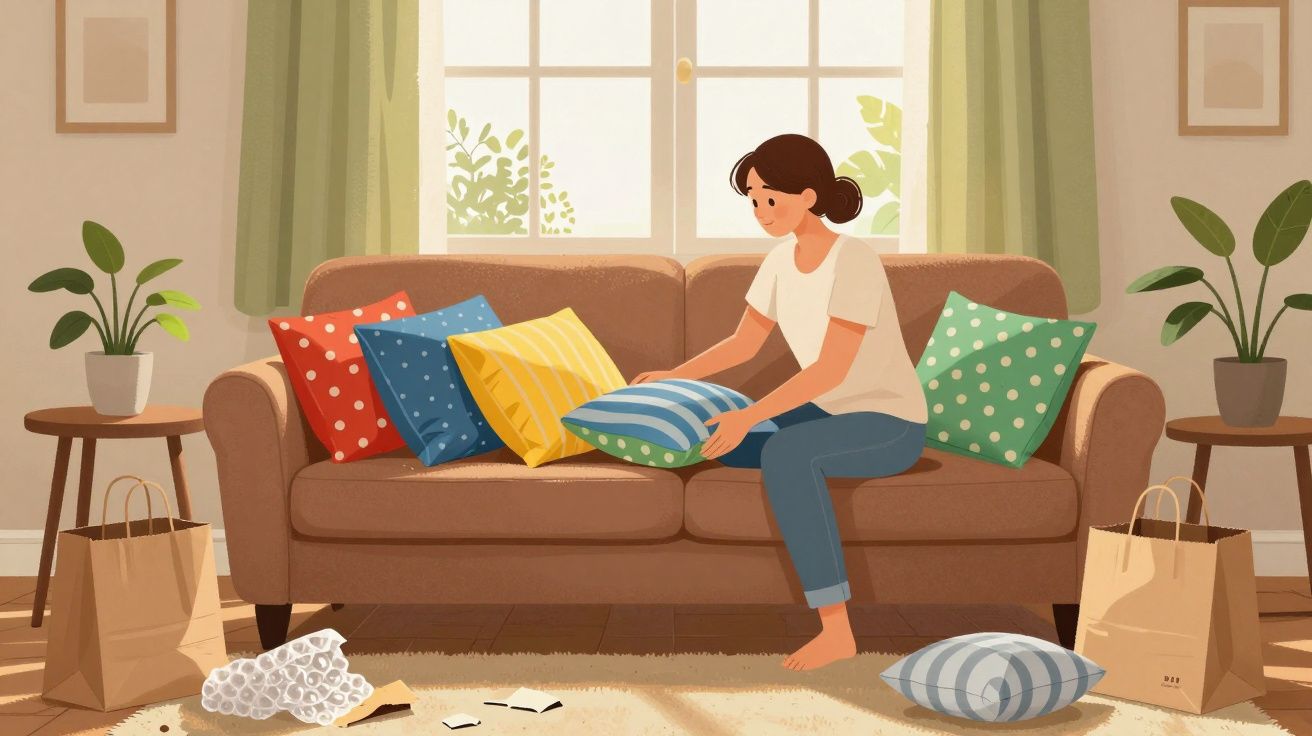
On a grey Tuesday in November, a woman in Leeds nearly bought a £1,300 sofa she didn’t really like. The old one sagged a bit, the fabric felt tired, and every evening the living room looked as flat as she felt after work. Her search history was a graveyard of “corner sofa sale” tabs, all beige, all slightly wrong.
An interior stylist friend came round, stared for a minute and shook her head. “The sofa’s fine,” she said, dropping her bag. “It’s the cushions that are letting it down.” They spent £38 on three cushion covers and one new insert. Forty minutes later, the room looked as if someone had quietly upgraded everything - walls, rug, even the lamp in the corner.
We’re trained to think big when a room feels off: new sofa, new paint, full makeover. The pros reach for something smaller, cheaper and far less terrifying to get wrong. Cushions are their not-so-secret weapon, because they transform what you see and how you feel without touching the furniture catalogue.
The £40 swap stylists reach for first
Stylists are blunt about it: your eye reads the colour and texture of a sofa before it notices the shape. Change what’s on top and you change the whole impression, even if the frame underneath is ten years old and a bit wobbly.
A new sofa drags in delivery fees, long waits and commitment anxiety. Cushions? You can carry them home on the bus, live with them for a week and swap them if the mood’s off. Under £40 isn’t a fantasy number; it’s an everyday styling budget.
“Think of cushions as clothes for your sofa,” says one London stylist who preps show homes for estate agents. “You wouldn’t throw out your body because you’re bored of your wardrobe.”
Most pros start with three to five cushions, even on a small two-seater. Fewer looks mean and hotel-waiting-room; too many can feel like a soft-furnishing avalanche. The trick is mixing sizes, fabrics and a tight handful of colours so the sofa suddenly feels like it was chosen on purpose.
Why cushions change the whole room, not just the sofa
Your sofa usually sits on the longest wall or in the most visible spot. Cushions are the bit your eye lands on first: small objects with outsized influence. Get them right and they quietly fix other niggles in the room.
Colour is the quickest win. Pick up the green from a plant, the rust in a picture frame, the navy in your rug, and echo those shades in the cushions. Suddenly the random bits of your living room start talking to each other. The room feels “done”, even though you haven’t painted a thing.
Texture does the warmth work. A slubby linen next to a faux fur or bouclé, a knitted cover against something smooth and velvety - this is what makes a budget room feel layered rather than cheap. Even if the sofa fabric itself is shiny or not quite your taste, contrasting cushions can pull it back.
Pattern is where personality sneaks in. A stripe to sharpen things up, a tiny check for cosiness, one bold print to stop the whole arrangement going bland. One patterned cushion can make a plain high-street sofa look editorial, especially if the colours link to something else nearby.
The quiet psychology of a “soft upgrade”
There’s a mood shift too. A sofa flanked by flattened, mismatched cushions reads as tired, like a bed that was half-made in a rush. Plump, coordinated cushions send a different message: this is a place you’ve chosen to rest in, not just collapse onto.
You also remove the guilt shadow of “we really should buy a new sofa soon”. For under £40, you give yourself permission to enjoy the one you’ve got for a few more years. That breathing space alone changes how you see the whole room.
How to get a stylist-level refresh for under £40
Treat this like a small project, not a vague browse. One focused evening is enough.
1. Pick a three-colour story
Stand in your living room and choose:
- One base neutral (grey, taupe, cream, charcoal, tan).
- One accent colour already in the room (from art, a rug, a throw, a plant).
- One deeper or darker tone to ground everything (ink blue, bottle green, chocolate, black).
Everything you buy should sit inside that trio. This is how you avoid the charity-shop-jumble effect.
2. Buy covers first, inserts second
The insider trick: don’t keep buying filled cushions. Buy decent feather or good synthetic inserts once, then rotate covers with the seasons.
On a tight budget, you can often:
- Reuse the inserts you already have (even if the covers are awful).
- Size up: a 50×50 cm insert in a 45×45 cm cover looks plumper and more expensive.
Typical UK high-street prices:
- Cushion covers at IKEA, H&M Home, Dunelm, George Home, H&M, Matalan, Primark Home: £4–£10.
- Inserts from IKEA, Dunelm or online: £4–£8 each (or reuse what you own and spend the budget on covers).
A realistic £40 basket might look like:
- 2 x textured neutral covers @ £8 = £16
- 1 x patterned accent cover @ £10 = £10
- 1 x larger lumbar cushion (cover + insert) @ £12–£14
Total: £38–£40, and you’ve completely changed the sofa’s face.
3. Mix sizes and textures, not just colours
Stylists rarely use four identical squares. Aim for:
- 2 medium squares (45–50 cm) in your neutral texture
- 1 patterned square in your accent colour
- 1 lumbar/rectangular cushion in the darkest tone
Combine at least two textures (e.g. corduroy + linen, bouclé + cotton, knit + velvet). This matters more than an expensive label.
4. Add one “disruptor” cushion
This is the fun bit: something slightly unexpected that stops the arrangement feeling too safe.
That might be:
- A small cushion with a bold graphic or stripe.
- A round cushion on an otherwise straight-lined sofa.
- A velvet jewel tone on an all-neutral base.
You only need one. It works the way good jewellery does - a single piece that lifts the whole outfit.
“If everything matches perfectly, the room can feel dead,” says a Brighton-based stylist who stages rental flats. “One slightly cheeky cushion wakes up the whole space.”
5. Style them like a pro (takes five minutes)
Once you’ve got them home:
- Start with the largest cushions at the back, near the arms.
- Layer the medium squares in front, angled slightly rather than dead straight.
- Pop the lumbar cushion in the centre or at one end like an invitation to sit.
- Plump from the sides and bottom, not just the top. The infamous “karate chop” is optional; a soft pinch at the top can add shape, but overdo it and it looks staged.
Step back, half-close your eyes, and look at the shapes more than the patterns. You want an easy rhythm, not a regimented row of soldiers.
Small habits that keep your sofa looking expensive
The good news: this isn’t high maintenance. A handful of tiny habits make the refresh last.
- Daily-ish plump: a quick squeeze as you pick up mugs in the evening.
- Rotate: spin cushions occasionally so one side doesn’t sag ahead of the others.
- Seasonal swap: heavier textures (knit, faux fur, velvet) in autumn–winter; lighter (linen, cotton, slub weaves) in spring–summer.
- Wash with care: most covers have labels; low-temperature washes, gentle spin, and air-drying keep them fresh without fading.
Let’s be honest: nobody actually does all of this every single day. But even a Sunday-evening plump and a twice-yearly cover swap will keep things feeling deliberate rather than accidental.
When cushions beat a new sofa
There are times a sofa genuinely needs replacing: broken springs, frames you sink through, smells that won’t wash out. For everything else, cushions buy you time, comfort and style.
Here’s how stylists quietly make the call:
| Point clé | Détail | Intérêt pour le lecteur |
|---|---|---|
| The sofa is structurally sound | It’s comfy enough, just looks tired or dated | You can postpone a big spend and still love your living room |
| The room feels “bitty” | Colours and textures don’t connect; nothing feels intentional | A £40 cushion plan can link existing pieces into a scheme |
| Style confidence is low | You’re scared of committing to a bold sofa colour | Cushions let you test bolder shades and patterns with no long-term risk |
What cushions really offer is permission to experiment. You might discover you love deep rust and olive together, or that a single saffron velvet cushion makes your rented beige sofa look warm instead of bland. Once you’ve played with small pieces, the big decisions - paint, rugs, eventually a sofa - stop feeling like a shot in the dark.
The living room that felt stuck can shift in an evening, for less than a takeaway. That’s the kind of transformation most of us can actually use.
FAQ:
- How many cushions do I really need on a two-seater sofa? Three to four is the sweet spot: two larger at the back, one patterned or textured, and one lumbar. Enough to look inviting, not enough to feel like you need a degree to sit down.
- Can cushions still help if my sofa is a bold colour? Yes. Use cushions in softer, related tones (e.g. blush and rust on a red sofa, sage and stone on a green one) to calm it, or add neutrals and texture (bouclé, linen) to balance the brightness.
- What if my living room is very small? Go for fewer, larger cushions rather than lots of tiny ones. Keep the palette tight - two main colours plus one accent - so the space feels coherent, not cluttered.
- Are cheap cushions a false economy? Cheap inserts often go flat fast. Prioritise decent inserts once, then buy affordable covers you can rotate. Texture and colour do more for the look than an expensive brand name.
- Where do stylists actually shop on a budget? High-street and supermarket ranges are staples (IKEA, Dunelm, H&M Home, Matalan, George, Primark Home), with the odd statement cover from Etsy or an independent maker when budget allows. The magic is in the mix, not the logo.



Comments (0)
No comments yet. Be the first to comment!
Leave a Comment