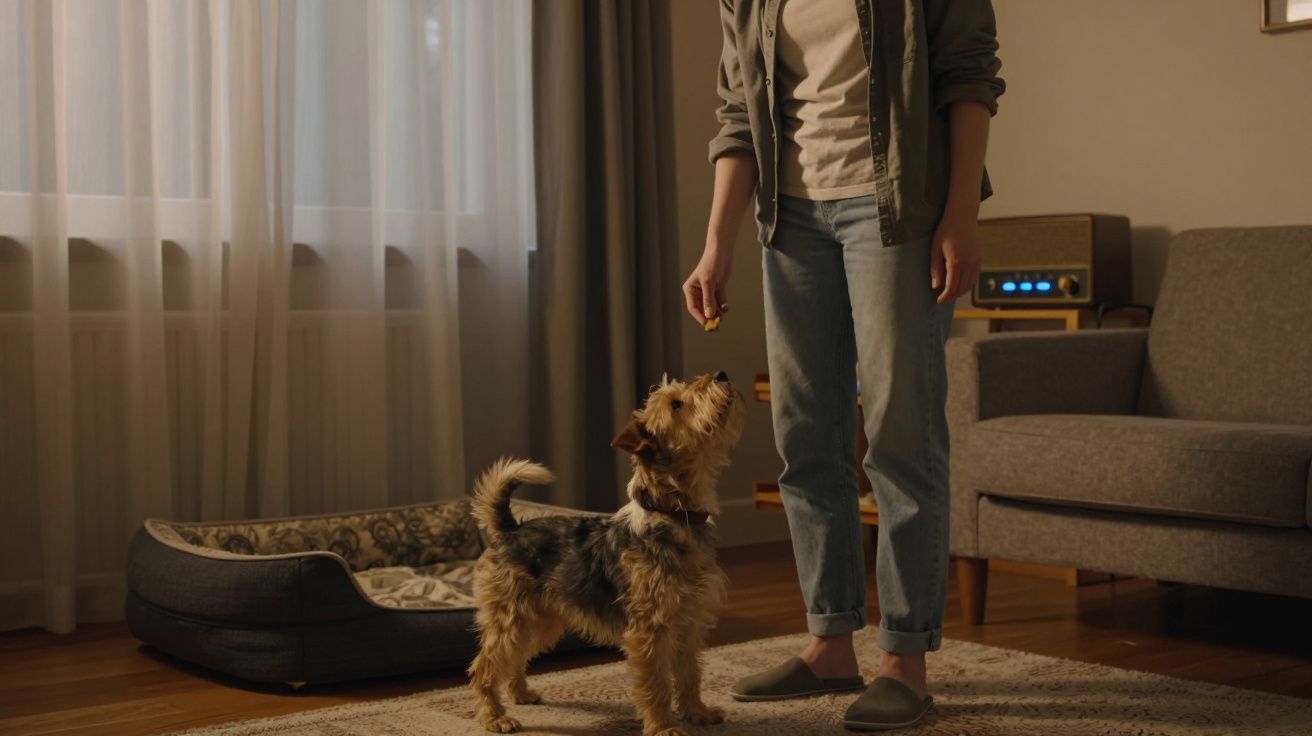
November creeps in quietly. One week you’re chatting over the fence in a cardigan at 4pm, the next you’re fumbling for the back-door light at ten past five and wondering why the dog has turned into an evening alarm system.
The first complaints usually arrive just after the clocks change. A note through the door. A comment in the street. A slightly pointed message on the WhatsApp group about “dogs barking at all hours now it’s dark”. Your own patience is thinner too. The same terrier who barked at the postie in July without much drama now feels like a nightly flashpoint with next-door.
From the dog’s point of view, nothing “small” has changed. Everything has. The light, the sounds, the smells on the wind, the way your street carries noise on cold air. Dusk is earlier, fireworks are still fizzing somewhere over the estate, and the fox that used to slip past at midnight is now padding along the fence just as you’re putting the kettle on.
The trick is not to “shut the barking down”, but to teach your dog a different job at dusk – one that keeps the street calm and the neighbours off your back.
Why barking peaks in the gloomy months
You don’t need to be a behaviourist to see the pattern. Vets, trainers and council noise teams all report the same thing: barking complaints often spike from late October through to early December.
Several small shifts pile up for dogs:
Darker, earlier, and full of surprises
Light isn’t just for seeing. It tells your dog’s body what time of day it is. When dusk slides from 9pm to 4.30pm almost overnight, “quiet evening” and “busy afternoon” get shoved on top of each other.
Your 5pm garden wee suddenly coincides with:
- Children shouting on the walk home.
- Delivery drivers racing the last drops of light.
- Foxes, hedgehogs and cats starting their night shift earlier.
To a dog’s ears, that’s not background noise. That’s live news.
Fireworks don’t end on Bonfire Night
In many UK streets, fireworks start on Hallowe’en, surge around 5 November and then flare up again for Diwali, birthdays and random weekend parties.
Even if your dog isn’t the type to shiver under the table, a single bang can set off “alert barking”: one sharp burst, then another, just to check the world is still safe. For nervous dogs, that alert can tip straight into full-blown panic.
Cold, still air carries sound – and bounces it off houses
On chilly, still evenings, sound travels further. A slammed car door two streets away can sound as if it’s right outside. Voices echo differently in cul‑de‑sacs and terraces once the leaves are off the trees.
From your dog’s point of view, the territory has changed. The same footsteps now “appear” closer, and the safest response for many dogs is to bark first and think later.
Routines slide – and dogs notice
You get home in the dark, a bit later than usual. Tea is pushed back. The quick 20‑minute loop you did in daylight all summer suddenly feels less appealing in the rain, so the walk shrinks.
Less exercise and more pent‑up energy mean it takes less for your dog to explode at a squirrel on the fence or the neighbour’s spaniel on the pavement. The bark isn’t just about the trigger; it’s about the whole day.
| November trigger | Typical time shift | How it lands for your dog |
|---|---|---|
| School run, commuters, deliveries | From broad daylight to dusk | “Why are the humans still rushing about when it’s night?” |
| Wildlife activity | Moves earlier into tea‑time | New smells and rustles on every breeze |
| Fireworks and parties | Clustered weekends and early evenings | Sudden bangs layered onto an already busy soundscape |
Before you train: check it’s not pain or panic
If your dog has started barking more and you also notice clinginess, pacing, toileting indoors, or refusal to go into the garden after dark, speak to your vet first. Pain, age‑related changes and noise phobias can all flare up in autumn and will not be fixed by training alone.
Similarly, if the barking is intense, prolonged or tipped with aggression (lunging at the window, teeth bared at the fence), a qualified behaviourist is worth their fee. You’re not just trying to keep the peace with your neighbour; you’re trying to make your dog feel safe.
“Think of barking as a smoke alarm,” one trainer told me. “You don’t fix the problem by smashing the alarm; you change what’s setting it off and how sensitive it is.”
Once health issues are ruled out, three surprisingly small tweaks can dial down evening noise without turning your dog into a robot.
Training tweak 1: Replace the “patrol” with a dusk routine
Many dogs treat the garden or living‑room window as their personal CCTV. Every rustle, every car door, every fox on the fence gets logged – loudly. In November, that patrol suddenly covers the busiest and noisiest part of the day.
Your job is to give dusk a different meaning.
Build a predictable “quiet hour”
Pick a 45–60 minute window around the time barking usually flares – often between 4.30pm and 7pm.
You’re going to turn that into a mini ritual:
- Short walk or sniffy game indoors 15–20 minutes before.
- Back home, lights on, curtains mostly closed.
- A long‑lasting chew or stuffed Kong in a bed that faces away from the window.
- Low‑level sound (radio, podcast or TV) to blur outside noise.
Repeat this most evenings for a couple of weeks. Dogs love patterns. Over time, they start to associate “dark outside” with “cosy chew on my bed” rather than “sound the alarm at the fence”.
Stop the roaming and window‑watching
Free access to the garden or a full‑view front window in that busy hour is like handing your dog a megaphone.
Where possible:
- Use baby gates to block access to the loudest viewing spots.
- Move sofas a little back from the window so there’s no easy lookout post.
- For gardens, switch from “free access” to invited trips: lead on, out, toilet, reward, back in.
You’re not punishing your dog for being vigilant; you’re removing the job. Less to monitor means less to shout about.
Reward calm, not silence
Many people only react when the dog barks. Try the opposite. During your “quiet hour”:
- Drop tiny treats next to your dog while they are already quiet.
- Softly say a chosen word – “settle” or “rest” – as you do it.
- Over time, this word becomes a hint that lying down quietly pays well.
You’re paying for the behaviour you want before the barking starts, instead of just telling your dog off once you’re already embarrassed.
Training tweak 2: Teach a “thank you, that’s enough” cue
Telling a dog “No!” may stop them for a second. It doesn’t tell them what to do instead. A simple “thank you” cue lets your dog bark once or twice, then hand the job back to you.
Step 1: Capture the break in the bark
Pick a time when your dog is likely to bark at something low‑level: a neighbour closing a car door, for example. Stand close with a handful of small treats.
- Dog barks.
- Say nothing. Wait for the brief pause that most dogs take to listen.
- As soon as they pause, calmly say “Thank you” (or “That’ll do”) and drop a treat at their feet.
- If they go back to barking, repeat: wait for a pause, mark it with your cue, reward.
After a few sessions, the dog starts to connect your words with the moment of quiet. You’re not rewarding the bark; you’re rewarding the gap.
Step 2: Add distance from the trigger
Once your dog is reliably turning to you on “Thank you” indoors, start to move them away from the window or door as you say it.
- Bark → “Thank you” → dog turns to you → you step towards the kitchen or sofa and reward there.
- Over time, the cue becomes both “stop” and “come away with me”.
The goal isn’t a dog that never makes a sound. It’s a dog who can say “Woof, someone’s there” and then trust you to handle it.
Step 3: Practise when nothing much is happening
On quiet evenings, occasionally say “Thank you” when your dog is already calm and follow up with a treat or a fuss. That keeps the cue “charged” and useful when you need it most.
Training tweak 3: Soften what your dog sees and hears
You cannot train what the dog is not experiencing. In November, a small bit of management goes a long way. Make it harder for your dog to get wound up in the first place.
Mask the view
If your dog barks at people walking past, other dogs on the pavement, or lights from cars:
- Use frosted window film on the bottom half of front windows or patio doors.
- Pull curtains or blinds closed earlier, but leave a lamp on inside so the room doesn’t feel like a cave.
- Move beds away from external doors and bay windows.
You’re not shutting the world out forever. You’re turning down the visual volume while you work on training.
Blur the noise
You don’t need special “dog calming” playlists (though they can be nice). Any steady, low sound helps to:
- Soften the impact of single bangs or car doors.
- Make distant voices and fox calls less distinct.
- Stop every creak in the street sounding like it’s at your front step.
Try a radio on in the kitchen, a fan in the hallway, or a TV at a sensible volume. For particularly firework‑heavy nights, white‑noise apps can be helpful.
Give your dog’s nose a better job
A bored dog with nothing to do will listen for the slightest excuse to bark. A dog working on a scent puzzle is usually too busy.
Simple dusk‑time options:
- Scatter a handful of kibble or treats on a towel and scrunch it into a loose “snuffle mat”.
- Roll treats into a cardboard tube, fold the ends and let your dog shred (supervised).
- Hide three or four treats around the living room and encourage your dog to “find it”.
Sniffing is naturally calming for dogs. A nose that’s searching the carpet is not pressed against the window waiting for a neighbour to sneeze.
Keeping the peace with neighbours (without a blazing row)
Even with training, progress is rarely overnight. Being proactive with the people on the other side of the fence can buy you patience while you work.
A few small moves help:
- Drop a note or have a brief chat acknowledging the barking and saying you’re working on it.
- Ask if there are particular times that bother them most – that gives you a clear target window.
- Keep a simple diary: when your dog barks, what set it off, how long it lasted. Patterns often jump out after a week.
Most neighbours don’t expect perfection; they want to feel heard. Showing that you’re not shrugging and ignoring the problem often calms tempers as much as it calms the dog.
A dog who learns “quiet hour”, “thank you”, and has less to guard doesn’t just bark less. They feel less on edge, and that changes everything about your evenings together.
FAQ:
- Is it realistic to stop barking completely? No, and it’s not fair to try. Dogs use their voices. The aim is to reduce excessive or prolonged barking, especially at predictable times like dusk, not to create a silent pet.
- Do anti‑bark collars work? Shock, spray or vibration collars may suppress barking in the moment, but they can increase anxiety and are banned or strongly discouraged in many places. They don’t solve the underlying reason your dog is barking.
- How long will these training tweaks take to work? Some owners notice a change within a week; others need several weeks of consistent practice. Small, daily sessions around dusk work better than one big weekend push.
- Should I let my dog out for a last wee if that’s when they bark most? Yes, but make it a short, supervised trip on a lead or long line, with a clear routine: out, toilet, reward, back in. Avoid letting them roam and patrol the fence in the dark.
- When should I call in a professional? If the barking is intense, your dog seems very distressed, or there are complaints from multiple neighbours, ask your vet for a referral to a qualified behaviourist. They can tailor these tweaks to your dog and home.




Comments (0)
No comments yet. Be the first to comment!
Leave a Comment