The first time it happens, you blame yourself. You step back from the freshly potted peace lily or ficus, proud of the new terracotta and tidy compost, and within a week the leaves start to yellow, curl or drop. You water a bit more, or a bit less, move the plant around the room, and still the green drains away in slow motion.
Quietly, a thought nags: did repotting kill it? Not quite. Most of the time, yellow leaves after repotting are a stress signal, not a death sentence. And a teaspoon of something that probably sits in your baking cupboard can tip the balance back in the plant’s favour.
When green turns yellow: what’s really happening after repotting
To a plant, repotting feels a lot like having the floor pulled out from under your feet. Roots that were threaded carefully through old compost are tugged, snapped and shaken. The new mix holds water differently, smells different, drains at a new pace. Light and air around the pot often change too.
From the outside, you see the leaves first. They lose their gloss, then colour; some go pale all over, others turn yellow at the edges or between the veins. Inside the plant, sap flow slows as damaged roots struggle to drink and feed. The plant quietly prioritises survival over looks, shunting resources away from older leaves to build new root tips.
Yellowing after repotting is usually a sign of shock and imbalance, not an instant nutrient disaster.
The hidden drama in the root ball
We’re trained to watch leaves, but the main battle takes place below the compost line. Even gentle hands break fine feeder roots when you slide a plant from its old pot. Those hair‑like tips are the main gateway for water and minerals.
In a snug, well‑colonised pot, roots fill every gap. Air, water and microbes sit in a pattern the plant has learned. A new, looser mix changes that overnight. Water might now pool in pockets, or rush straight through. Roots that loved being slightly cramped suddenly find themselves in a cool, damp expanse of compost where oxygen is scarce and fungi are eager.
If that new soil stays wet for too long, tiny wounds on the roots become doors for rot. The plant senses trouble and responds by dropping leaves it cannot afford to keep.
Why your plant turns yellow: the most common triggers
Several stresses often stack on top of each other. A few patterns come up again and again on windowsills and in living rooms.
Too much water in too much pot
After repotting, many people give a generous drink “to help it settle”. In a pot that is now one or two sizes bigger, that water can linger for days. Roots, already bruised, sit in a cold bath they cannot escape.
Leaves respond by drooping and yellowing from the bottom up. The soil feels constantly damp, but the plant looks thirsty because damaged roots cannot pull water properly. Adding more only deepens the problem.
New compost, new chemistry
Fresh bags of potting mix often contain slow‑release fertiliser. For a plant used to lean conditions, this sudden richness can jar. Salt levels in the soil water rise, making it harder for roots to take up what they need.
Sensitive species may show yellowing between the veins or scorched tips. It looks like deficiency, but it can be the opposite: too much, too soon.
Light and timing mis‑matches
Repotting a shade lover on a bright south‑facing sill in March is very different from doing the same job on a dull November afternoon. After roots are disturbed, plants cope best with steady, gentle light.
A sudden jump in brightness can bleach already stressed leaves. A sharp drop (for instance, moving away from a window after rearranging the room) means the plant has more foliage than it can now power. It dumps the surplus, and you see yellow and brown.
The teaspoon twist: how kitchen cinnamon helps bruised roots
Cinnamon is usually for porridge and apple crumble, not potting benches. Yet that same ground spice can quietly help a repotted plant recover. Its strength is not in feeding the plant directly, but in calming what happens in the dark, damp spaces around hurt roots.
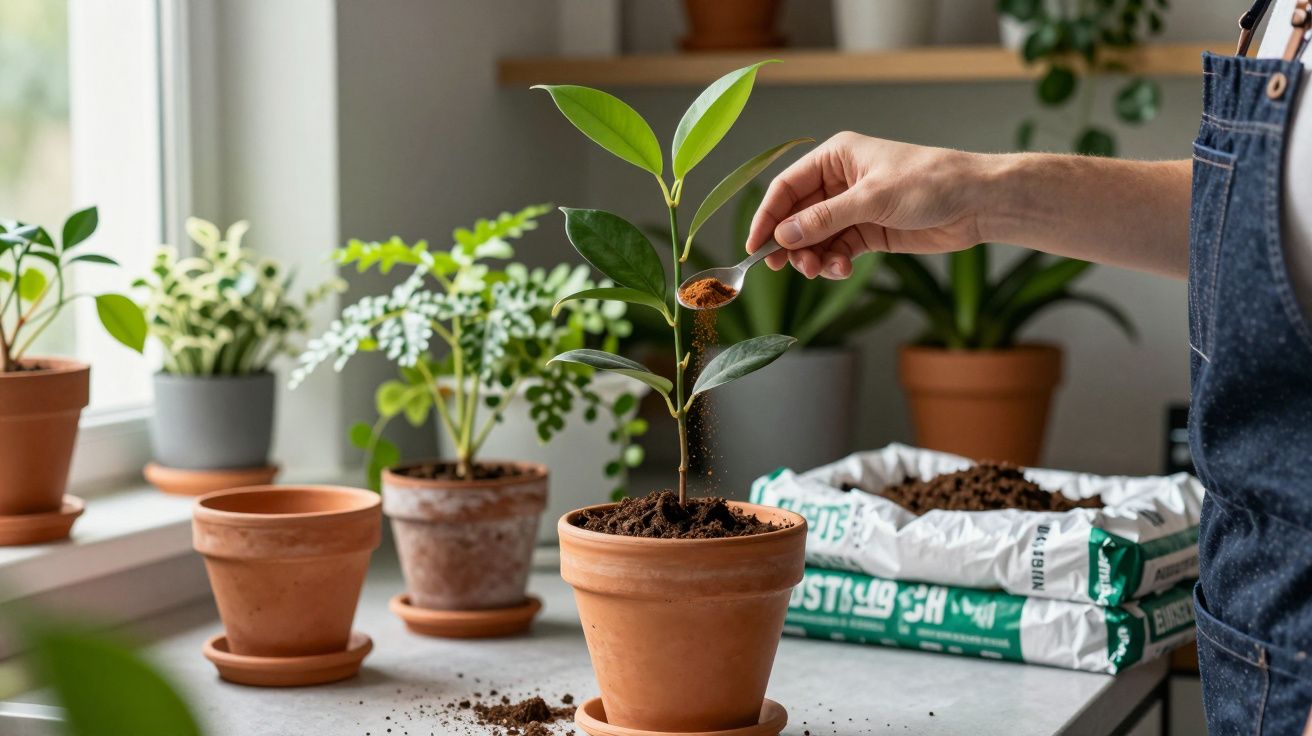
Ground cinnamon has mild antifungal and antibacterial properties. Gardeners have long dusted it over cuttings and seedlings to limit damping‑off and rot. In a freshly repotted plant, a light touch of cinnamon on the root ball or surface compost can gently tilt the balance away from opportunistic fungi and towards healing.
Think of it as a tiny antiseptic dressing for the invisible scrapes your plant has just endured.
By slowing down the fungi that would happily colonise soft, damaged tissue, cinnamon buys time. Roots can seal off wounds and push new tips without fighting a full‑scale infection in waterlogged pockets of soil. The result, for you, is often fewer yellowing leaves and a plant that stabilises faster.
How to use cinnamon after repotting (without overdoing it)
You only need a teaspoon or so per medium houseplant. More is not better; too thick a layer can form a dry crust on top of the compost.
Step‑by‑step
Repot as usual, but gently
Loosen the root ball with your fingers rather than tearing it apart. Trim only clearly dead, black or mushy roots.Dust the roots lightly (optional but useful)
Sprinkle a small pinch of ground cinnamon directly over any freshly cut or badly bruised roots before placing the plant into its new pot.Backfill with compost and water once
Pot up with good‑quality, free‑draining mix. Water slowly until moisture just runs from the drainage holes, then stop.Add your “teaspoon treatment”
Once the surface has drained and looks barely damp, sprinkle up to one teaspoon of cinnamon evenly over the top of the compost for a standard 12–15cm pot. Aim for a fine dusting, not a thick carpet.Keep conditions calm
Place the plant in bright, indirect light. Avoid feeding for 3–4 weeks. Water again only when the top few centimetres of compost are dry to the touch.
In small pots, halve the amount. For very large floor‑standing planters, you can go up to a tablespoon spread widely, but always as a thin veil rather than a mound.
Reading the yellow: what the leaves are trying to say
Not all yellowing is equal. A quick glance at where and how the colour changes can guide your next move.
| Yellowing pattern | Likely cause | What to do |
|---|---|---|
| Old, lower leaves yellow first; soil feels wet | Overwatering / root stress | Let compost dry more; check drainage; cinnamon can help limit rot |
| New leaves pale, entire plant looks washed out | Root shock plus diluted nutrients | Wait 2–3 weeks, then start a weak feed |
| Yellow between veins on newer leaves | Nutrient imbalance in fresh mix | Use a balanced, diluted fertiliser once plant is settled |
| Random yellow patches with brown, mushy base | Emerging rot | Reduce watering sharply, improve airflow, repot again if smell is sour |
Yellow leaves that formed before repotting rarely turn green again. The real test is whether new growth, over the next month or so, emerges healthy and holds its colour.
Other gentle ways to help plants bounce back
Cinnamon is a quiet ally, not a magic wand. A few simple habits around it make the biggest difference.
- Choose only one pot size up rather than jumping from cramped to cavernous.
- Use a free‑draining mix suited to the plant (more bark for orchids, more grit for succulents).
- Water by feel, not schedule, especially in the first month after repotting.
- Hold off on fertiliser until you see clear new growth; stressed roots struggle with strong feeds.
- Avoid drastic moves: no direct sun, no cold draughts, no radiators right beside the pot.
Patience does more for a shocked plant than fussing every day. You are giving it time to rebuild the invisible half of its body.
When yellow is normal – and when it’s a warning
Some leaf loss after repotting is simply the price of change. A few older leaves turning yellow and dropping over two or three weeks can be entirely normal, especially on plants like ficus, schefflera or ivy that hate being disturbed.
What matters is the trend. If yellowing spreads quickly up the plant, stems go soft, or the compost smells sour and stale, you are dealing with more than sulks. In that case, it is worth slipping the plant back out of the pot, trimming any black, mushy roots, repotting into fresher, drier mix and repeating the light cinnamon dusting.
A single teaspoon will not rescue a plant from constant overwatering or deep shade, but it can tip a wobbly one back towards recovery when the basics are right.
FAQ:
- Will cinnamon fertilise my plant?
No. Cinnamon is not a feed; it does not provide significant nutrients. Its main role is to gently discourage fungi and bacteria around damaged roots so the plant can heal.- Can I just add more fertiliser if leaves yellow after repotting?
Often that makes things worse. Yellowing just after repotting is usually about root stress or water balance, not lack of food. Wait a few weeks before feeding, and start with a weak solution.- Is sugar water better than cinnamon for shock?
Sugar can encourage microbial growth in the soil, including the fungi you are trying to avoid. A light cinnamon dusting is generally safer for houseplants recovering from root disturbance.- Can I use cinnamon on all houseplants?
Most common houseplants tolerate a light surface dusting or root sprinkle well. Avoid burying large amounts in the soil, and be cautious with very moisture‑sensitive succulents and cacti, where good drainage matters more than any additive.- How long should recovery take after repotting?
Many plants look unsettled for 2–4 weeks, then start to push healthy new leaves. If things are still worsening after a month, revisit watering, light and root health rather than adding more treatments.





Comments (0)
No comments yet. Be the first to comment!
Leave a Comment