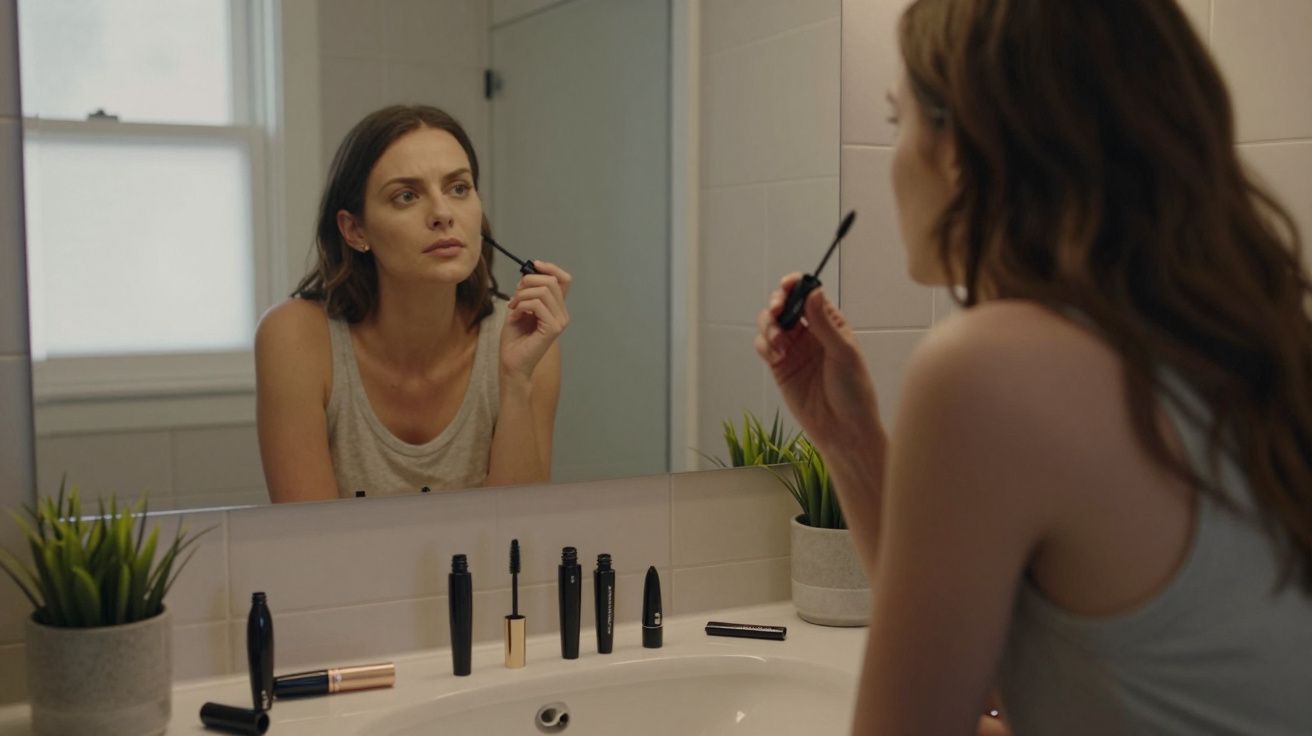
You know the sound: that horrible dry scratch as the wand drags through your lashes, leaving more crumbs than curl. Two weeks ago the tube was perfect, brand new, promising “up to 6 months” of fluttery volume. Now you are stood in bad bathroom light, blinking, already mentally adding new mascara to the next pay‑day list.
You twist the wand back in, hear a soft squelch, and shove it to the back of the makeup bag with four other half‑dead tubes. Somewhere between the first swipe and today it just… gave up. We blame the formula, the brand, even the central heating. Almost nobody blames the cap.
Because the truth is quietly infuriating.
Your mascara often dies not in six months, but in six weeks – because the cap was never truly closed.
And makeup artists? They almost never make that mistake.
How mascara actually dries out
Mascara is basically a tiny pot of paint on a stick. Water, waxes, film‑formers, pigments and preservatives all living in a narrow plastic tunnel. It is designed to dry on your lashes, not in the tube. Everything about the packaging exists to slow that process down.
Inside the neck there is a rubber gasket: the invisible “seal” that hugs the wand as it goes in and out. Around that, the screw thread that pulls the lid tight and locks out air. When both are working, every twist back into the tube presses the cap down like Tupperware.
You break the system the second air can sit in that tube overnight. A faint gap, dried product on the threads, a distorted seal – they all turn the lovely inky mousse into flaky sludge. Not in a dramatic way, but in this tedious, week‑by‑week thickening until you think, “Maybe it was always this clumpy?”
The tiny cap mistake that kills it in weeks
It is not glamorous. It is not obvious. And once you see it, you cannot unsee it.
Most of us do this without thinking: we swipe on our mascara, shove the wand back in until we feel resistance, give it a half‑hearted twist, then drop it on the dressing table. We stop twisting when we feel it is “in enough”, not when the cap has actually sealed.
Two small problems hide in that lazy twist:
- Dried product builds up on the rim and the screw threads, acting like a thin spacer.
- The lid hits that crust, feels tight, and you instinctively stop before the rubber gasket is fully compressed.
The result is a tube that looks closed yet has a millimetre‑thin air channel all the way round the wand. Night after night, day after day, that air slowly dehydrates the formula. You opened a fresh mascara. You are storing a half‑open one.
Makeup artists are borderline obsessive about this.
They automatically:
- Wipe the wand on a tissue, not on the neck of the tube.
- Twist the cap until they feel the final “lock”, not just the first bit of resistance.
- Check with a tiny extra twist before throwing it back into the kit.
It is a rhythm, not a ritual. Their tubes last closer to the promised three to six months because the seal is actually doing its job.
The other silent saboteur: wiping on the rim
There is a second, even pettier habit that quietly ruins the seal: using the neck of the tube as a scraper.
We have all done it. You pull the wand out, see a blob, and swipe it off on the opening. It feels neat and efficient. In reality, you are building a crunchy black collar around the very place that needs to close cleanly.
As soon as that crust dries, the lid cannot sit flush. It cross‑threads more easily, the gasket cannot meet evenly, and the air slides in around the edges. The more you scrape, the worse the seal.
A simple swap changes everything:
“If you must de‑gunk the wand, scrape on a tissue, never on the neck. The rim should stay as clean as a bottle of eye drops.”
Small habits that secretly murder your mascara
Beyond the cap, a few everyday reflexes cut the life of a tube in half. None of them feel dramatic in the moment.
1. Pumping the wand
That classic up‑down pumping move is just… an air pump. Every push drags pockets of air into the tube, which dries out the formula faster and encourages bacteria.
- Instead, twist the wand as you pull it out to pick up more product.
- If you like a wetter look, layer quickly while it is still fresh, rather than re‑dipping endlessly.
2. Doing your mascara in a steamy bathroom
Hot, humid air followed by central heating is mascara whiplash. That steamy mirror moment feels cosy, but the constant temperature swings and condensation inside the neck speed up separation and drying.
Whenever you can, move mascara to a cooler, drier spot – bedroom, hallway mirror, even a shelf just outside the bathroom.
3. Storing it on its side in a hot bag
Heat thins the formula, then it thickens weirdly as it cools. Meanwhile, a tube rolling around on its side lets product pool, leaving parts of the wand dry and exposing more surface area to air.
Standing tubes upright in a pot is not just “vanity aesthetic”; it keeps the gasket coated and the formula more consistent.
What pros do instead (and how to copy them in 10 seconds)
Makeup artists baby their mascara because it is literally their job on the line if it fails at 7am on a client. Their habits are obsessive for a reason – but they are easy to steal.
| Everyday habit | What it does | Pro alternative |
|---|---|---|
| Half‑twisting the cap | Leaves an air gap, dries formula | Twist until you feel a final, firm stop |
| Wiping on the rim | Builds a crust, breaks the seal | Wipe wand on a tissue or metal palette |
| Pumping the wand | Forces air and bacteria in | Pull out once, twist as you go |
| Leaving it in hot bags | Warps texture, shortens life | Store upright, cool, out of sun |
None of this requires special tools or new products. It is about how you close and handle what you already own.
A simple 10‑second routine every time you use mascara:
- Apply quickly – 2–3 coats max, no frantic pumping.
- Wipe excess on a tissue if needed, not on the tube.
- Slide the wand in straight, no wobbling against the neck.
- Twist until fully tight – then add a micro‑twist to check it is flush.
- Stand it upright in a pot or cup, away from radiators and direct sunlight.
Those seconds add literal weeks to the usable life of the tube.
When a “dead” mascara is actually past its safe date
There is a slightly awkward truth hidden in all this: even if you baby your mascara, it is not meant to last forever. It is wet, it is near your eyes, and every use introduces a little bit of your skin flora into the mix.
Most brands quietly assume:
- Around 3 months of regular, daily use for optimum performance.
- Up to 6 months if you use it less often and keep it well sealed.
After that, even a tube that still feels “fine” can harbour more bacteria and irritants, especially if you have had eye infections, allergies or wear contact lenses. The drying, clumping and smell changes are late‑stage warning signs, not the first ones.
A simple, calm rule of thumb:
“If it smells different, feels gritty, or has changed colour, let it go – no mascara is worth a stye.”
A calmer relationship with that tiny black tube
This is not about panicking every time you twist a wand. It is about swapping one unconscious habit (lazy half‑closing, rim scraping) for another (proper sealing, clean necks) that quietly saves money and frustration.
You do not have to count days on a calendar or buy special storage. Just:
- Keep the rim clean.
- Close it all the way every single time.
- Stop pumping the wand.
- Retire it when it genuinely changes.
Your next new mascara will still be the fun bit of the shop. It will just stay “new” for longer than three commutes and one night out.
FAQ:
- Is it bad if I hear a little “click” when I close my mascara? That faint click or final tighten is usually a good sign – it often means the threads and seal are fully engaged. What matters is that the cap does not keep turning freely and sits flush with no gap.
- Can I revive dried mascara with eye drops or water? It is not recommended. Adding liquid can dilute preservatives and increase the risk of irritation or infection, especially near your eyes.
- How often should I actually replace my mascara? For daily use, aim for every 3–4 months, even if some product remains. If you have sensitive eyes or wear lenses, err on the shorter side.
- Does waterproof mascara dry out faster? Waterproof formulas often feel drier sooner because they contain more waxes and less water, but with good sealing habits, their usable life is similar to regular mascara.
- Is sharing mascara really that risky? Yes. Sharing wands passes bacteria and viruses between eyes. Even a well‑sealed tube cannot fix that, so keep mascara personal.



Comments (0)
No comments yet. Be the first to comment!
Leave a Comment