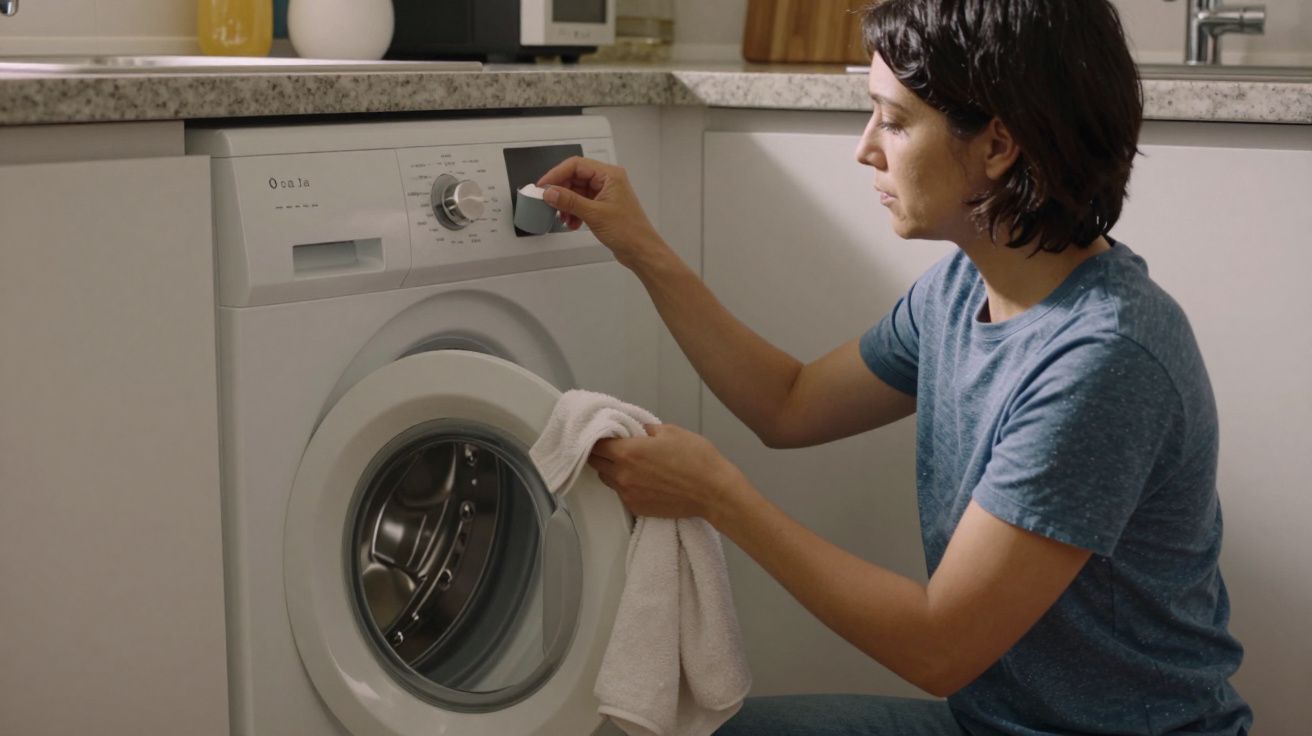
The towels came out “clean”, still warm from the spin, and yet the bathroom smelled faintly like a forgotten tent. You rewash them, add more softener, maybe a fragranced booster for good measure. For a day or two it’s better. Then, halfway through the week, the same cold, damp smell creeps back – a mix of wet dog and old socks that seems to live in the machine itself.
When an appliance engineer finally visits, they don’t reach straight for an expensive drum cleaner. They pull out the drawer, peer into the rubber seal, run a finger along the grey slime at the back of the door boot and raise an eyebrow. Then they ask a question that sounds almost rude: “When was the last time this machine saw a proper hot wash with a towel and nothing else?”
The “towel trick”, as some engineers call it, is surprisingly low-tech. No special tablets, no bottles at £7 a pop. Just one sacrificial bath towel, the hottest cotton cycle your machine has, and a weekly habit that quietly keeps that damp smell from ever building up.
Why your washing machine smells like a damp cellar
Most modern machines don’t actually get filthy overnight. The smell you notice on towels and gym kit is usually months of residue quietly rotting in the dark. It’s a biofilm – a thin, sticky layer of detergent, fabric softener, skin cells and lint – that lines the outer drum, door seal and pipes.
Low-temperature “eco” washes are brilliant for bills, less brilliant for hygiene. Liquid detergents and pods dissolve easily but can leave more residue than powder, especially when you over-dose. Fabric softener clings to everything it touches, including the inside of your machine. Shut the door straight after a cycle and you’ve made a little greenhouse for mildew.
Your nose isn’t lying: if the machine smells musty empty, it will share that smell with every load you put in it.
Over time, that film traps bacteria and mould spores. They don’t always look dramatic – often it’s just a grey shadow under the door seal or a slimy feel if you wipe inside the gasket. But every wash pulls a little of that odour into your water. Towels and synthetics soak it up best, which is why they’re often the first things to “smell like wet dog” even when they’re freshly washed.
Why pricey machine cleaners rarely fix it for long
Those “washing machine cleaner” bottles and tablets do have their place. They’re usually a mix of surfactants, bleaches and perfume designed to strip some residue and leave a fresher scent. The trouble is what they don’t do.
Most products:
- Run on a short, hot cycle with no meaningful mechanical scrubbing.
- Rely on chemical action in places where sludge has had years to harden.
- Perfume the machine rather than remove every source of the smell.
- Get used once, then forgotten until the next crisis.
It’s the same story as glasses wipes or “quick fix” sprays: they improve things on the day but don’t change the habit that caused the problem. If you go straight back to 30°C cycles, over-dosing pods and slamming the door shut after every wash, the biofilm rebuilds.
Engineers know this, which is why they’re more interested in your routine than in the latest scented cleaner. A weekly hot cycle with the right loading does more to keep smells away than any occasional miracle bottle.
The weekly “towel trick” engineers actually use
Here’s the version many appliance techs quietly recommend – and use on their own machines.
Pick a sacrificial bath towel
Choose an old, clean cotton towel you don’t mind getting a bit grey over time. Avoid fluffy new towels that shed heavily.Dampen and dose lightly
Run the towel under hot tap water so it’s thoroughly damp but not dripping. If your machine smells strongly, drizzle 1–2 tablespoons of standard biological powder or 2–3 tablespoons of soda crystals over the towel. No softener, no pods, no bleach needed.Load just the towel – nothing else
Place the towel in the drum on its own. This gives the machine a “real” load so it tumbles properly. An empty drum on its hottest setting can sometimes spin unevenly and doesn’t scrub its own walls nearly as well.Select the hottest cotton cycle your machine allows
Ideally 90°C; 60°C at a full-length cotton cycle if that’s all you have. Turn off eco/quick options – you want time, water and heat.Let it run, then inspect the towel
When the cycle finishes, smell inside the drum. It should already be fresher. The towel may look a bit dull or grey; that’s fine – it’s picked up some of the loosened residue. Wash it again with your next dark or cleaning load, or keep it as your dedicated “machine cleaning” towel.Repeat weekly at first, then fortnightly
For a smelly machine, do this once a week for a month. Once the odour settles, most households can drop to every two to four weeks depending on how often you wash on low temperatures.
Why this works so well:
- Heat breaks down fats from conditioners and oily residues from clothes.
- Detergent or soda crystals lift that muck into the water.
- The towel provides gentle abrasion, scrubbing against the drum ribs and helping to wipe away slime from surfaces the water alone would just run over.
- A proper load makes your pump and pipes flush with hot water under realistic conditions, rather than a half-hearted, half-full “maintenance” cycle.
“A hot cotton with one old towel every week does more good than a fancy cleaner once a year,” as one engineer put it. “You’re basically washing the washing machine.”
Simple habits that stop the smell coming back
The towel trick is your reset button. To keep that clean, neutral smell, your day-to-day habits matter just as much.
After every wash
Leave the door and detergent drawer ajar
This is the easiest, most powerful habit. Airflow lets the drum and seal dry, which mould absolutely hates.Pull out and wipe the seal once in a while
Once a week, run a cloth or a bit of kitchen roll around the rubber door gasket, especially the folds at the bottom. You’ll often find trapped hair, coins and small socks starting to go slimy.Empty the machine promptly
Leaving wet laundry stewing for hours in a warm drum is the fastest route to that damp smell.
Every week or two
Dose detergent correctly
More is not cleaner. Over-dosing leaves residue. Use the line on the cap, adjust for soft/hard water, and consider powder for regular 40–60°C loads.Go hotter sometimes
If most of your cycles are 20–30°C to save energy, make sure at least one load a week runs at 60°C – bedding, towels or tea towels. It’s like a mini hygiene cycle for the whole system.Rinse the drawer
Remove the detergent drawer (it usually slides and then tips out), rinse under hot water and scrub off the black or orange gunk collecting in corners. Let’s be honest: nobody really does this every week, but even once a month is a huge improvement.
Quick reference
| Problem you notice | Likely cause | First thing to try |
|---|---|---|
| Towels smell damp when dry | Biofilm in drum and pipes | Weekly towel trick at 90°C for a month |
| Black spots on door seal | Mould in gasket folds | Wipe with hot soapy water, then start towel routine |
| Drawer slime and streaks on clothes | Softener and liquid build-up | Clean drawer, reduce softener, run hot towel cycle |
| Machine smells fine but clothes don’t | Overloading / low spin | Looser loads, higher spin, better drying |
When a smell means something more serious
A cold, musty odour that improves with the towel trick is usually just hygiene. Some smells, however, are a warning sign.
Eggy, drain-like smell
Could be a blocked standpipe or waste hose rather than the machine itself. If the sink gurgles when the washer drains, the waste plumbing needs attention.Burning, rubber or electrical smell
Stop using the machine and switch it off at the wall. This may indicate a worn belt, motor issue or wiring fault. Call an engineer; do not keep running hot cycles hoping it will clear.Water left sitting in the drum or drawer
A partially blocked filter or pump can leave grey water behind that smells. Check your manual for the pump filter flap (often at the bottom front), put down towels, and clear it – or get help if you’re unsure.
If you’ve run several hot towel cycles, cleaned the drawer and seal, left everything to dry and the smell is still strong, it’s worth a professional inspection. Long-term leaks, hidden mould behind the machine or a failing heater can all masquerade as “just a bit damp”.
FAQ:
- Can I use vinegar or bleach instead of detergent with the towel trick?
You can add a small cup of white vinegar to the drawer if you like, but it isn’t essential and some manufacturers dislike regular acidic runs. Avoid bleach unless your manual explicitly allows it; over time it can be harsh on rubber seals and stainless steel.- Will this damage my machine if I do it every week?
No, as long as you follow the manufacturer’s guidance on maximum temperature. Machines are designed to handle hot cotton cycles. In fact, occasional high‑temperature runs are good for the heater, drum and hoses.- What if my machine only goes up to 60°C?
Use the longest 60°C cotton programme with the towel and a little powder. It may take a few more cycles to fully clear a very smelly machine, but the principle is the same.- Can I just run an empty hot cycle instead?
It’s better than nothing, but less effective. The towel adds scrubbing action and weight, helping to dislodge residue and flush the system under normal load conditions.- Do I still need shop-bought machine cleaners?
Not routinely. Many households find a combination of correct detergent dosing, door‑open drying and the weekly or fortnightly towel trick is enough. You might keep one cleaner on hand for an occasional deep reset, but they become the backup, not the main plan.




Comments (0)
No comments yet. Be the first to comment!
Leave a Comment